
We know we've talked about women's wrestling before, and at this point, we're probably going to be accused of beating a dead horse. The problem is that the horse isn't dead. The horse is very much alive, moving at full speed, and dragging along a surprising number of wrestling programs that still haven't figured out how important women's wrestling has become to the future of our sport. We're watching one of the most significant periods of growth in American wrestling history unfold right in front of us, and somehow there are still high school programs treating their girls' teams like an extracurricular inconvenience. It's difficult to understand how we can celebrate the accomplishments of American women on the world stage while continuing to accept the second-class treatment of female athletes in our own wrestling rooms.

According to the National Federation of State High School Associations (NFHS), girls' high school wrestling participation reached 88,771 athletes during the 2025–26 school year, representing a 19.9% increase over the previous season. That's more than 14,000 additional female wrestlers in a single year. During that same period, boys' wrestling participation declined by approximately 5,000 athletes, meaning the growth of girls' wrestling was responsible for the entire net increase in high school wrestling participation nationwide. Those numbers should be getting the attention of every athletic director and wrestling coach in the country, particularly those who are concerned about declining participation or struggling to maintain competitive rosters. Girls' wrestling represents an enormous opportunity to expand the reach of our sport, yet too many programs are approaching that opportunity with the same organizational structures they were using when girls were barely represented in high school wrestling.
The international results make the situation even more interesting. At the 2026 Senior World Championships in Astana, Kazakhstan, the American women's freestyle team captured the team world title, finishing ahead of Japan and producing six individual medalists. Among those athletes was 19-year-old Everest Leydecker, who won a senior world championship while beginning her freshman year at the University of Iowa. We're watching incredibly young American women compete against established international champions, and some of these athletes are accomplishing things at the senior level before they've even had the opportunity to establish themselves in college wrestling. The United States also captured the men's freestyle team title at those championships, demonstrating the extraordinary level of talent developing across both disciplines. American wrestling has plenty to be excited about right now, and our female athletes are contributing enormously to that success.
Why are girls' teams still getting second-class treatment?
For all the progress we're seeing in participation and international competition, the way girls' wrestling is treated at the high school level remains frustratingly inconsistent. There are outstanding programs around the country that have invested in dedicated coaching staffs, independent varsity schedules, and the development of strong female team cultures. Unfortunately, there are also programs where the girls' team exists primarily because the school is required or expected to offer one, while nearly every meaningful decision continues to revolve around the boys' program. The girls are assigned whatever practice time remains available, their coaches are expected to divide their attention between two teams, and their competition schedules are treated as secondary to the established boys' varsity program.
One of the most obvious examples is the way girls' varsity duals are presented at some high schools. Why are we still seeing girls' varsity competitions scheduled between the boys' junior varsity and varsity matches, with the gym lights left on and little of the recognition that accompanies the boys' varsity event? These are sanctioned varsity athletes representing their schools, yet the atmosphere surrounding their competitions frequently communicates that their matches are simply something to get through before the main event. Even when schools schedule separate girls' dual nights, the differences in promotion, attendance efforts, and event presentation can be substantial. If an athletic department considers girls' wrestling a legitimate varsity sport, its athletes should receive the same introductions, recognition, and opportunities to compete in an environment that reflects the significance of representing their school.
There's also the issue of female wrestlers being pulled from their own teams to fill vacancies in boys' varsity lineups. We understand that girls have historically competed against boys, and there are circumstances where doing so can provide valuable developmental opportunities. However, there's a difference between an athlete choosing to compete against boys as part of her development and a coaching staff treating talented girls at 106 or 112 pounds as convenient solutions to gaps in the boys' roster. We've seen situations where these decisions are being made even when the girls' team has its own varsity dual scheduled on the same night. When a female athlete's commitment to her own varsity program becomes negotiable whenever the boys' team needs someone, it creates a very clear hierarchy between the two programs. Coaches should be developing those girls as members of their own team, with competitive opportunities and responsibilities that are taken just as seriously as those of their male counterparts.
Dedicated coaching and leadership are part of the solution
The National Wrestling Coaches Association has discussed research connecting dedicated girls' coaching staffs with substantially larger female rosters. During its 2026 convention, NWCA executive director Mike Moyer referenced association findings indicating that girls' programs with their own dedicated coaches had rosters approximately 60% larger than programs where coaches were sharing responsibilities between boys and girls. Although that relationship alone doesn't establish that separate coaching causes every increase in participation, it certainly raises questions about the way schools allocate their coaching resources. Programs with independent leadership have greater opportunities to focus on recruiting female athletes, establish competition schedules around their development, and build a team culture that encourages girls to remain involved in wrestling throughout high school.
Part of this conversation also needs to address the lack of opportunities for women who want to coach. There are talented young female coaches entering the sport who have competed at high levels, understand the technical demands of wrestling, and want to help develop the next generation of athletes. Some are encountering established high school coaching structures that leave very little room for new leadership, particularly when the existing staff continues to view girls' wrestling as an extension of the boys' program. We should be encouraging these women to pursue coaching positions and giving them genuine opportunities to lead programs. Female athletes benefit from seeing women in positions of authority within their sport, particularly women who understand the experiences and challenges associated with competing in a wrestling environment that was historically built around male participation.
None of this diminishes the contributions of male coaches who have invested years into developing women's wrestling. Some of the strongest advocates for female wrestlers have been men who recognized the potential of women's wrestling long before it began receiving widespread attention. We work alongside male and female athletes at No Limits, and we recognize that good coaching depends on knowledge, communication, and the ability to develop athletes. At the same time, as female participation continues to grow, schools should be intentionally expanding opportunities for women in coaching leadership. The growth of female athletes should be accompanied by a comparable commitment to developing female coaches, and established programs have a responsibility to make room for qualified people who want to contribute.
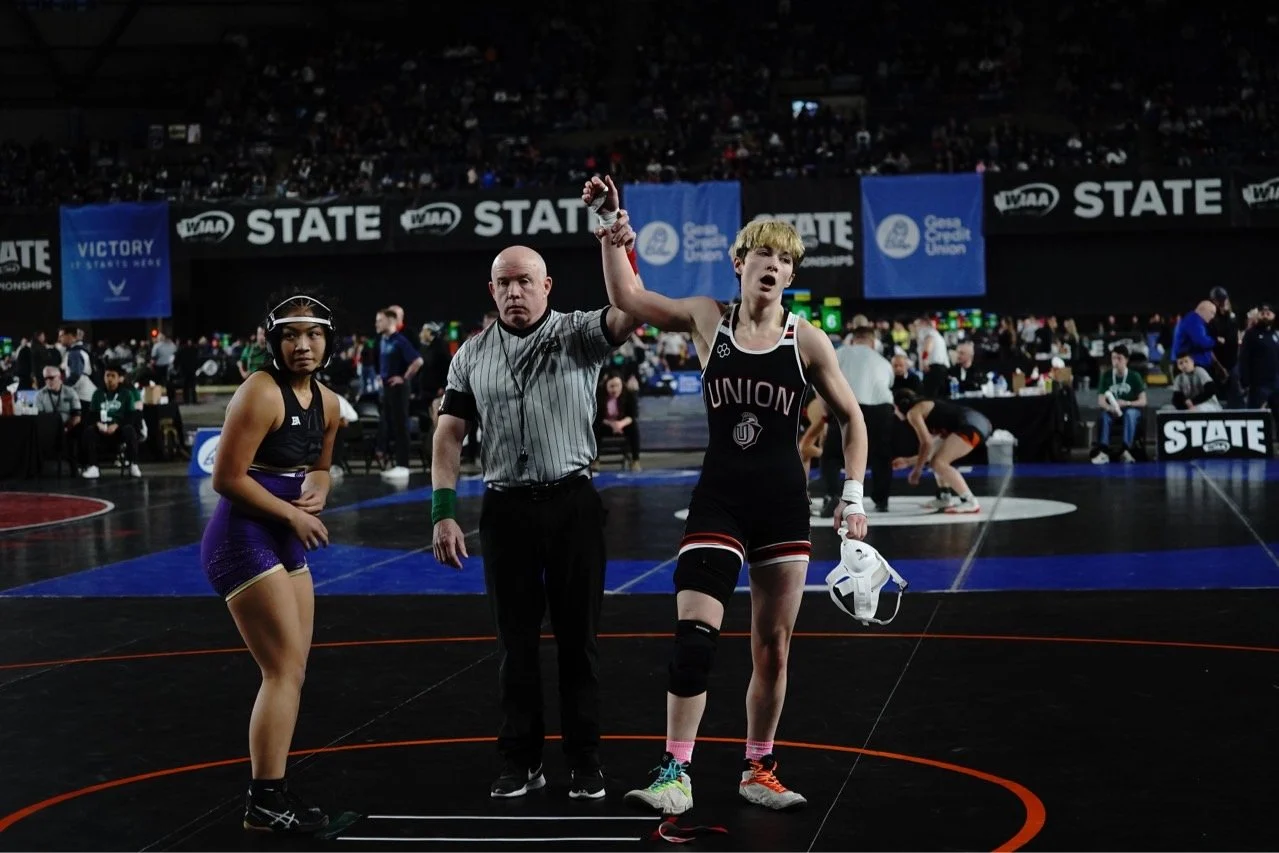
Investing in girls' wrestling benefits the entire sport
One of the more shortsighted attitudes we continue to encounter is the belief that allocating additional resources to girls' wrestling somehow takes opportunities away from the boys. Wrestling programs benefit when more athletes are participating, more families become invested in the sport, and schools have a larger athletic community supporting their teams. A strong girls' program can improve the visibility of wrestling within an athletic department and create additional opportunities for community engagement. Successful female athletes also help introduce younger girls to wrestling, bringing families into the sport who may never have considered participating otherwise. While the success of a girls' program doesn't automatically guarantee growth in a boys' program, there are obvious advantages to building an athletic culture where both teams are encouraged to succeed and supported by the same broader wrestling community.
Women's wrestling has also contributed to the survival and expansion of wrestling opportunities at the Olympic and collegiate levels. When wrestling was threatened with removal from the Olympic program in 2013, the international wrestling community was forced to confront several issues involving the sport's presentation, governance, and gender equity. Expanding the number of women's Olympic weight classes became part of the reforms associated with wrestling's successful effort to remain in the Games. More recently, women's wrestling reached another major milestone when the NCAA held its inaugural women's wrestling national championship in March 2026. These developments have helped strengthen the institutional foundation of wrestling and created additional pathways for athletes to continue competing beyond high school. Women's wrestling deserves support because female athletes have earned those opportunities, but its contribution to the growth and long-term stability of the entire sport should be impossible to overlook.

High school wrestling needs to catch up
We understand that high schools operate with limited budgets, shared facilities, and coaching shortages. Those are legitimate logistical challenges, particularly for smaller schools that are still developing their girls' rosters. However, those challenges cannot continue serving as permanent justifications for assigning girls the worst practice times, limiting their access to coaching, or treating their varsity competitions as secondary events. Building a successful program requires intentional investment, and many of the changes we're discussing begin with how athletic departments and coaching staffs choose to prioritize their athletes. A girls' team should have designated practice opportunities, qualified coaching leadership, and a competition schedule that reflects its status as an independent varsity program.
There is also no reason that separate girls' and boys' programs cannot share training opportunities when doing so benefits the athletes. Mixed practices have been part of wrestling for generations, and they can provide excellent opportunities for technical development and competitive training partners. Those decisions should be made with the developmental needs of both teams in mind, with each program maintaining its own identity and leadership. When girls have a legitimate place within their school wrestling program, they can develop pride in their team, establish their own competitive goals, and build the same kind of lasting relationships that have made high school wrestling such an important experience for generations of male athletes.
At No Limits Wrestling Club, we've been vocal about the importance of women's wrestling because we spend our time working with young athletes who represent the future of the sport. We see firsthand how capable these girls are, how quickly they develop when they're given quality instruction, and how seriously they take their commitment to becoming better wrestlers. Watching female athletes compete at the highest levels in the world while knowing that girls in some high school programs are still fighting for equitable practice time is frustrating. We have an entire generation of young women growing up with opportunities that barely existed for female wrestlers twenty years ago, and the responsibility for developing those opportunities now belongs to the coaches and administrators running our programs.
There are plenty of experienced coaches who have spent decades building successful wrestling programs, and that experience deserves respect. However, experience should also come with the ability to recognize when the sport has evolved beyond the systems that worked twenty years ago. Coaches who continue treating girls' wrestling as an inconvenience are overlooking one of the fastest-growing areas of American athletics, while younger coaches who want to build strong female programs are sometimes left fighting for access to the resources and leadership opportunities needed to make that happen.
We'll probably continue talking about women's wrestling until conversations like this become unnecessary, because the athletes coming through our wrestling rooms deserve programs that reflect the opportunities available to them. American women are winning world championships, high school participation continues to grow, and collegiate wrestling is providing more opportunities for female athletes than ever before. The sport is moving forward at an extraordinary pace, and it's time for every level of wrestling to recognize how much its future depends on the success of the girls stepping onto the mat.
And as for that dead horse we've supposedly been beating? Judging by the direction women's wrestling is heading, we're going to be riding that thing for a very long time.
References and further reading
National Federation of State High School Associations (NFHS). High School Athletics Participation Survey, 2025–26.Official national participation statistics documenting the growth of girls' wrestling to 88,771 athletes, a 19.9% increase from the previous year.
https://www.nfhs.org/data-and-statistics/high-school-sports-participation
USA Wrestling. (October 30, 2026). Leydecker's gold cements landmark World team title for U.S. women. Coverage of the American women's freestyle team's championship performance at the 2026 Senior World Championships in Astana, Kazakhstan, including individual medalists and team standings.
USA Wrestling. (November 5, 2026). U.S. Men's Freestyle Records and Achievements at the 2026 World Championships.Documents the historic accomplishment of the United States becoming the first country to win both men's and women's freestyle world team titles in the same year.
National Wrestling Coaches Association (NWCA). (2026). Mike Moyer's State of the Union, 2026 NWCA Convention.Discussion of coaching shortages, the expansion of girls' wrestling, and NWCA research associating dedicated girls' coaching staffs with approximately 60% larger rosters.
National Federation of State High School Associations (NFHS). (November 2025). High School Wrestling's Comeback: Participation, Opportunity Reach All-time Highs. Examines the growth of scholastic wrestling and includes NWCA leadership's recommendations for dedicated girls' coaching positions.
National Collegiate Athletic Association (NCAA). (March 9, 2026). The First NCAA Women's Wrestling Champions Are Crowned. How Bright Is the Sport's Future? Reviews the inaugural NCAA women's wrestling national championships and the continued expansion of collegiate opportunities.
United World Wrestling (UWW). (September 8, 2023). A Decade Since Wrestling's Grapple Back into the Olympics.Examines wrestling's reinstatement to the Olympic program in 2013, including reforms that expanded women's Olympic wrestling from four to six weight classes.
https://uww.org/articles/decade-wrestlings-grapple-back-olympics
National Wrestling Coaches Association (NWCA). (October 2026). High School Girls Wrestlers vs. Women's College Programs. Interactive state-by-state research showing the relationship between girls' high school wrestling participation and available collegiate women's wrestling opportunities.
https://nwcaonline.com/sports/2026/10/13/high-school-girls-wrestlers-vs-womens-college-programs.aspx
