
The Push-Out Rule Debate in Folkstyle Wrestling: Progress or Erosion of Identity?
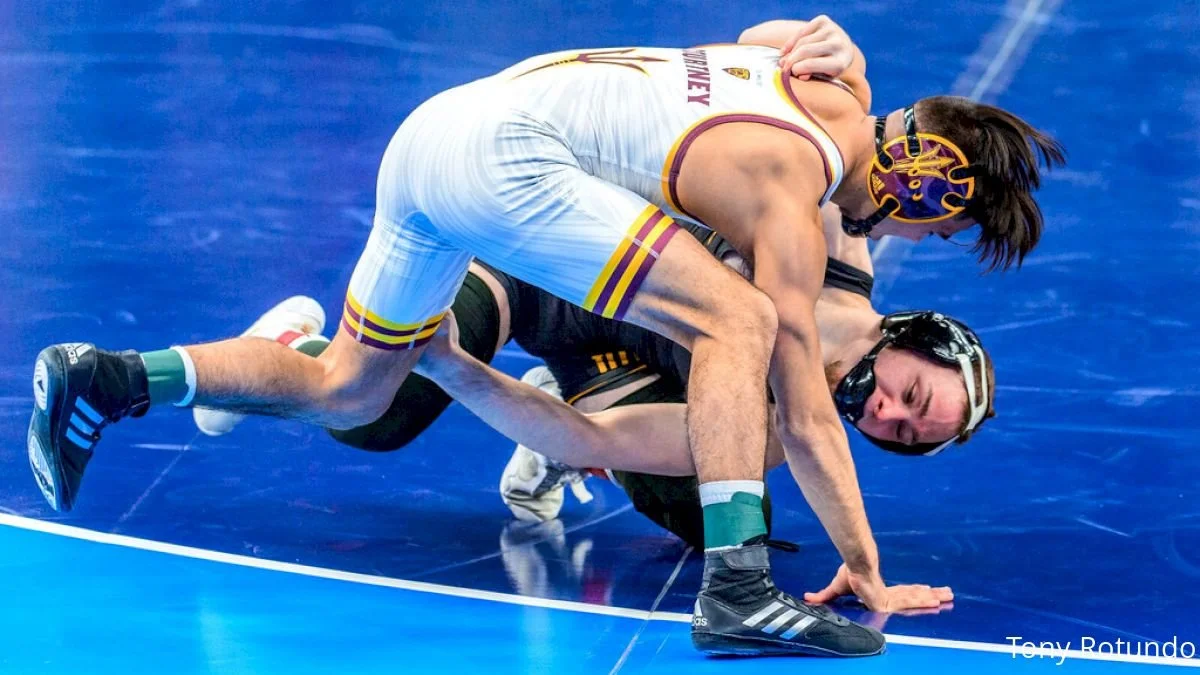
In recent years, few proposed rule changes have generated as much quiet tension, and increasingly vocal debate, as the idea of introducing a push-out rule into American folkstyle wrestling. Associated publicly with figures like Cael Sanderson, the proposal draws inspiration from international freestyle wrestling, where forcing an opponent out of bounds results in a point.
At first glance, the rule seems simple. In practice, however, it touches nearly every philosophical foundation of the sport: what constitutes control, how aggression should be rewarded, and whether wrestling should evolve toward spectator accessibility or preserve its traditional identity. The controversy surrounding the push-out rule is not merely about scoring, it is about defining what wrestling is, and what it should become.
The Argument for the Push-Out Rule: Encouraging Action and Modernizing the Sport
Proponents of the push-out rule argue that it directly addresses one of the most persistent criticisms of folkstyle wrestling: passivity at the boundary. Under current rules, wrestlers can retreat toward the edge of the mat to avoid engagement, often resulting in repeated resets without meaningful penalty. While stalling calls exist to counteract this behavior, enforcement is inherently subjective and often delayed.
A push-out rule offers a more immediate and objective solution. By awarding a point when an athlete forces their opponent out of bounds through continuous action, the rule would incentivize forward pressure and positional dominance. In this sense, it reframes mat control not just as the ability to hold an opponent down, but as the ability to dictate where the match takes place.
From a competitive standpoint, this aligns closely with established principles in international styles. Freestyle wrestling, governed by United World Wrestling, already incorporates step-out points to reward aggression and maintain pace. Advocates argue that integrating a similar concept into folkstyle would better prepare American wrestlers for global competition, where awareness of mat boundaries and constant offensive pressure are essential skills.
Beyond athlete development, there is also a broader argument rooted in the visibility and growth of the sport. Wrestling has long struggled with mainstream accessibility, in part due to its complex scoring system and slower periods of action. By introducing a rule that produces clear, immediate scoring outcomes tied to visible effort, proponents believe the sport becomes easier to follow and more engaging for spectators.
From this perspective, the push-out rule is not a departure from wrestling’s core values, but an evolution, one that rewards initiative, discourages avoidance, and aligns domestic competition with international standards.
The Argument Against the Push-Out Rule: Preserving the Integrity of Folkstyle
Opponents of the push-out rule do not merely resist change; they argue that the rule fundamentally misunderstands the purpose and structure of folkstyle wrestling.
At its core, folkstyle is defined by control. Points are awarded not simply for movement or pressure, but for the clear establishment of dominance, takedowns, rides, escapes, and reversals. A push-out, critics contend, does not meet this threshold. It represents displacement without control, pressure without completion.
From this viewpoint, awarding a point for forcing an opponent out of bounds risks diluting the value of scoring. A takedown requires setup, execution, and control. A push-out may require far less technical precision. By placing these outcomes on the same scoring spectrum, even at a reduced value, the rule introduces a form of partial credit into a system historically built on definitive achievement.
There are also strategic concerns. While proponents argue that the rule would promote center control, critics suggest it may have the opposite effect, shifting the locus of competition toward the boundary. Wrestlers may begin to prioritize driving opponents out of bounds over developing complete offensive sequences, leading to matches defined more by positioning near the edge than by clean finishes in the center.
This concern is echoed by Nick Puller, who argues that a push-out rule undermines decades of technical development in the sport. Wrestlers at every level, from youth to elite, have been trained to finish takedowns in-bounds, even in tight edge scenarios. Entire systems of technique have been built around:
Cutting angles at the boundary
Reattacking before going out of bounds
Maintaining control through scrambles near the line
At No Limits Wrestling Club in Ridgefield, WA, we believe youth wrestlers still need to develop strong positional awareness, clean finishes, and the ability to score under pressure at the edge of the mat.
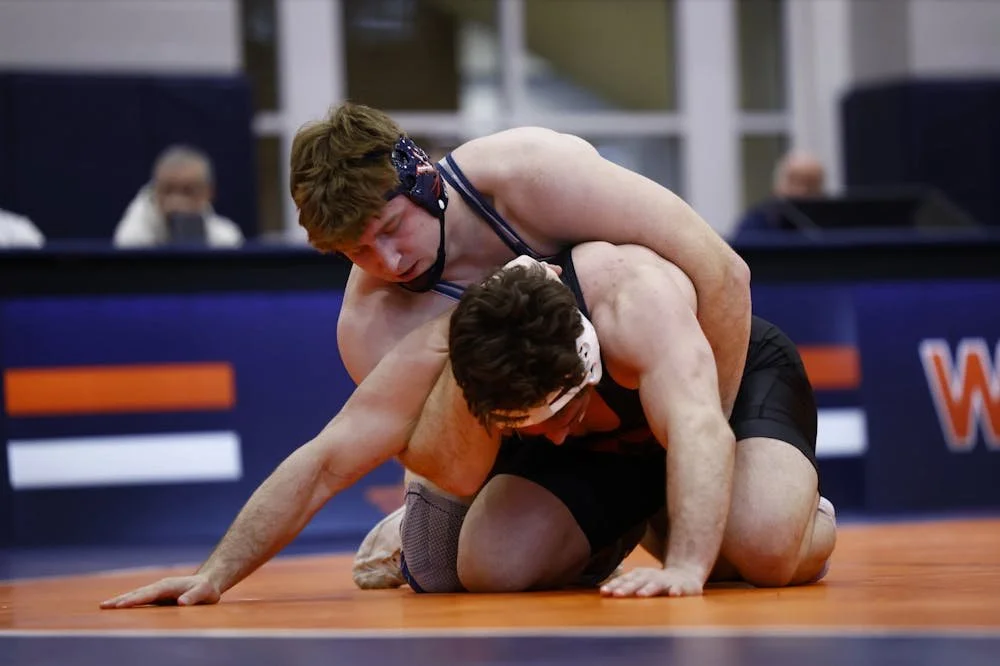
According to this perspective, introducing a push-out point effectively devalues those skills. Instead of rewarding athletes who have mastered the ability to score under pressure at the edge, the rule risks incentivizing a simpler alternative: driving an opponent out rather than completing the takedown. In doing so, it may unintentionally erase one of the most technically rich and hard-earned areas of wrestling development.
More broadly, the push-out rule raises questions about the identity of folkstyle wrestling itself. Unlike freestyle and Greco-Roman, which emphasize exposure and amplitude, folkstyle has developed as a uniquely American style centered on sustained control and the gradual breaking down of an opponent. Its distinctiveness lies precisely in these differences.
To incorporate a freestyle scoring mechanism into folkstyle is, in the eyes of critics, to blur the boundaries between styles. Over time, such changes could result in a hybrid system that lacks the clarity and purpose of either tradition.
A Sport at a Crossroads
The debate over the push-out rule ultimately reflects a deeper tension within wrestling: the balance between evolution and preservation.
On one hand, there is a clear need to address issues of passivity, improve spectator engagement, and align more closely with international competition. On the other, there is a legitimate concern that in solving these problems, the sport may compromise the very principles that define it.
It is possible that the push-out rule represents a necessary adaptation, one that brings clarity and energy to a sport seeking broader relevance. It is equally possible that it introduces unintended consequences, rewarding incomplete action and shifting the strategic foundation of matches in ways that cannot easily be reversed.
What makes this debate particularly compelling is that neither side is easily dismissed. Both are grounded in a genuine commitment to the sport, albeit with different visions for its future.
Conclusion
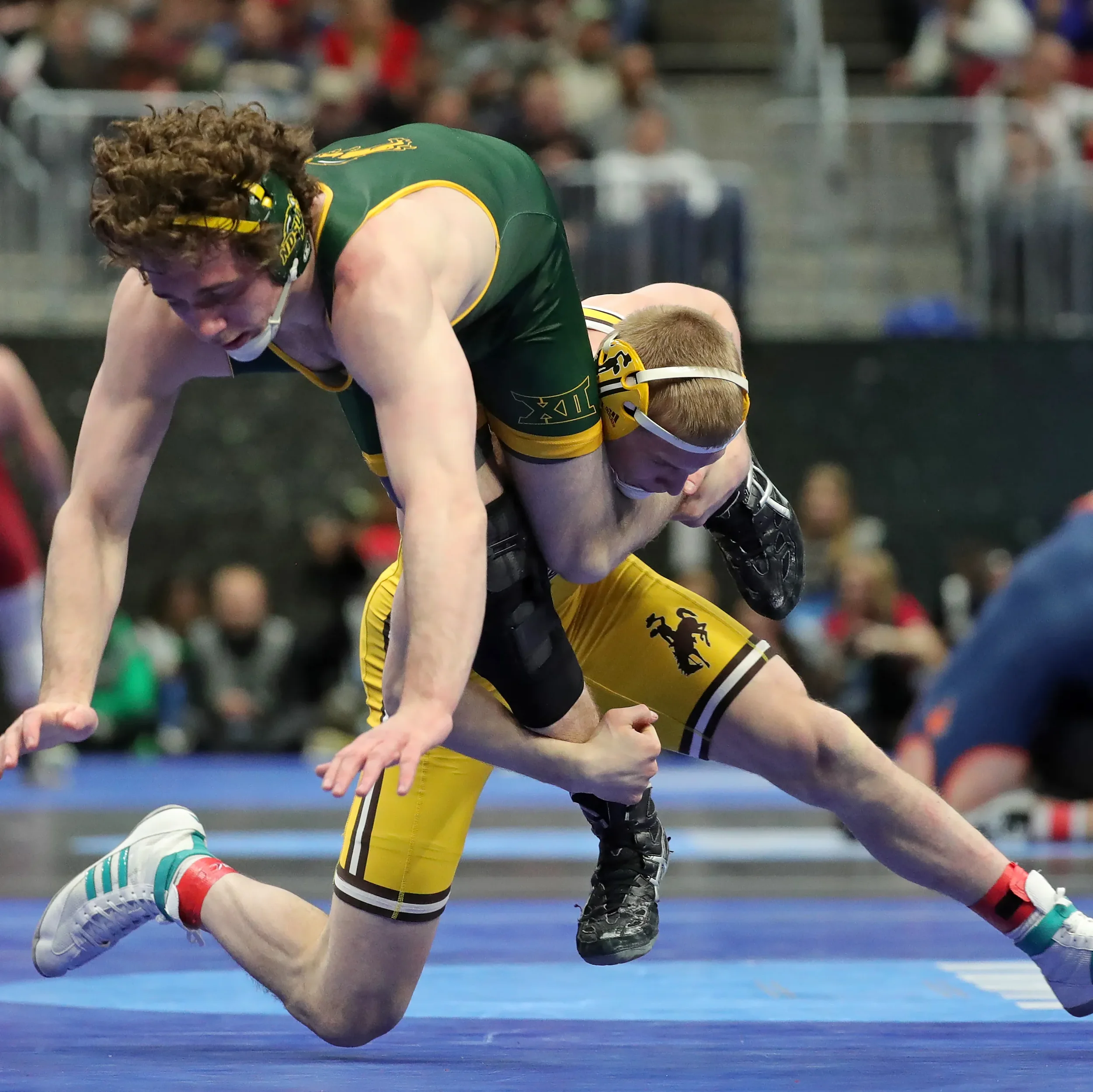
The proposal to introduce a push-out rule into folkstyle wrestling is not simply a technical adjustment; it is a philosophical decision. It asks whether wrestling should prioritize immediate, visible action or maintain a system that rewards sustained control and technical completion.
Figures like Cael Sanderson have brought this conversation into the spotlight, but its resolution will ultimately depend on the broader wrestling community, coaches, athletes, officials, and fans alike. For more on how girls wrestling is developing on its own pathway, read An Open Letter to Parents of Girl Wrestlers.
As with many debates in sport, the question is not whether change will occur, but how far that change should go.
References & Further Reading (APA Style)
United World Wrestling
United World Wrestling. (2024). International wrestling rules: Freestyle & Greco-Roman. https://uww.org/governance/rules-and-regulations
NCAA
National Collegiate Athletic Association. (2024). 2024–2025 NCAA wrestling rules and interpretations. NCAA Publications. https://www.ncaa.org/sports/2024/1/1/wrestling-rules.aspx
National Federation of State High School Associations
National Federation of State High School Associations. (2023). 2023–2024 NFHS wrestling rules book. NFHS. https://www.nfhs.org/sports-resource-content/wrestling-rules-changes-2023-24/
Cael Sanderson
Sanderson, C. (2022–2025). Interviews and press conference statements on wrestling pace, scoring, and rule evolution[Media interviews]. Penn State Athletics; various sports media outlets.
USA Wrestling
USA Wrestling. (2024). Freestyle and Greco-Roman rule modifications and interpretations. https://www.usawrestling.org
FloWrestling
FloWrestling. (2023–2025). Coverage and analysis of proposed NCAA wrestling rule changes. https://www.flowrestling.org
