

There's a tendency in youth wrestling to measure progress by tournament placements. A wrestler wins a bracket, brings home a medal, and everyone feels like they're moving in the right direction. Those accomplishments deserve recognition, especially when an athlete has worked hard to earn them. However, we've also coached plenty of wrestlers who were making tremendous progress while struggling to win matches, and we've seen athletes collect medals while continuing to rely on the same limited set of techniques.
At No Limits Wrestling Club, we're working to establish a competitive philosophy that accounts for both of those realities. We want our athletes competing regularly, challenging themselves against good opponents, and pursuing opportunities to wrestle at higher levels. We also want to be intentional about how competition contributes to their development, particularly during the years when they're still establishing their technical foundations.
That approach has led us to begin implementing what we call our “100-match philosophy”.
Understanding our 100-match philosophy
When we discuss the goal of accumulating 100 matches, people occasionally assume we're encouraging young wrestlers to compete every weekend for an entire season. That's quite a bit different from what we're actually proposing.
Our philosophy involves building approximately 100 matches of competitive experience over two to three years, depending on the individual athlete. We also recognize folkstyle and freestyle as separate competitive seasons, each providing different opportunities for technical development.
For a wrestler participating throughout the year, that experience can accumulate gradually through local tournaments, regional competitions, and larger events. Some athletes will reach that benchmark sooner than others. Age, experience, readiness, and the demands of the athlete's schedule all influence what an appropriate competition calendar looks like.
There is no magic number of matches that guarantees someone will become a successful wrestler. We use 100 as a practical benchmark to encourage consistency and give our athletes enough time on the mat to develop competitive experience.
A young wrestler can drill a single-leg takedown hundreds of times in practice and still struggle to execute it during competition. Their opponent might defend differently than their practice partners, their timing may be off, or they may hesitate when they finally recognize an opening. Competition exposes those weaknesses in ways that controlled drilling cannot always replicate.
When that wrestler returns to practice, we have something specific to work on. Over time, they begin recognizing familiar situations, making adjustments more quickly, and developing confidence in their ability to solve problems independently.
That process requires repetition, and much of that repetition happens through actual matches.
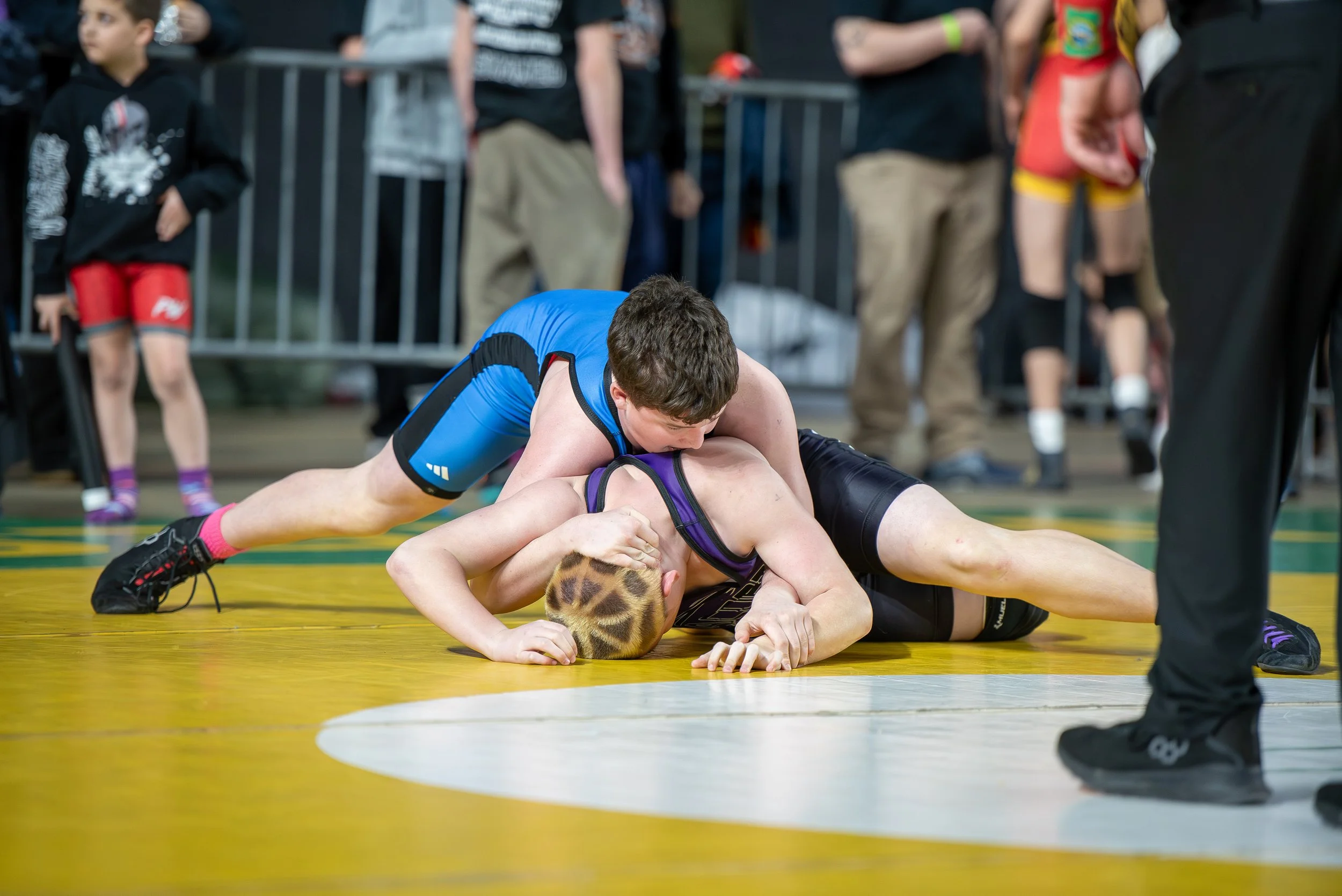
What USA Wrestling recommends and the 10-year competitive window
USA Wrestling has spent considerable time developing guidelines for how young wrestlers should train and compete. Its Athlete Development Model (ADM) provides age-based recommendations intended to help coaches balance competitive experience with technical development, while recognizing that the needs of an elementary school wrestler differ considerably from those of a high school athlete preparing for national competition.
According to USA Wrestling's Athlete Development Model, the recommended annual match volumes are:
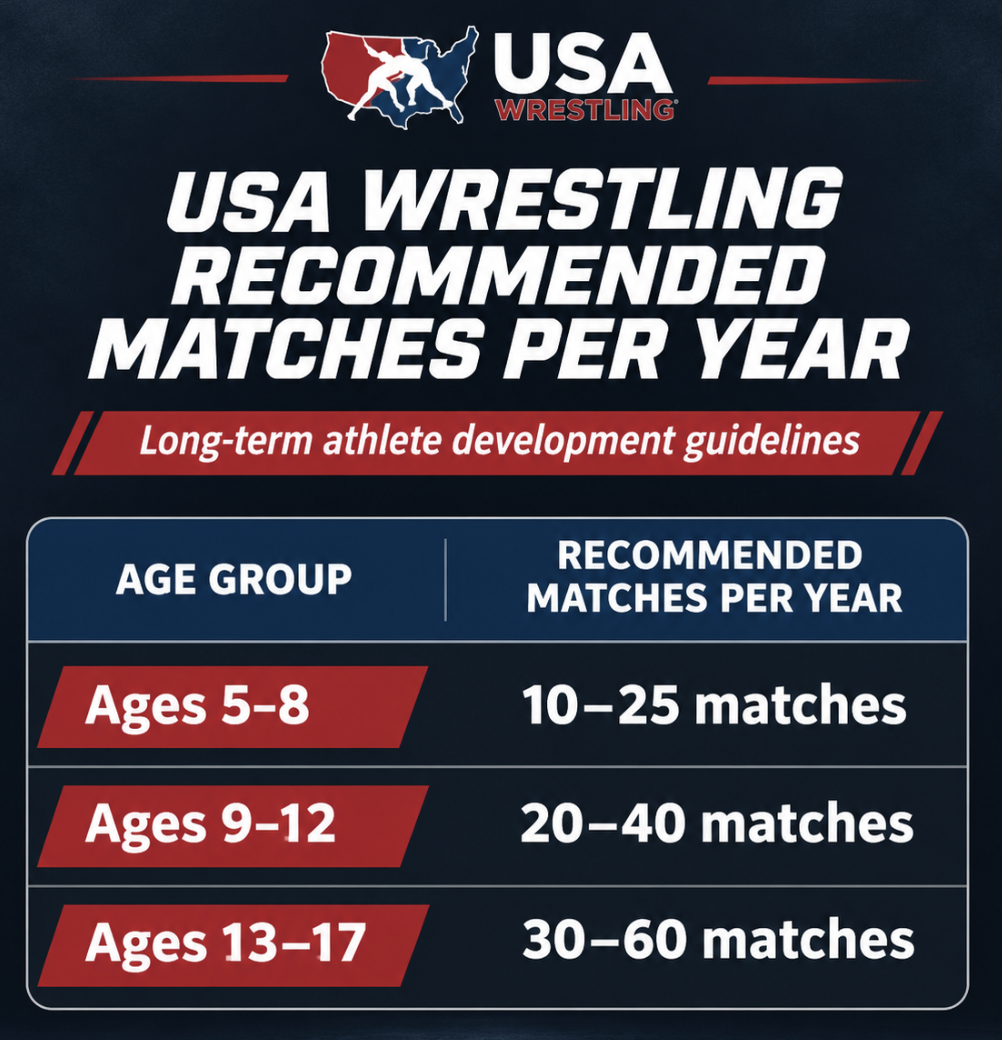
These recommendations are developmental guidelines, and USA Wrestling has also published a more detailed Long-Term Athlete Development model with somewhat different age groupings and match ranges. Neither model should be interpreted as a requirement for every wrestler to reach a minimum number of matches. Individual readiness, training experience, and recovery all influence how much competition is appropriate.
USA Wrestling's 2018 article on age-appropriate competition also addresses the consequences of competing too frequently during childhood. Mike Clayton, who managed USA Wrestling's National Coaches Education Program, explained that excessive competition among wrestlers 12 and younger can reinforce poor technical habits. When young athletes repeatedly rely on techniques that produce immediate results, those habits can become increasingly difficult to correct as the level of competition improves.
This connects directly to another concept discussed in long-term athlete development: the approximate 10-year period often associated with developing toward elite competition.
The number is frequently discussed in wrestling development literature, although athletes do not have a universal, scientifically established 10-year limit on their competitive careers. It is better understood as a reminder that an athlete's development unfolds over many years and that early success offers little certainty about future performance.
Consider a wrestler who begins competing at six years old. By the time that athlete reaches sixteen, they've potentially spent a decade participating in competitive wrestling. Those years include enormous physical changes, increasingly difficult opponents, and the transition into high school competition. For athletes who continue into college or international wrestling, the developmental process can extend considerably further.
As coaches and parents, we should be thinking about when we want our athletes to be performing at their highest level. Are we preparing an eight-year-old to win as many tournaments as possible this winter, or are we building the technical skills that will allow that athlete to compete successfully at sixteen, eighteen, or twenty-two?
USA Wrestling's approach reinforces the value of keeping young athletes engaged in the sport long enough to reach those later stages. Practice time, skill acquisition, appropriate competition, and recovery all contribute to that process. Its guidelines also emphasize that young wrestlers should not be cutting weight to meet competitive expectations.
At No Limits, these recommendations provide useful context for our 100-match philosophy. We want athletes accumulating meaningful competitive experience over multiple years while remaining attentive to the needs of their age group. A ten-year-old and a sixteen-year-old may both be working toward long-term competitive goals, but their training schedules and tournament expectations should reflect where they are in their development.
We want our wrestlers to have the opportunity to discover what they're capable of when they've had years to build the necessary skills. That requires patience during the early stages, particularly when the immediate rewards of another tournament victory can make it tempting to prioritize short-term results.
Why more competition doesn't automatically mean better development
We encourage our athletes to compete, but we also recognize that the quality of their competitive experiences matters.
Consider a wrestler who attends local tournaments every weekend and consistently wins using the same takedown. Their results might look excellent on paper, but what happens when they eventually face someone who can defend that technique? If they haven't developed additional offensive options or learned to wrestle effectively from difficult positions, they're going to struggle.
Now consider another athlete who spends several tournaments attempting techniques they've only recently started learning. They might lose matches they previously could have won by relying on their familiar offense. However, those attempts give their coaches an opportunity to evaluate their positioning, identify technical problems, and help them improve.
We want our athletes to be comfortable taking those risks because there will eventually come a point when the techniques that worked against less experienced opponents stop working.
This is particularly relevant in youth wrestling, where physical development varies considerably. An athlete who is stronger or more physically mature than their peers may experience early success without having to develop the same technical skills as a smaller wrestler. As those athletes grow older and the physical differences begin to change, technical gaps can become much more apparent.
We have to consider what our wrestlers will need several years from now when making decisions about their development today.
How we're implementing this at No Limits
Our approach to competition begins with understanding what an individual athlete needs to improve.
Some athletes need more experience competing against unfamiliar opponents. Others need to be challenged by wrestlers who are technically advanced enough to expose weaknesses in their current approach. We also have athletes who are still learning how to manage the pressure of competition, and additional matches can help them become more comfortable in that environment.
We're working to make our tournament recommendations reflect those individual needs.
Local competitions provide valuable opportunities to develop experience and practice applying techniques. Larger regional and national events can expose our athletes to different styles of wrestling and a higher level of competition. Both have a place in our program, and the appropriate balance will change as athletes develop.
We're also emphasizing the connection between what athletes are learning in practice and what they're attempting during competition.
If we've spent several weeks working on a particular position, we want to see wrestlers recognize opportunities to use it during matches. An athlete who attempts a technique and makes an error gives us something to address when we return to practice. We can review what happened, make adjustments, and continue working toward consistent execution.
Sometimes those attempts cost athletes points or even matches. We're comfortable with that being part of the learning process, provided the athlete is making a genuine effort to apply what they've been taught.
We still expect our wrestlers to compete with intensity and take their preparation seriously. We want them pursuing victories, and we will continue celebrating their accomplishments. We simply have a broader set of expectations for what progress should look like throughout the season.
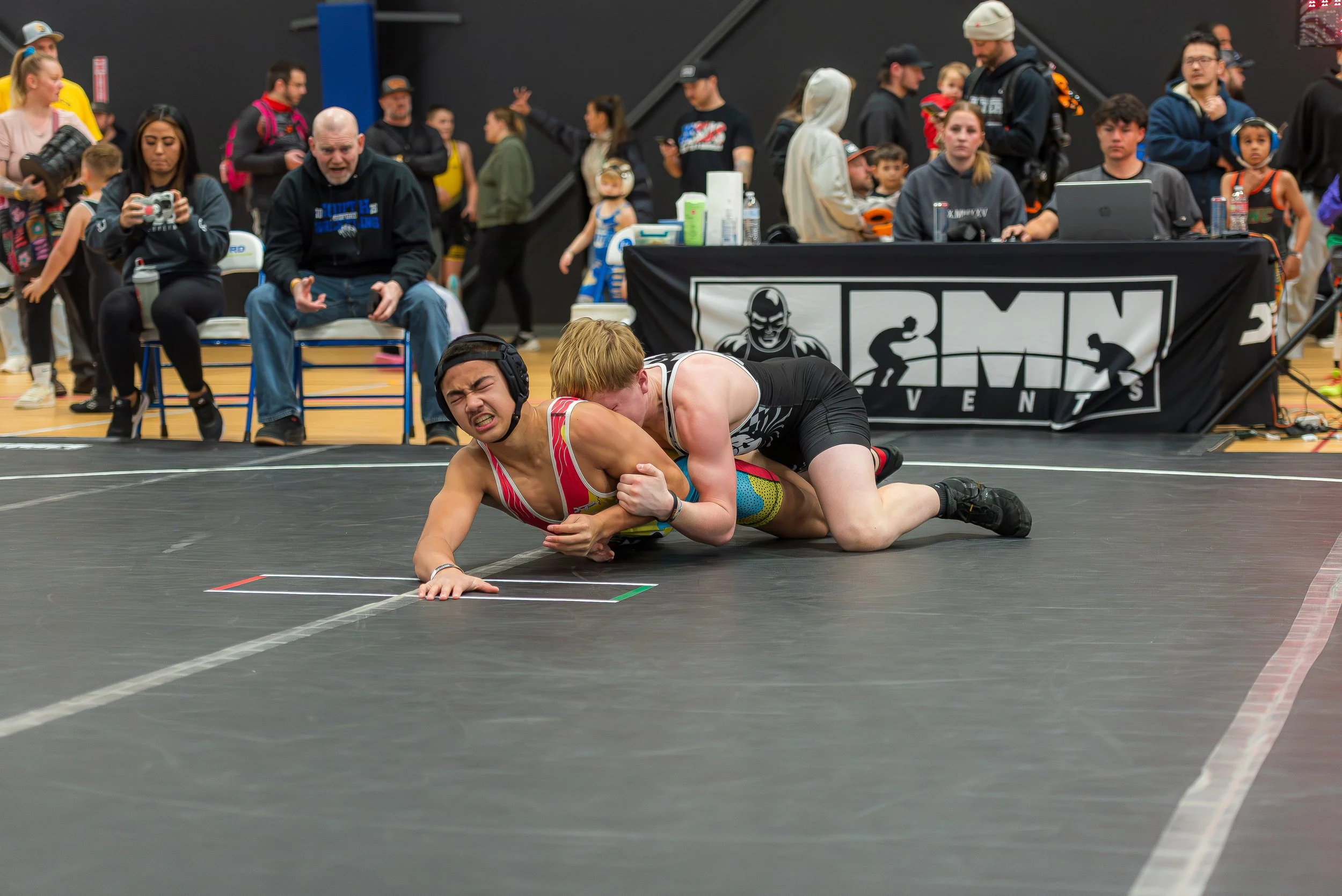
Parents have a tremendous influence on how athletes experience competition
One of the more difficult aspects of coaching youth sports is watching the pressure adults sometimes place on children without realizing it.
Wrestling requires a considerable investment from families. Between practices, tournament registrations, travel expenses, and weekends spent in gymnasiums, parents give up a lot of their personal time to support their athletes. It's understandable that they want to see their children succeed.
However, the way adults respond to wins and losses can influence how comfortable young wrestlers feel taking risks.
If an athlete knows that losing a match will lead to criticism or an uncomfortable conversation on the drive home, they may become hesitant to attempt unfamiliar techniques. A wrestler who is afraid of making mistakes will often fall back on whatever feels safest, even when their coaches are encouraging them to expand their skills.
We encourage parents to pay attention to the improvements that don't necessarily appear in tournament results.
Maybe your athlete finally attempted the takedown they've been practicing for the past month. Maybe they wrestled an entire match without becoming discouraged after giving up points. Perhaps they lost to an opponent who defeated them easily earlier in the season, but this time they were competitive throughout the match.
Those are meaningful signs of development, and they deserve recognition.
Of course, we want families celebrating tournament victories. Winning is exciting, especially for a child who has worked hard to accomplish something. We also want athletes to feel supported when their results don't reflect the effort they've been putting into practice.
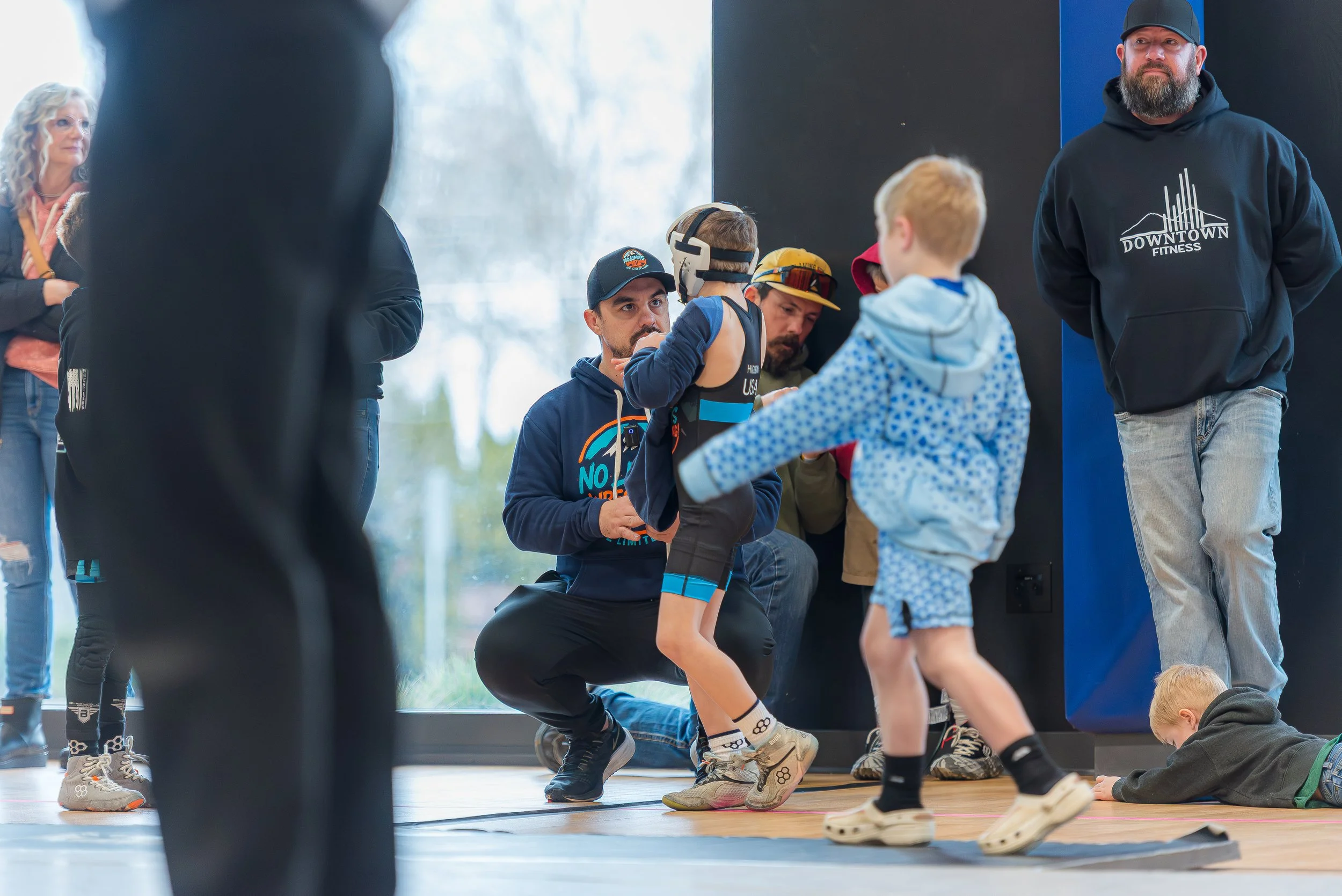
Thinking beyond the current season
One of the reasons we're passionate about this approach is that youth wrestling represents only a portion of an athlete's potential career.
An eight-year-old who wins every local tournament may eventually become an excellent high school or collegiate wrestler. Another eight-year-old who struggles through several seasons might develop into an equally successful competitor after gaining experience and confidence.
We cannot accurately predict an athlete's long-term potential from their elementary school tournament record.
What we can do is establish an environment that provides consistent instruction, appropriate competitive opportunities, and the freedom to make mistakes while learning.
Our 100-match philosophy gives us a framework for developing competitive experience over several years. It encourages athletes and families to think about progress across multiple seasons and gives our coaches an opportunity to evaluate development beyond individual tournament results.
At No Limits, we're building a program that challenges athletes while remaining mindful of their long-term progression. We will continue traveling to tournaments, seeking out difficult opponents, and preparing our wrestlers to compete at increasingly higher levels.
We also understand that some of the most valuable work happens after an athlete loses, returns to practice, and begins correcting the weaknesses that competition exposed.
If we're doing our jobs as coaches, the wrestler who walks onto the mat two or three years from now should be considerably more capable than the one standing there today. Their record along the way will tell part of that story, but the way they wrestle will tell us much more.
References and further reading
The following resources provide additional information on long-term athlete development, age-appropriate competition, and the importance of balancing competitive experience with technical development and athlete well-being.
1. United States Olympic & Paralympic Committee. American Development Model (ADM). Outlines developmentally appropriate training, progressive competition, foundational skill development, and long-term athlete participation.
Read the American Development Model
2. United States Olympic & Paralympic Committee. American Development Model Stages. Provides specific guidance on emphasizing practice and skill development during youth athletic development, with competition appropriate to an athlete's age and experience.
Explore athlete development stages
3. Bergeron, M. F., et al. (2015). International Olympic Committee consensus statement on youth athletic development.British Journal of Sports Medicine, 49(13), 843–851. Examines long-term development, individual maturation, appropriate competition, and athlete health.
Read the IOC consensus statement
4. Brenner, J. S., & Watson, A. (2024). Overuse injuries, overtraining, and burnout in young athletes. Pediatrics, 153(2), e2023065129. Discusses the relationship between training demands, recovery, excessive competition, and athlete burnout.
5. Brenner, J. S. (2016). Sports specialization and intensive training in young athletes. Pediatrics, 138(3), e20162148. Reviews the effects of early specialization, intensive training, and long-term athletic participation.
