
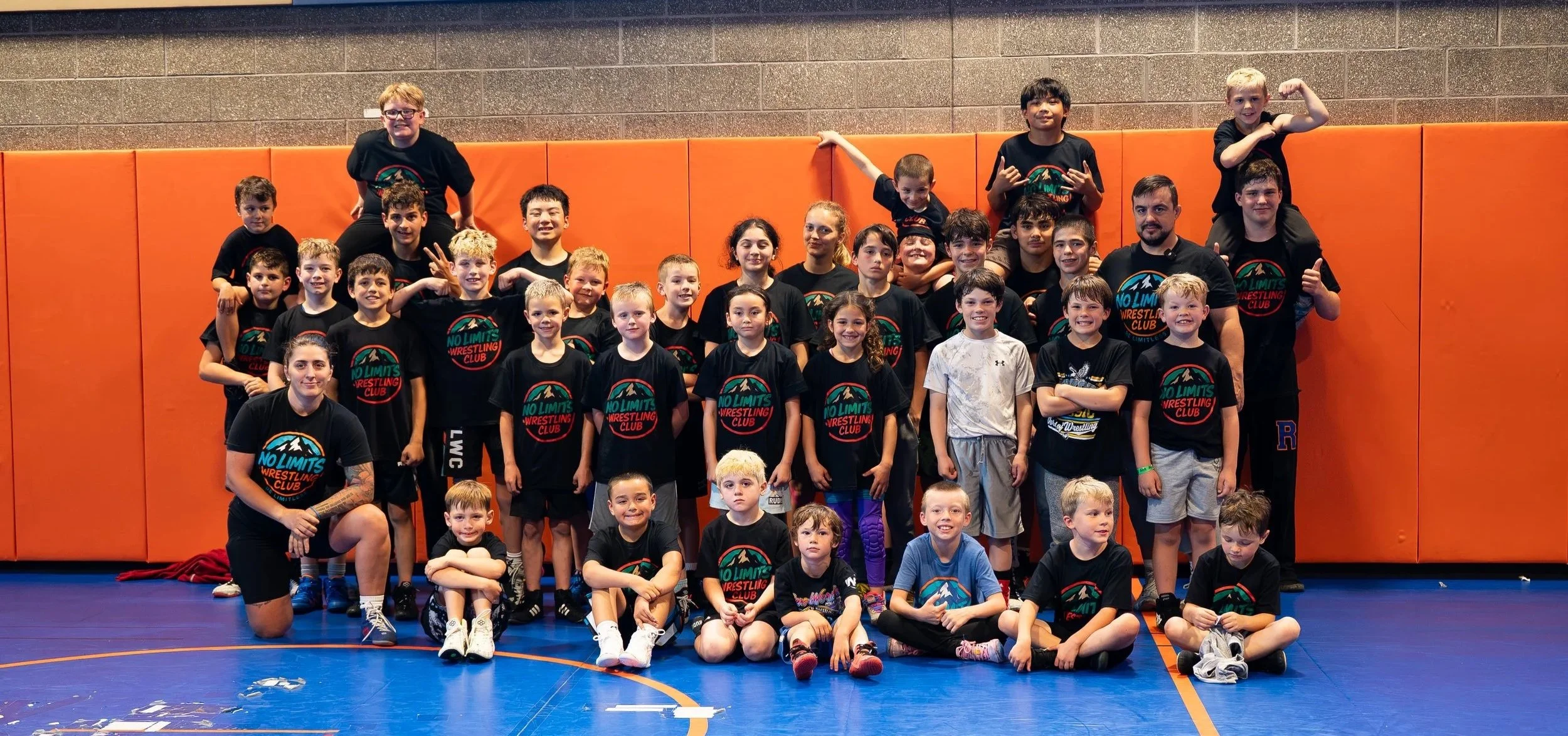
Every wrestling season, clubs across Washington begin advertising camps. Some promise elite-level training, others emphasize technical development, and plenty offer several hours of drilling and live wrestling for an additional registration fee.
With so many options available, parents are left trying to determine which camps are worth attending, particularly when attending means sacrificing an entire weekend, paying registration fees, and sometimes traveling several hours.
At No Limits Wrestling Club, we encourage our athletes to seek opportunities to learn outside our own program. We believe exposure to different coaching styles and challenging training partners can be extremely valuable. We also believe families should be selective about where they send their wrestlers, because the word "camp" tells you remarkably little about what your athlete will actually experience.
Some camps offer thoughtfully developed technical instruction. Others provide an opportunity to wrestle unfamiliar opponents at a much higher intensity than athletes might encounter during their normal practices. Both have their place in wrestler development.
Then there are the camps that feel suspiciously like a regular wrestling practice stretched into a four-hour session, with a couple of extra technique demonstrations and an excessive amount of live wrestling thrown in to fill the schedule.
Those are the camps we encourage families to evaluate a little more carefully.
Knowing when your wrestler needs to get dragged into deep water
There are some exceptional wrestling programs in Washington, and one we frequently recommend to our older and more experienced athletes is Mat Demon Wrestling Club, founded by Shawn Dawley and Jess Torres.
You can find information about their camps and such by following their Facebook page: https://www.facebook.com/Matdemonwc/
Mat Demon operates a relatively small training facility in Auburn, Washington, but the caliber of wrestlers they bring together is impressive. Their camps regularly draw serious competitors, particularly in the 12U and older age groups, and create an environment where athletes have to work for absolutely everything.
For middle school and high school wrestlers who are ready to experience a higher level of competition, this kind of environment can be incredibly valuable.
Sometimes a wrestler needs to spend an entire day getting dragged into deep water by athletes who are technically better, physically stronger, or significantly more experienced. They need to feel what happens when their usual offense stops working, when somebody counters their favorite shot, or when they encounter pressure and pace they aren't accustomed to handling.
Those experiences expose weaknesses that may never become apparent when an athlete spends most of their training time wrestling familiar partners.
From our perspective, Mat Demon runs one of the few camp systems worth rearranging an entire family calendar to attend when an athlete is ready for that level of training. We have also incorporated several fundamental technical concepts we've learned from their coaching staff into our own instruction at No Limits.
We have no problem acknowledging when another program does something exceptionally well. In fact, we believe recognizing those opportunities is part of our responsibility as coaches.
We also recognize that a developmentally appropriate camp for a competitive 14-year-old may look considerably different from the training environment that would most benefit an eight-year-old still learning to maintain position through basic wrestling exchanges.
But seriously, if you can get in on some of Mat Demon Wrestling Clubs camps this season we highly recommend them, we love Coach Jess and Coach Shawn and we view them as mentors in this crazy world of trying to figure out what works in building a high level wrestling program from the ground up.
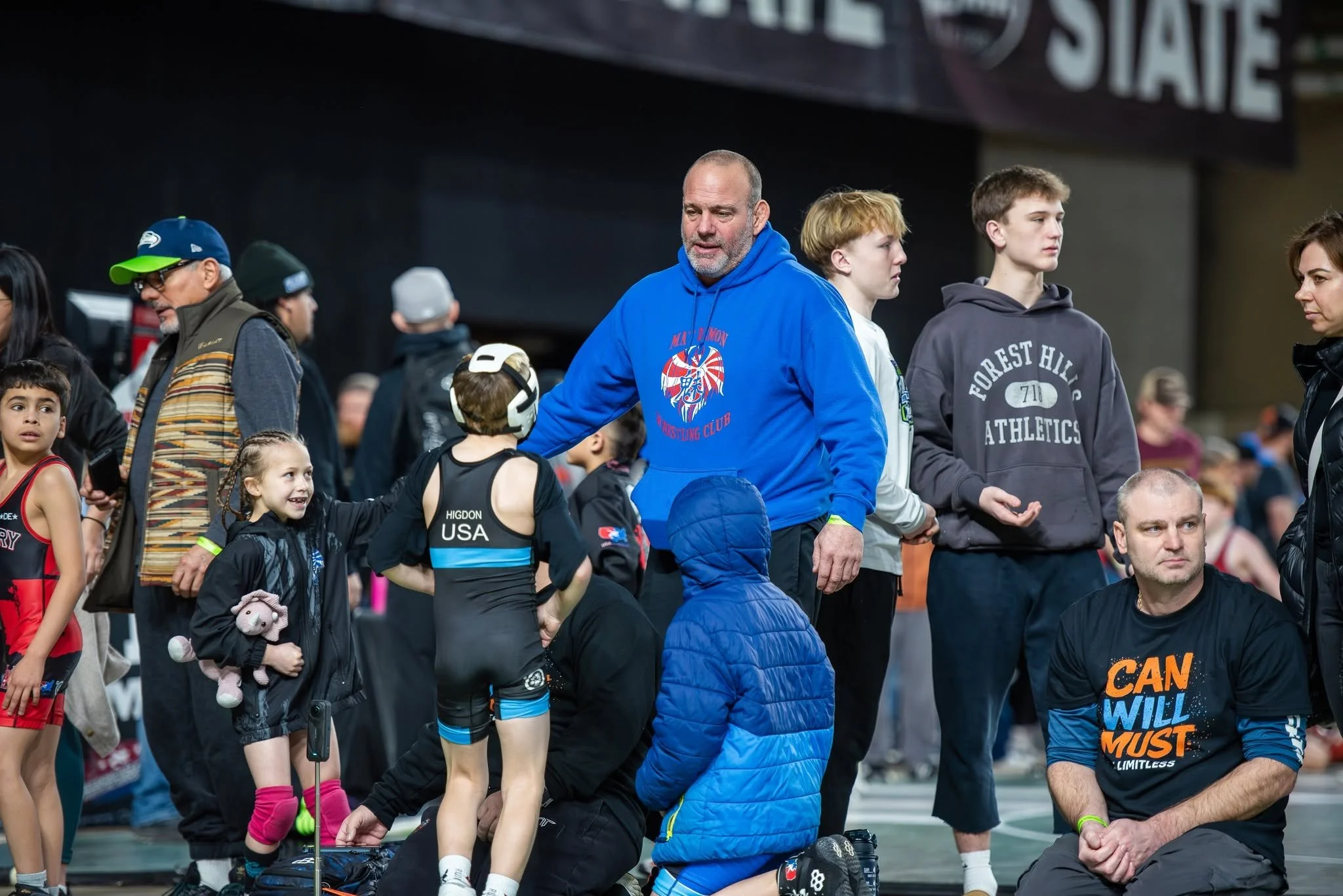
Coach Shawn Dawley(Mat Demon Wrestling Club) and Brayson Higdon (No Limits Wrestling Club) right before 2026 WSWA State Championship Semi Finals matchup.
When a camp becomes a really long practice
There's a relatively common approach to organizing wrestling camps that involves extending an ordinary practice schedule across several hours. Athletes warm up, learn a few techniques, drill for a while, and eventually spend a substantial portion of the remaining session wrestling live.
Everyone goes home sweaty and exhausted, and parents feel like their children must have gotten their money's worth because they spent so much time on the mat…. we like to call this the hype machine…..going 100 MPH, but in no particular direction.
We're a little more interested in what those athletes actually learned.
If an athlete spends four hours drilling techniques with the same fundamental positioning errors they arrived with, what has that additional mat time accomplished? If a wrestler cannot execute a stand-up correctly at the beginning of the camp and still cannot execute it correctly at the end, we have a difficult time calling that successful technical instruction.
There is a difference between exposing athletes to a technique and teaching them to understand it.
The latter requires coaches to watch closely, recognize where the movement is breaking down, and make corrections that athletes can understand and reproduce.
A wrestler might know every step of a breakdown and still struggle to finish it because their weight distribution is incorrect. They may understand the mechanics of standing up from bottom but consistently fail because they don't recognize when to apply backward pressure against their opponent.
Those details are difficult to develop when instruction moves rapidly between unrelated techniques or when coaches rely primarily on live wrestling to identify problems after they occur.
Live wrestling has enormous value, particularly when athletes are learning to apply their skills against resistance. We use it ourselves. Our concern is with the assumption that adding more live wrestling automatically makes a camp more valuable.
Parents should be able to ask a camp organizer what skills their athlete will be working on and receive an answer more specific than a promise of hard drilling and lots of live matches.
What the research says about deliberate practice
The principles behind technical development have been examined extensively in motor-learning and expertise research.
In their influential 1993 paper, The Role of Deliberate Practice in the Acquisition of Expert Performance, K. Anders Ericsson and his colleagues examined how structured, effortful practice contributes to developing advanced skills.
The authors described deliberate practice as training designed specifically to improve performance, with tasks selected to address weaknesses and feedback used to guide correction.
The research has been revisited and debated in subsequent decades, particularly regarding how much of elite performance can be explained by accumulated practice alone. Nevertheless, the distinction between purposeful practice and simply accumulating activity remains useful for coaches.
An athlete completing hundreds of repetitions with poor positioning may become extremely consistent at reproducing that positioning. Repetition is valuable when athletes understand what they are trying to accomplish and receive feedback that helps them recognize errors.
Research on motor learning also examines how practice should be organized to help athletes retain skills and apply them in changing situations. Findings are mixed, and there is no universal formula that works equally well for every athlete or every skill.
That uncertainty makes thoughtful coaching more necessary. A coach should recognize when a wrestler needs additional instruction, when they are ready for more variability and resistance, and when a skill has become reliable enough to incorporate into more complex wrestling exchanges.
USA Wrestling's own core curriculum reflects a progressive approach to instruction. Its folkstyle training materials organize development through increasingly advanced positions and techniques, with foundational movements appearing before more complicated applications.
Purler Wrestling Academy uses a comparable philosophy in its technical education programs, organizing instruction into defined progressions and emphasizing the development of core skills. Its camp offerings also distinguish technical development from competition-intensive training, recognizing that athletes benefit from different kinds of sessions.
These approaches align closely with how we believe youth wrestling should be taught.
Why we can spend six hours teaching something as basic as pressure
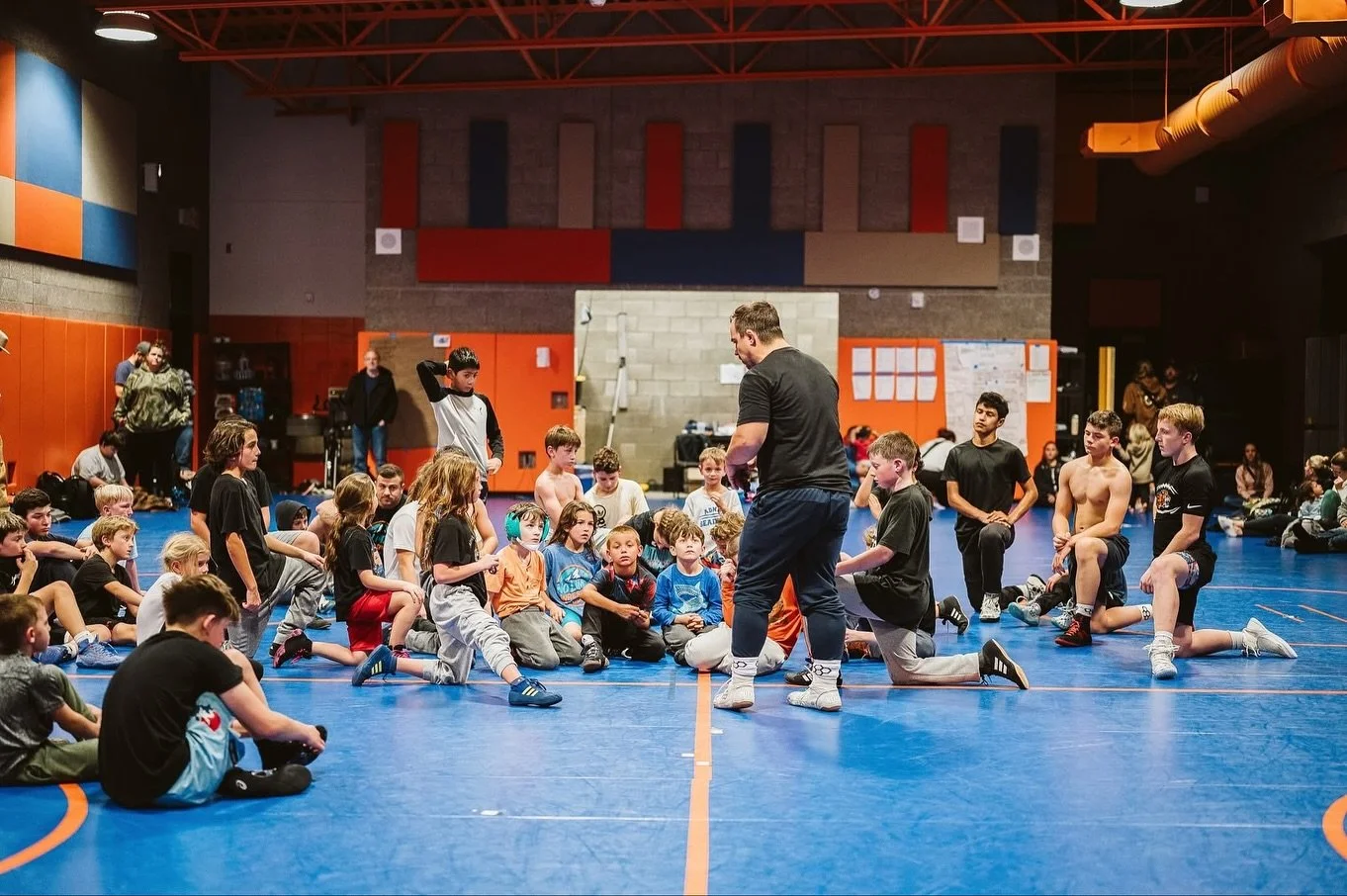
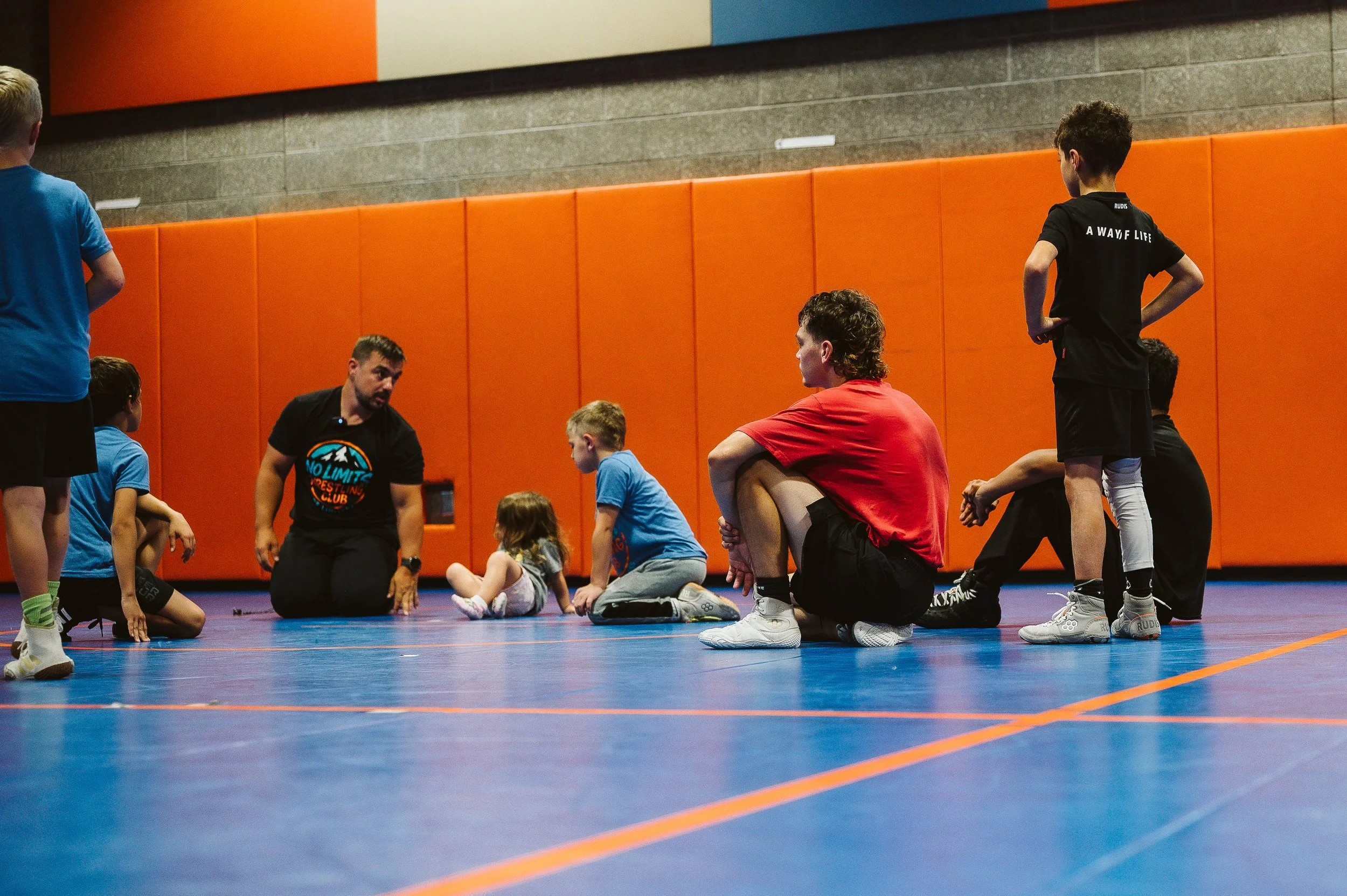
Our first camp of the 2026–2027 folkstyle season was a good example of our coaching philosophy.
We spent the day examining forward and backward pressure in referee's position, specifically how an athlete applies pressure while riding on top and how the bottom wrestler recognizes and responds to that pressure when attempting to escape.
To someone unfamiliar with wrestling, spending an extended technical session on a concept as basic as pressure might sound excessive.
To an experienced coach, pressure is one of the details that determines whether a technique works against a resisting opponent.
A wrestler can memorize every step of a breakdown and still struggle to execute it because they aren't using their body weight efficiently. They may rely almost entirely on their arms, pull in the wrong direction, or fail to recognize when their opponent's weight has shifted far enough to create an opening.
On bottom, that same wrestler may repeatedly attempt a stand-up without recognizing how their opponent's pressure affects their ability to build a base or clear their hips.
Throughout camp, we worked through these situations repeatedly. We wanted athletes to understand how different directions of pressure felt, what their opponent's reactions were telling them, and how small adjustments changed the effectiveness of familiar techniques.
We corrected positioning, revisited concepts, and continued working until athletes demonstrated a more reliable understanding of what we were teaching.
That is the kind of technical detail we want our wrestlers to develop.
There are plenty of opportunities throughout a wrestling season for athletes to learn new moves. Our camps are an opportunity to spend additional time working through the details that regular practices sometimes cannot accommodate.
Why the smallest details deserve the most attention
One of the most common problems we see in developing wrestlers is an athlete who knows an impressive number of techniques but struggles to execute them consistently against capable opponents.
They know how to shoot a double leg, but their setup rarely puts them in a favorable position. They understand how to escape from bottom, but they expose themselves to unnecessary mat returns because they haven't developed a strong relationship between their hips, base, and pressure.
As coaches, it's tempting to respond by introducing another technique. Sometimes the athlete simply needs a better understanding of the movements they already know.
We spend a tremendous amount of time correcting fundamental positioning because those details influence almost everything a wrestler does.
A properly executed technique should become familiar enough that an athlete can recognize and reproduce the necessary movements without having to consciously think through every individual step.
That level of skill develops over time through consistent instruction, meaningful repetition, feedback, and opportunities to apply the technique against varying levels of resistance.
We often refer to this as developing muscle memory, although motor learning involves the nervous system learning and refining coordinated movement patterns.
Our philosophy is that a less-is-more approach to selecting techniques, combined with a relentless commitment to mastering their underlying principles, produces wrestlers with a more dependable technical foundation.
We would rather spend an entire camp helping athletes become genuinely proficient in a small number of important positions than rush through fifteen different moves so everyone can say they learned something new.
The fundamentals that make an athlete effective at the youth level are still relevant when that athlete reaches high school. Higher levels of competition simply expose technical weaknesses more quickly.

Coaching proactively instead of reactively
One of the biggest differences in how we organize our camps comes down to planning.
Reactive coaching happens when instruction is driven primarily by whatever went wrong during the previous match or tournament. A wrestler gets turned with a particular technique, so the next practice becomes a lesson on defending that technique. Another wrestler struggles to finish a takedown, so the coaching staff introduces a different finish.
Addressing immediate problems is necessary, and coaches should absolutely respond when athletes demonstrate technical weaknesses.
However, a wrestling program benefits from having a broader curriculum that anticipates what athletes will need as the season progresses.
At No Limits, our camps follow a systematic instructional plan developed alongside our regular club curriculum. We consider where athletes are in their technical development, what competitions are approaching, and which skills deserve additional attention before those events arrive.
Early-season camps emphasize fundamental positions, pressure, and technical proficiency. As the season develops, our camp topics become increasingly connected to competitive preparation and the situations athletes are likely to encounter at upcoming tournaments.
This philosophy is reflected at higher levels of sport as well. USA Wrestling organizes national-team training camps that bring athletes together for focused preparation and high-level training. A June 2026 Greco-Roman National Team camp, for example, brought international medalists and world-class competitors to Colorado Springs for an eleven-day training period.
The objectives and demands of senior-level international wrestling are obviously different from those of youth wrestling, but planning purposeful training around an athlete's developmental and competitive needs is relevant at every level.
Our calendar is organized around that same principle of deliberate preparation.
Why we keep seeing the same kids come back
One of the things we're especially proud of is how many wrestlers return to our camps throughout the season.
A significant portion of our camp attendance comes from athletes who have attended previous sessions and want to continue developing their skills with us.
Many of these wrestlers belong to other clubs, and we're perfectly happy with that.
We have no expectation that an athlete who attends a No Limits camp should eventually become a No Limits wrestler. Their home club is where they train throughout the week, build relationships with their teammates, and continue putting what they've learned into practice.
Our role is to provide additional technical instruction for athletes who are hungry to improve, regardless of which program they represent.
We want those athletes to return to their regular practices with a stronger understanding of the positions we've covered, and we want their coaches to see that progress.
Our camps are generally geared toward youth wrestlers who benefit from additional attention to foundational technique. We deliberately emphasize details that can become overlooked when athletes and coaches are focused on preparing for the next competition.
We also understand that some wrestlers eventually reach a point where they need training partners capable of pushing them beyond what their regular environment provides. That's when we encourage families to explore opportunities like Mat Demon and other programs offering appropriate high-level competition.
The goal is to help each wrestler access the kind of training that makes sense for their current development.

Choosing a camp that's actually worth attending
Before registering for another wrestling camp, we encourage families to look beyond the advertised hours, the number of coaches attending, or how difficult the workout is supposed to be.
Find out what the camp intends to teach. Ask how instruction will be organized and whether athletes will receive individual technical corrections. Consider the age and experience level of the wrestlers expected to attend, particularly if the camp advertises extensive live wrestling.
A technically inexperienced wrestler may benefit most from a smaller instructional environment where coaches can closely supervise technique. An experienced wrestler preparing for a major tournament may gain substantially more from a competitive training room filled with athletes who can challenge them.
A worthwhile camp should have a clear purpose, and that purpose should match the needs of the athlete attending.
We're confident enough in our own camp system to recommend other programs when they offer something our athletes need. We expect families to be equally selective when considering our camps.
The wrestlers who develop into technically proficient competitors are often the ones who have spent years revisiting details that other athletes rushed past. Their progress reflects repeated opportunities to practice those skills, recognize mistakes, and make corrections.
At No Limits, we're committed to building those opportunities into our coaching curriculum throughout the season.
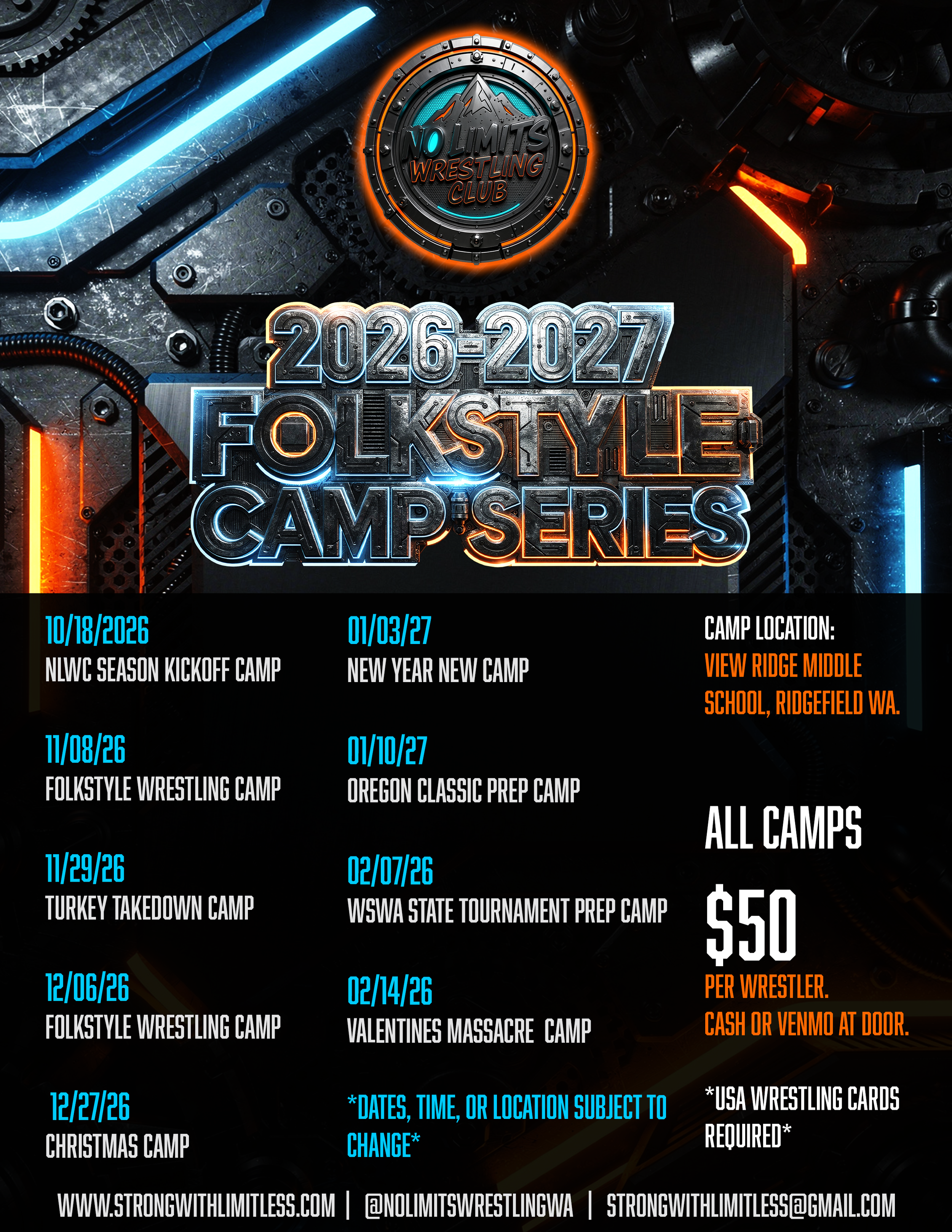
No Limits Wrestling Club | 2026–2027 folkstyle camp series
Our folkstyle camp schedule was developed around our seasonal curriculum and upcoming competition opportunities. Camps focus on technical development, positional understanding, and preparing athletes for the demands of the season.
DateCampOctober 18, 2026NLWC Season Kickoff CampNovember 8, 2026Folkstyle Wrestling CampNovember 29, 2026Turkey Takedown CampDecember 6, 2026Folkstyle Wrestling CampDecember 27, 2026Christmas CampJanuary 3, 2027New Year New CampJanuary 10, 2027Oregon Classic Prep CampFebruary 7, 2027WSWA State Tournament Prep CampFebruary 14, 2027Valentine's Massacre Camp
Camp location: View Ridge Middle School, Ridgefield, Washington
Registration: $50 per wrestler
Payment: Cash or Venmo at the door
Requirement: Current USA Wrestling membership card
Dates, times, and locations are subject to change.
For camp information and additional announcements, visit www.strongwithlimitless.com, follow @nolimitswrestlingwa, or email strongwithlimitless@gmail.com.
Research and references
The following sources provide additional information on deliberate practice, motor learning, wrestling curriculum design, and athlete development.
Peer-reviewed research
Ericsson, K. A., Krampe, R. T., & Tesch-Römer, C. (1993). The role of deliberate practice in the acquisition of expert performance. Psychological Review, 100(3), 363–406. https://doi.org/10.1037/0033-295X.100.3.363
Macnamara, B. N., & Maitra, M. (2019). The role of deliberate practice in expert performance: Revisiting Ericsson, Krampe & Tesch-Römer (1993). Royal Society Open Science, 6, 190327. https://doi.org/10.1098/rsos.190327
Ammar, A., et al. (2023). The myth of contextual interference learning benefit in sports practice: A systematic review and meta-analysis. Educational Research Review. https://doi.org/10.1016/j.edurev.2023.100537
Wrestling education and coaching resources
USA Wrestling. USA Wrestling Core Curriculum: Folkstyle Levels 1–3.https://www.usawmembership.com/usa_wrestling_core_curriculum/1
United States Olympic & Paralympic Committee. American Development Model. https://www.usopc.org/ADM
Purler Wrestling Academy. Technique Only Academy and progressive wrestling instruction.https://www.purlerwrestling.com/pages/technique-only-academy
Tony Purler Wrestling Academy. Wrestling camp and clinic descriptions. https://tonypurler.com/wrestling-camp-clinic-descriptions/
USA Wrestling. (June 21, 2026). Greco-Roman National Team welcomes Olympic and World medalists for international camp. https://www.themat.com/news/2026/june/21/greco-roman-national-team-welcomes-olympic-and-world-medalists-for-international-camp
