
An evidence-based guide to adolescent sports nutrition, healthy weight management, and the psychological consequences of weight cutting in youth wrestling.
Weight cutting has been part of wrestling culture for generations, and unfortunately, some of its least productive habits are finding their way into middle school programs. Athletes as young as eleven or twelve are skipping meals, restricting fluids, and worrying about weigh-ins before they've developed a basic understanding of sports nutrition. Some believe that weighing less automatically makes them more competitive, while others are simply repeating behaviors they've seen from older wrestlers or teammates.
These behaviors deserve attention because adolescence is a period of significant physical and psychological development. Young athletes are building the nutritional habits that will support their training throughout high school and beyond, while simultaneously developing their relationship with food, body image, and athletic performance.
The American Academy of Pediatrics (AAP) addressed these concerns in its 2017 clinical report, Promotion of Healthy Weight-Control Practices in Young Athletes. The report identifies unhealthy weight-control behaviors in sports such as wrestling and recommends approaches that protect growth, nutritional adequacy, and long-term health. The National Athletic Trainers' Association (NATA) similarly identifies inadequate food intake, dehydration, and pressure from coaches or peers as concerns in weight-class sports.
The evidence supports a coaching approach that emphasizes adequate nutrition, normal growth, technical development, and healthy participation. For most middle school wrestlers, deliberate weight loss for competition introduces risks that offer little justification at their stage of athletic development.

Understanding weight management and weight cutting
Weight management describes the habits and health practices that support an individual's appropriate body weight and body composition over time. For children and adolescents, this includes regular meals, adequate energy intake, hydration, physical activity, and normal growth. Healthy weight management may involve changes in body composition as an athlete matures, but individual concerns about a child's weight should be evaluated by a qualified healthcare professional using growth history and developmental context.
Weight cutting refers to intentional efforts to lower body weight to meet a competitive target, frequently within a limited period before weigh-ins. Athletes may accomplish this through reduced food intake, dehydration, excessive exercise, or a combination of methods. Rapid changes on the scale often reflect losses of water and stored carbohydrate rather than meaningful improvements in athletic conditioning.
This distinction becomes particularly relevant in middle school wrestling, where competition structures vary between programs. Some leagues establish formal weight classes, while others weigh athletes primarily to identify reasonably matched opponents. In programs using flexible weight-based pairings, the recorded weight should help organizers arrange appropriate competition. It should never become an unofficial target that children are expected to reach by restricting food or fluids.
Even when formal weight classes are used, weight cutting is an inappropriate expectation for developing athletes. Their nutritional requirements are influenced by growth, maturation, training volume, and ordinary daily activities. Their bodies require energy outside of the wrestling room, and those needs continue regardless of what the scale reads.
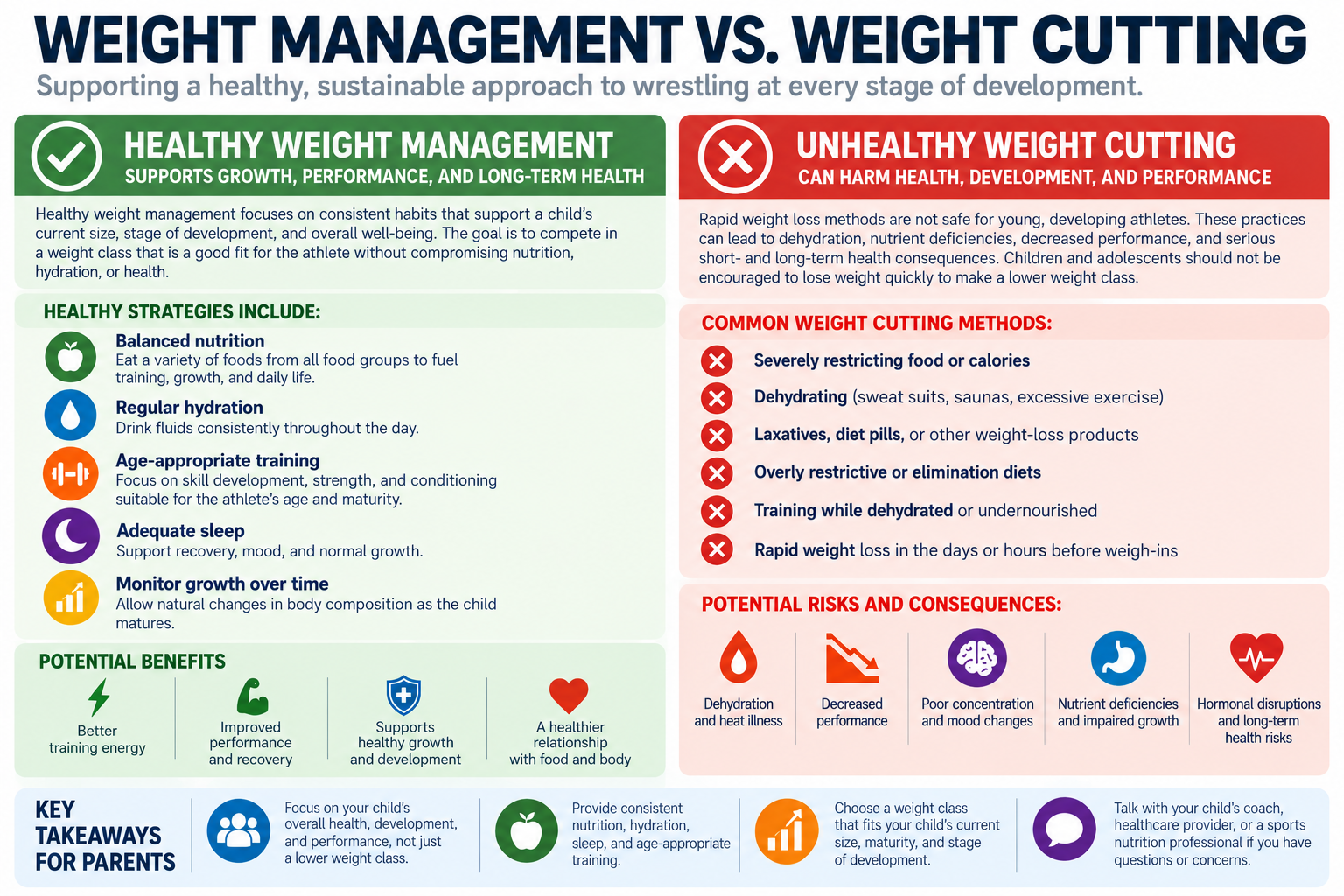
Figure 6. A comparison of healthy weight-management practices and potentially harmful weight-cutting behaviors in youth wrestling, including their effects on physical development, athletic performance, and psychological well-being.
What happens physiologically when an athlete isn't eating enough?
Every physical activity requires energy. Wrestling is particularly demanding because it combines repeated high-intensity efforts with muscular endurance, rapid changes in direction, and sustained physical contact. The body relies on sufficient energy and available nutrients to support these activities and recover afterward.
During adolescence, energy is also required for skeletal growth, tissue development, hormonal function, and the maintenance of normal physiological processes. Restricting food creates competition between the energy required for exercise and the energy needed for ordinary development.
Sports medicine researchers describe this problem through the concept of low energy availability, which occurs when insufficient dietary energy remains to support the body's needs after accounting for exercise.
The International Olympic Committee's 2023 consensus statement on Relative Energy Deficiency in Sport (REDs) explains that prolonged or severe low energy availability can affect multiple body systems. Potential consequences include impaired bone health, altered hormonal function, weakened immune responses, difficulty recovering from training, and reduced athletic performance. REDs can affect both male and female athletes.
These effects are particularly concerning in children because normal development is still underway. An underfueled wrestler may struggle with practice intensity or recovery while experiencing nutritional deficiencies that are less immediately obvious. A child can also be underfueled at any body size; weight alone cannot establish whether an athlete is eating adequately.
Dehydration introduces another set of concerns. Restricting fluids can impair temperature regulation and physical performance while increasing the risk of heat-related illness. Wrestling practice already creates substantial physical demands, and deliberately arriving dehydrated adds preventable strain.
The National Athletic Trainers' Association recommends that weight-management practices be supervised by appropriately qualified healthcare professionals and specifically discourages dangerous strategies involving dehydration and restrictive eating.
For parents, these findings provide a practical reason to prioritize consistent meals and hydration. Athletes need adequate energy before training and sufficient nutrition afterward to recover. Repeatedly going to practice hungry or attempting to make weight by withholding food can interfere with the physical adaptations that training is supposed to produce.
The sports psychology of weight cutting: what young athletes learn from the environment
Weight cutting is also a behavioral and psychological issue. Children's beliefs about acceptable athletic behavior develop through observation, reinforcement, and the expectations established by adults and peers.
Within sport psychology, social learning theory helps explain how athletes acquire behaviors by observing others and noticing which behaviors receive approval. When an older wrestler proudly discusses losing several pounds before competition, younger athletes may interpret that behavior as evidence of commitment. When coaches praise athletes for making a lower weight class, the message can become more influential.
An athlete does not need to receive explicit instructions to cut weight for the behavior to spread. Repeated conversations about weight, visible food restriction, and favorable reactions to weight loss can establish an informal standard of what a committed wrestler is supposed to do.
This matters because children are still developing their ability to evaluate long-term consequences. Their immediate concerns often involve social belonging, adult approval, and competitive success. If restrictive eating becomes associated with being disciplined or serious about wrestling, the child may adopt the behavior before understanding its physiological costs.
The concept of a motivational climate also helps explain the role of coaching. Achievement goal theory distinguishes between environments that emphasize mastery and personal improvement and those that place greater emphasis on demonstrating superiority over others.
A mastery-oriented wrestling environment rewards technical improvement, consistent effort, and the ability to apply skills. An environment heavily focused on comparison, rankings, and outcomes can increase pressure around characteristics athletes believe may affect competitive success, including body weight.
Research does not establish that every performance-focused environment causes disordered eating. However, the IOC's REDs consensus identifies body dissatisfaction, performance pressure, dietary restraint, and influences from the athlete's social environment as relevant concerns in problematic underfueling and disordered eating.
For coaches, the practical application is straightforward. Discussions of an athlete's progress should emphasize measurable improvements in wrestling skills, decision-making, and training habits. Body weight should not be treated as an achievement or a reflection of character.
A wrestler who learns a better stand-up, improves positional awareness, or consistently finishes a takedown has demonstrated athletic development. Those are accomplishments worth recognizing.
Understanding macros: the basics of fueling athletic performance
One of the most useful things parents can teach young athletes is how nutrition supports the work their bodies perform.
Food contains three primary macronutrients, commonly called macros: carbohydrates, protein, and fat. Each provides energy and supports different physiological functions.
Understanding these nutrients helps families build balanced meals and recognize why restrictive diets often work against athletic development.
Carbohydrates and training energy
Carbohydrates provide glucose, which the body uses for energy. Some glucose is stored as glycogen in the muscles and liver, making it available during exercise.
Wrestling involves frequent bursts of high-intensity activity, and glycogen availability contributes to an athlete's ability to sustain demanding physical work.
Rice, potatoes, oatmeal, pasta, whole-grain bread, fruit, and other carbohydrate-rich foods help replenish these energy stores. Milk, yogurt, and legumes also contribute carbohydrates alongside other nutrients.
Parents sometimes encounter dietary advice that treats carbohydrates as something to limit automatically. For active children, unnecessary carbohydrate restriction can reduce access to an important training fuel. The appropriate amount varies with age, growth, and physical activity.
Protein and muscular recovery
Protein provides amino acids required for tissue growth and repair. During the normal training process, muscles experience stress and adapt during recovery. Sufficient dietary protein supports these processes, along with ordinary growth.
Common sources include chicken, lean beef, eggs, fish, Greek yogurt, milk, tofu, and legumes.
Young wrestlers benefit from having protein available throughout the day through regular meals and snacks. Large amounts of supplemental protein are generally unnecessary when nutritional needs can be met through food.
Protein requirements may increase with activity level, but consuming more protein than the body needs does not automatically produce better strength or athletic performance.
Dietary fat and healthy development
Dietary fats provide energy and support normal cellular function, hormonal activity, and the absorption of fat-soluble vitamins.
Foods such as avocados, olive oil, nuts, seeds, eggs, and oily fish provide dietary fat along with other valuable nutrients.
Because fat contains more energy per gram than carbohydrates or protein, it is sometimes targeted for restriction in weight-loss diets. In growing athletes, adequate fat intake remains necessary for a nutritionally complete diet.
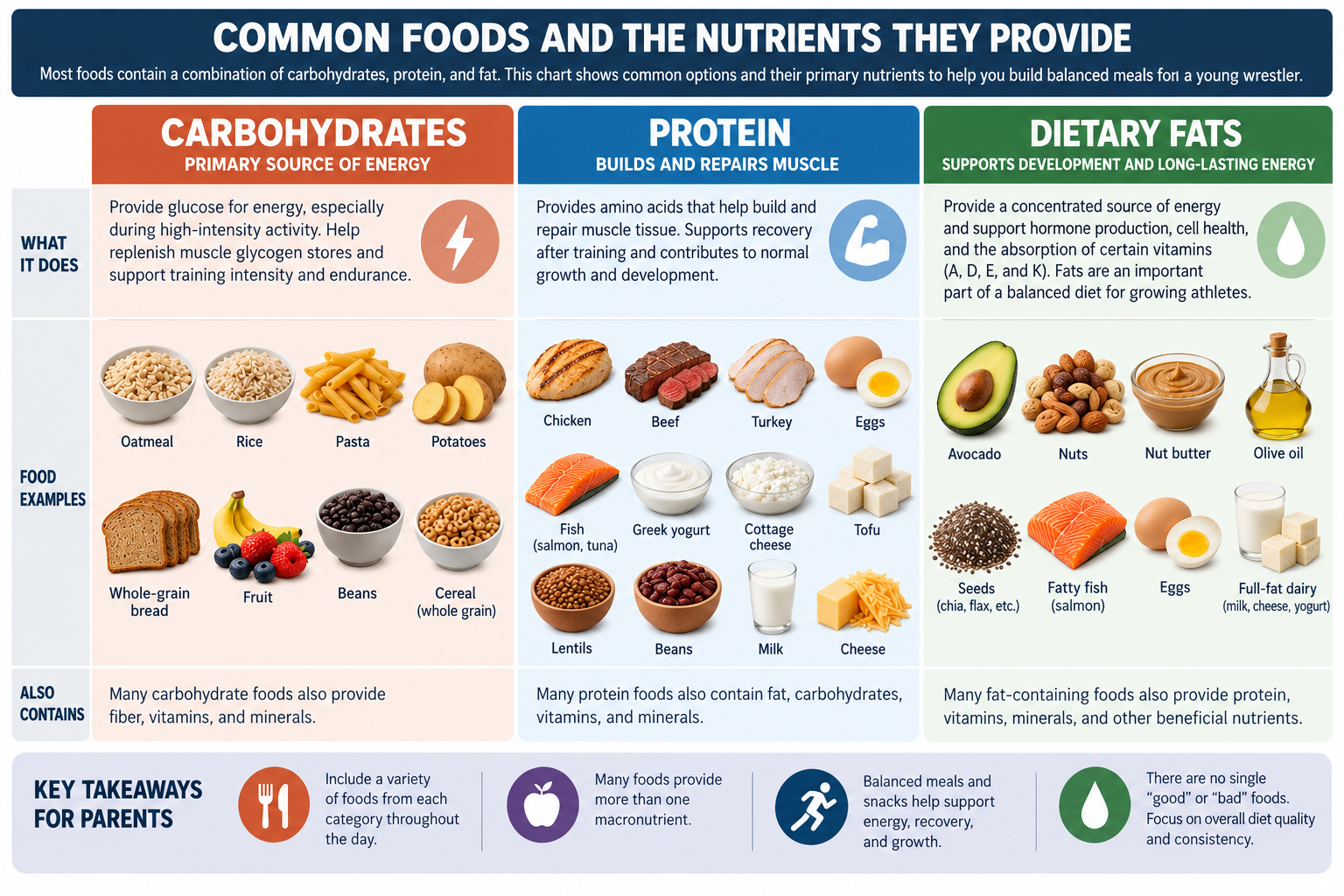
Figure 2. Common foods that provide carbohydrates, protein, and dietary fats. Many foods contain multiple macronutrients, and a varied diet helps young wrestlers meet their energy and nutritional needs.
How macro counting works, and whether young wrestlers need it
Macro tracking involves recording the grams of carbohydrate, protein, and fat consumed over a given period. Each macronutrient contributes a predictable amount of dietary energy.
MacronutrientEnergy per gramCarbohydrates4 caloriesProtein4 caloriesFat9 calories
For example, a food containing 20 grams of carbohydrates, 10 grams of protein, and 5 grams of fat would provide approximately 165 calories from those macronutrients.
The calculation is:
(20 × 4) + (10 × 4) + (5 × 9) = 165 calories.
Actual nutrition-label values may differ slightly because of rounding and the way certain ingredients, such as fiber, are calculated.
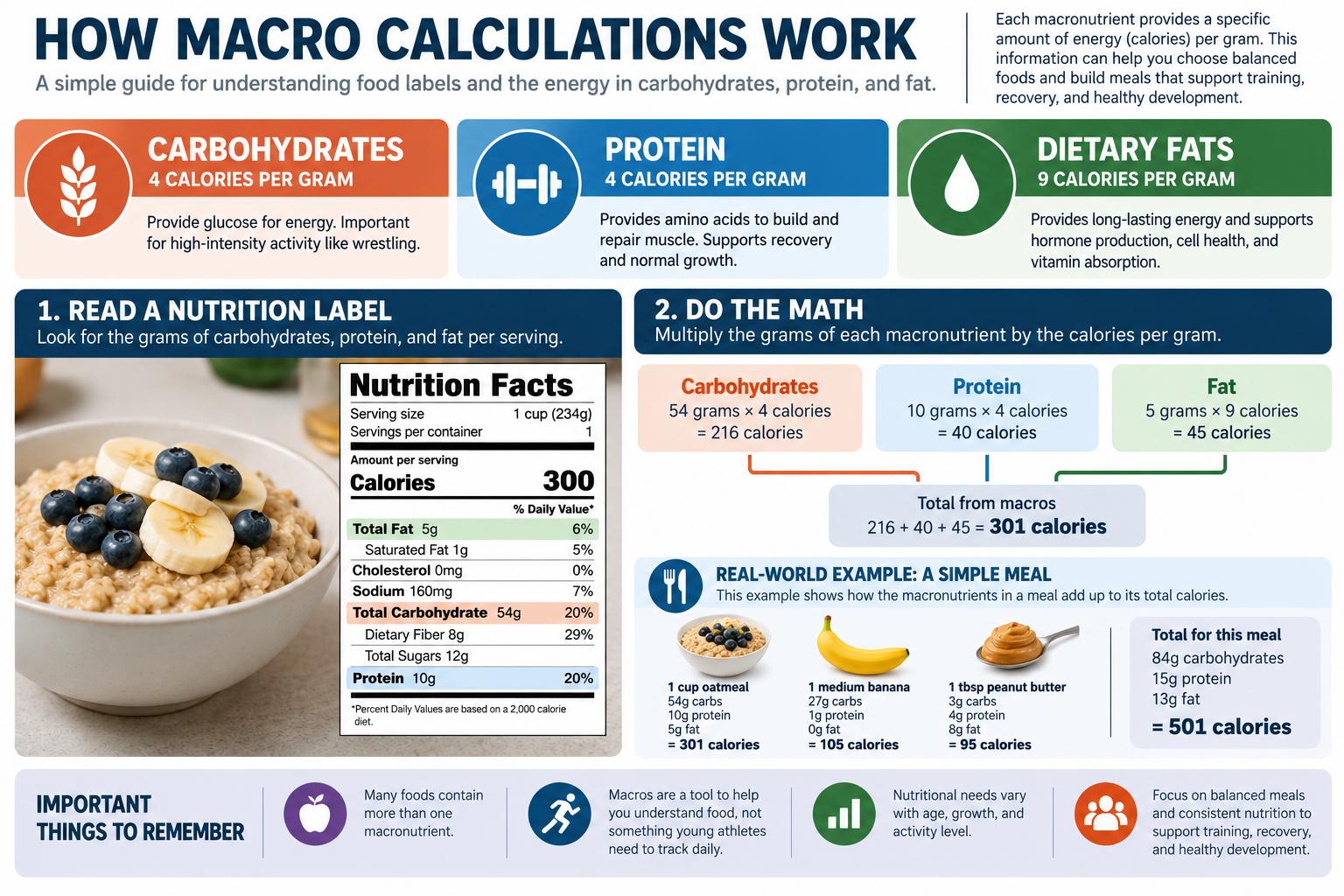
Figure 3. Understanding macronutrient calculations. Carbohydrates and protein provide approximately 4 calories per gram, while dietary fat provides 9. These calculations help explain food labels but are not recommended as restrictive dietary targets for developing wrestlers.
This information can help parents understand food labels and the nutritional composition of meals. It also explains why different foods support different aspects of athletic performance.
However, macro counting is a tool that requires appropriate context. For children, particularly those already expressing concern about making weight, strict macro targets and daily food tracking can introduce unnecessary attention to numbers.
The AAP emphasizes that growing athletes have nutritional requirements that vary with age, maturation, and activity level. A young athlete's needs may change substantially during growth spurts or periods of increased training.
Parents can use macro knowledge to evaluate dietary variety and make sure meals contain useful energy sources. Most middle school wrestlers do not need prescribed macro percentages, calorie deficits, or routine gram-by-gram tracking.
When individualized nutrition planning is necessary, a registered dietitian experienced in pediatric sports nutrition can account for developmental needs and medical history.
Putting nutrition into practice: a parent's guide to feeding a young wrestler
The most practical nutrition strategy for many families is a consistent eating routine that accommodates school, practice, and normal family activities.
A balanced meal generally includes a carbohydrate source, a protein source, and some dietary fat. Fruits and vegetables contribute vitamins, minerals, fiber, and additional nutrients. Portions should reflect the child's appetite, activity, and individual needs, with additional food available when necessary.
Figure 2. Common foods that provide carbohydrates, protein, and dietary fats. Many foods contain multiple macronutrients, and a varied diet helps young wrestlers meet their energy and nutritional needs.
The following examples illustrate how familiar foods can support an athlete's training.
Breakfast before school
Eggs with toast and fruit provide protein and carbohydrates, while oatmeal prepared with milk and topped with banana or nut butter offers another practical option. Greek yogurt with granola and berries works for children who prefer a quicker breakfast.
Skipping breakfast can leave a child with a lengthy period of inadequate food intake before afternoon activities, especially when school lunch is small or eaten early.
Lunch during the school day
A turkey sandwich with fruit and yogurt, rice with chicken, or leftovers from dinner can provide useful combinations of nutrients.
For children who regularly attend evening practices, lunch is part of preparing for training. A child who eats very little during the school day may arrive at practice hungry and fatigued.
Snacks before wrestling practice
A pre-practice snack can help bridge the gap between lunch and evening training.
Bananas, toast, pretzels, applesauce, yogurt, or a simple sandwich are familiar choices. Easily digested carbohydrates are particularly useful when practice is approaching, while larger meals containing more fat and fiber may be better tolerated earlier in the day.
Children differ in their digestive comfort, so families can adjust the timing and composition of snacks based on experience.
Dinner and recovery after practice
After wrestling, the body needs additional energy and nutrients to support recovery.
Meals such as ground beef and rice, chicken with potatoes, pasta with meat sauce, or a bean-and-cheese burrito provide carbohydrates and protein. Vegetables, fruit, and appropriate dietary fats help create nutritionally complete meals.
Athletes who are still hungry after dinner may need additional food. Appetite can fluctuate with growth and training demands, and a child asking for more food after a demanding practice is not automatically overeating.
Hydration during the day
Water should be readily available before, during, and after physical activity. Hydration needs vary with body size, exercise intensity, duration, and environmental temperature.
For many ordinary youth practices, water is sufficient. Longer or particularly demanding sessions may require additional hydration and electrolyte considerations, particularly when athletes sweat heavily.
Children should never be instructed to withhold fluids to influence a weigh-in. Parents should also avoid encouraging excessive water consumption without regard to thirst and activity.
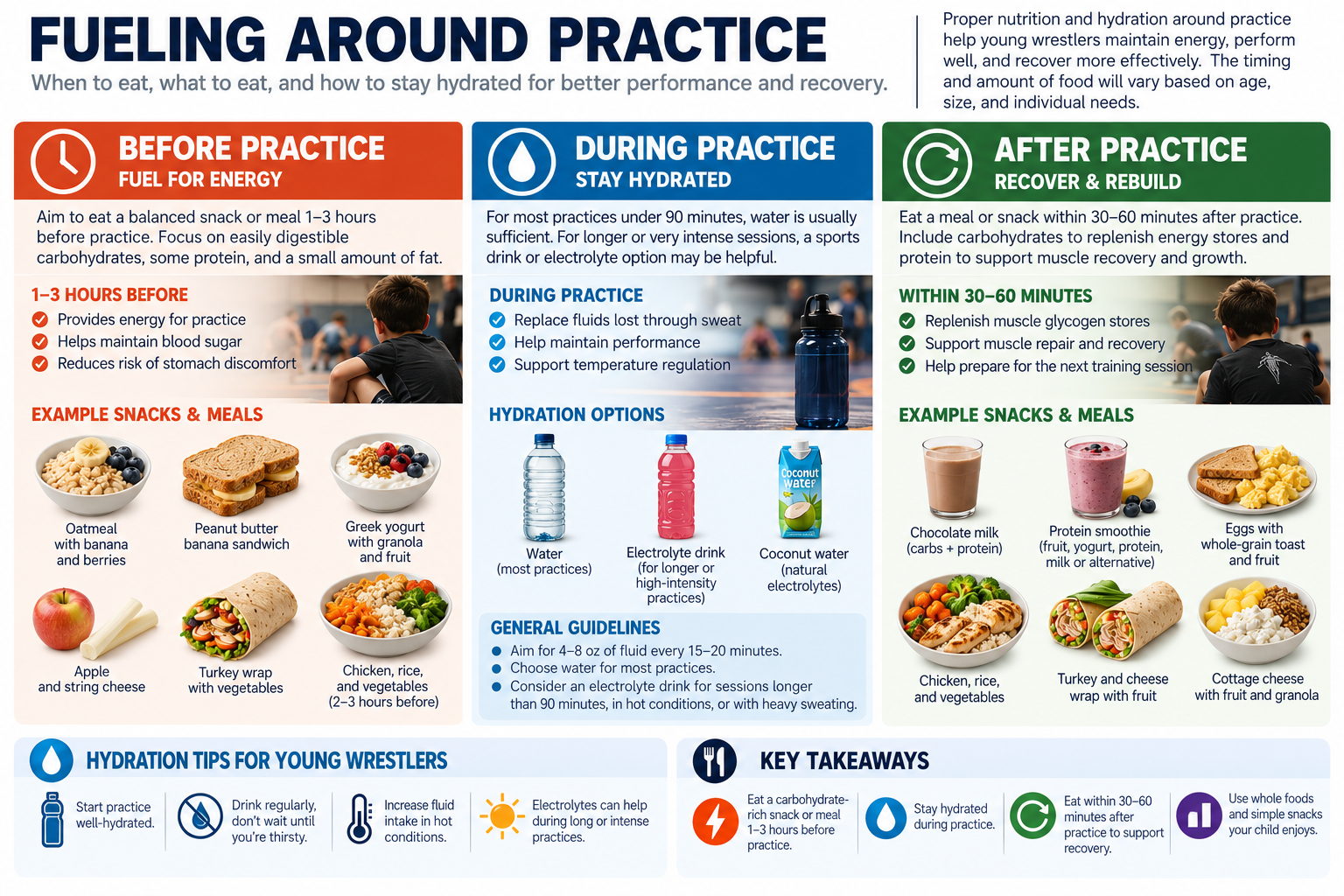
Figure 5. Examples of meals, snacks, and hydration strategies to support young wrestlers before, during, and after training. Timing and nutritional needs vary according to age, appetite, training intensity, and individual circumstances.
A practical meal-building reference for parents
Food categoryExamplesPrimary contributionCarbohydrate-rich foodsRice, oatmeal, potatoes, bread, fruitTraining energyProtein-rich foodsEggs, meat, fish, yogurt, tofuGrowth and tissue repairFat-containing foodsOlive oil, avocado, nuts, seedsEnergy and essential bodily functionsFruits and vegetablesBerries, carrots, broccoli, orangesVitamins, minerals, fiberFluidsWater, milkHydration and other nutritional needs
This is a meal-planning reference, not a prescribed diet. Many foods contribute more than one macronutrient, and a child's nutritional adequacy depends on overall intake over time.
Families do not need expensive products marketed toward athletes to provide appropriate nutrition. Ordinary grocery-store foods can support an active child's needs.
Building a balanced plate for a young wrestler
Understanding macronutrients becomes more useful when families can apply that information to meals they're already preparing. Parents don't need to weigh ingredients or calculate exact macronutrient percentages to provide adequate nutrition. A practical approach is to offer a combination of carbohydrate-rich foods, protein sources, dietary fats, and fruits or vegetables throughout the day.
Consider a dinner consisting of grilled chicken, rice, roasted sweet potatoes, broccoli, and avocado. The chicken provides protein for tissue growth and repair, while the rice and sweet potatoes contribute carbohydrates that help replenish energy used during training. Broccoli supplies fiber and micronutrients, and avocado adds dietary fat. Several of these foods provide additional nutrients beyond their primary categories.
The quantities an athlete needs will vary considerably based on age, growth, appetite, and physical activity. Some children will need larger servings or additional food after particularly demanding practices. A balanced plate provides a useful starting point for meal planning, while a child's individual nutritional needs determine how much food is appropriate.
Families can use the following visual as a flexible meal-building reference. It illustrates how different nutrient sources can be combined without prescribing restrictive serving sizes or calorie targets.Warning signs parents should recognize
Occasional changes in appetite are common in childhood and adolescence. More concerning patterns involve persistent restriction, anxiety about food or body weight, or behavior that begins interfering with normal eating and athletic participation.
Parents should pay attention if a wrestler begins routinely skipping meals before practice or competition, avoiding fluids before weigh-ins, expressing guilt after eating, or becoming distressed by ordinary weight changes.
Additional concerns include unexplained fatigue, dizziness, declining performance, recurrent injuries, noticeable changes in mood, or an unusually rigid focus on food rules.
Some of these symptoms have multiple possible medical explanations, so parents should avoid attempting to diagnose the cause themselves. A pediatrician can assess growth and health concerns, with referral to a sports dietitian or mental health professional when appropriate.
The psychological component deserves particular care. A child who believes eating will make them less successful at wrestling may begin experiencing ordinary meals as a threat to athletic achievement.
Early, supportive conversations can help identify these beliefs before they become entrenched. Parents should ask what the child has heard about weight and performance, where the information came from, and whether the athlete feels pressure to change their body.
Avoiding shame is essential. Children who have attempted to cut weight need accurate information and support, not punishment or public criticism.

Figure 4. A practical guide to building balanced meals for young wrestlers using carbohydrate-rich foods, protein sources, dietary fats, and fruits or vegetables. Food needs and portion sizes vary with age, growth, activity, and individual appetite.
How parents and coaches can create healthier expectations
A young wrestler's training environment influences the habits they develop. Coaches control many of the messages athletes hear about performance, while parents influence how those messages are interpreted and reinforced at home.
Programs can establish clear expectations that athletes should arrive at practice adequately fed and hydrated. Coaches can avoid public conversations about individual body weights and prevent teammates from encouraging one another to skip meals.
When weigh-ins are required, they should be handled professionally, respectfully, and with appropriate privacy. Any concerns involving an athlete's weight or health should be discussed privately with their parent or guardian and qualified healthcare professionals.
Parents can reinforce these standards through everyday conversations. Asking what technique a child learned at practice encourages attention to controllable aspects of performance. Praising persistence in a difficult position or improvement in match strategy supports a learning-oriented view of the sport.
There is also value in being careful with casual comments. Children hear adults discussing dieting, body size, and whether particular foods are good or bad. Those conversations may shape their understanding of what it means to be healthy.
Nutrition education should help young athletes identify how food supports their training and recovery. It should give them the confidence to eat when hungry, recognize the purpose of balanced meals, and understand that normal growth will change their bodies.
What weight management should look like in youth wrestling
For developing wrestlers, appropriate weight management begins with maintaining nutritional adequacy and supporting healthy growth.
Children naturally gain weight as they develop. Increasing body weight during adolescence can reflect changes in height, bone structure, muscle development, and normal maturation.
There are legitimate medical circumstances in which a healthcare professional may recommend changes to an adolescent's nutrition or activity habits. Those recommendations should be individualized and made with consideration for growth and overall health.
Competitive weight manipulation is a separate concern. Athletes should not be encouraged to reduce food intake or dehydrate themselves to qualify for a lower weight category.
Wrestling provides extensive opportunities for improvement without manipulating body weight. Better hand fighting, improved mat awareness, technical proficiency, muscular conditioning, and positional decision-making develop through structured training and appropriate recovery.
These improvements remain useful as children grow and move into different competitive weight categories.
Establishing a responsible standard for developing wrestlers
Youth wrestling programs have the opportunity to shape athletes' attitudes toward nutrition before unhealthy practices become normalized.
Our coaching position at No Limits Wrestling Club is that children should be adequately fueled, properly hydrated, and allowed to grow naturally while competing at their normal, healthy body weight. We do not support intentional weight cutting among our youth athletes.
This position reflects the broader goal of long-term athlete development. Technical proficiency, physical preparation, and healthy participation can be developed without teaching children that hunger and dehydration are necessary parts of competition.
Parents should be able to send their children to wrestling practice knowing that the adults responsible for their development are teaching habits that support their health as well as their athletic progress.
A young wrestler deserves the opportunity to eat, grow, recover, and participate in a sport they enjoy without treating their developing body as an obstacle to competitive success.
Research and further reading
American Academy of Pediatrics (2017). Carl, R. L., Johnson, M. D., & Martin, T. J. Promotion of Healthy Weight-Control Practices in Young Athletes. Pediatrics, 140(3), e20171871. Clinical guidance on healthy and unhealthy weight-control behaviors among young athletes.
https://doi.org/10.1542/peds.2017-1871
National Athletic Trainers' Association (2011). Turocy, P. S., et al. National Athletic Trainers' Association Position Statement: Safe Weight Loss and Maintenance Practices in Sport and Exercise. Journal of Athletic Training, 46(3), 322–336. Professional recommendations addressing weight management, hydration, nutritional adequacy, and appropriate clinical supervision.
https://doi.org/10.4085/1062-6050-46.3.322
International Olympic Committee (2023). Mountjoy, M., et al. 2023 International Olympic Committee's consensus statement on Relative Energy Deficiency in Sport (REDs). British Journal of Sports Medicine, 57, 1073–1097. Consensus guidance on low energy availability, health consequences, and psychological considerations in athletes.
https://doi.org/10.1136/bjsports-2023-106994
American Academy of Pediatrics (2017). Talking to young athletes about healthy weight loss, gain. AAP News. A parent- and clinician-accessible overview of the academy's recommendations for weight-control practices.
https://publications.aap.org/aapnews/news/14229/Talking-to-young-athletes-about-healthy-weight
