
How to narrow down college wrestling programs as a female athlete getting ready to graduate
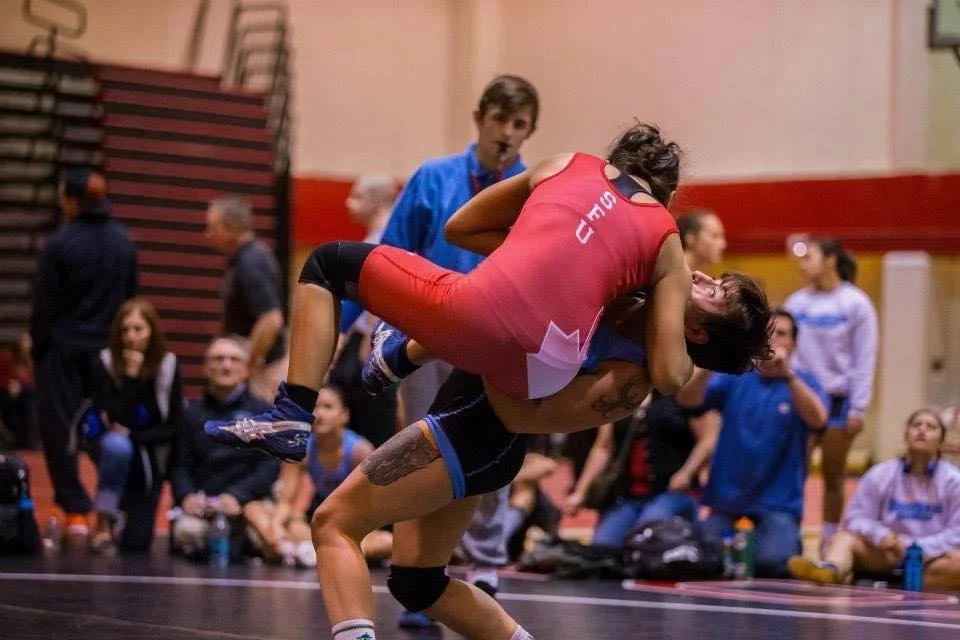
Choosing a college wrestling program as a female athlete looks completely different than it did even 10 or 15 years ago.
In 2010, the Women’s Collegiate Wrestling Association included only 12 programs, 10 in the United States and two in Canada. By 2012, having 20 teams included in the WCWA rankings was considered a record. Today, the National Wrestling Coaches Association reports more than 150 colleges sponsoring varsity women’s wrestling programs. The NCAA alone reported 95 sponsoring schools and more than 1,700 female wrestlers during the 2024-25 academic year. Women’s wrestling became an official NCAA championship sport in 2025, and the first NCAA National Collegiate Women’s Wrestling Championships were held in March 2026.
The competitive structure has changed too. NCAA Division I, II and III athletes currently compete together at the National Collegiate championship, with Division III scheduled to begin its own championship in 2028. The NAIA has its own sanctioned national championship, and athletes also have junior college and club options available.
For the girls coming through wrestling now, that growth means opportunity on a scale previous generations simply did not have.
But it also makes choosing a school harder.
When I was looking at colleges, I had a very specific order of priorities. I still recommend that athletes establish something similar before recruiting gets serious because once coaches start calling, offering money and telling you how badly they want you, it becomes much easier to make an emotional decision.
Research on athlete burnout and sport dropout repeatedly points to motivation, autonomy, enjoyment, perceived competence, coaching relationships, social support, competing demands and stress as factors associated with whether athletes remain engaged in sport. Burnout develops through more than training volume alone. The athlete’s environment and her relationship with the sport matter too. (Gustafsson, Kenttä, & Hassmén, 2011; Crane & Temple, 2015).
Priority #1: does the school have what you actually want to study?
This was my first question, and I think some version of this should be every athlete’s first question.
Does the school have the academic program you want?
If you already know what you want to study and the school does not offer it, take the school off the board.
For most athletes, collegiate wrestling lasts four or five years. Your working life will probably last several decades. Wrestling should open educational opportunities for you, and the degree you leave with needs to make sense for the person you expect to be after wrestling.
There is research behind treating academics and athletics as two parts of the same developmental process. Sports psychologists use the term dual career to describe athletes simultaneously pursuing sport and education. Modern dual-career research has found that athletes do better when their environment supports both roles and gives them resources to manage the demands of each. Academic flexibility, financial support, social support, coping resources and an environment that actually allows athletes to develop outside sport are recurring factors in this literature.
This matters beyond graduation. Research on athletes transitioning out of collegiate sport has identified retirement planning, identity loss, coping skills and support systems as major factors in how well athletes handle the end of their competitive careers. Developing a legitimate academic and professional identity while you are still an athlete gives you something real to move toward when wrestling eventually ends.
That does not mean an 18-year-old needs her entire life figured out. If you are undecided, look for a school with several programs you could realistically see yourself pursuing. Give yourself options.
The question I would ask is simple: If wrestling disappeared tomorrow, would I still have a reason to attend this school?
If the answer is no, I would think very carefully before committing.
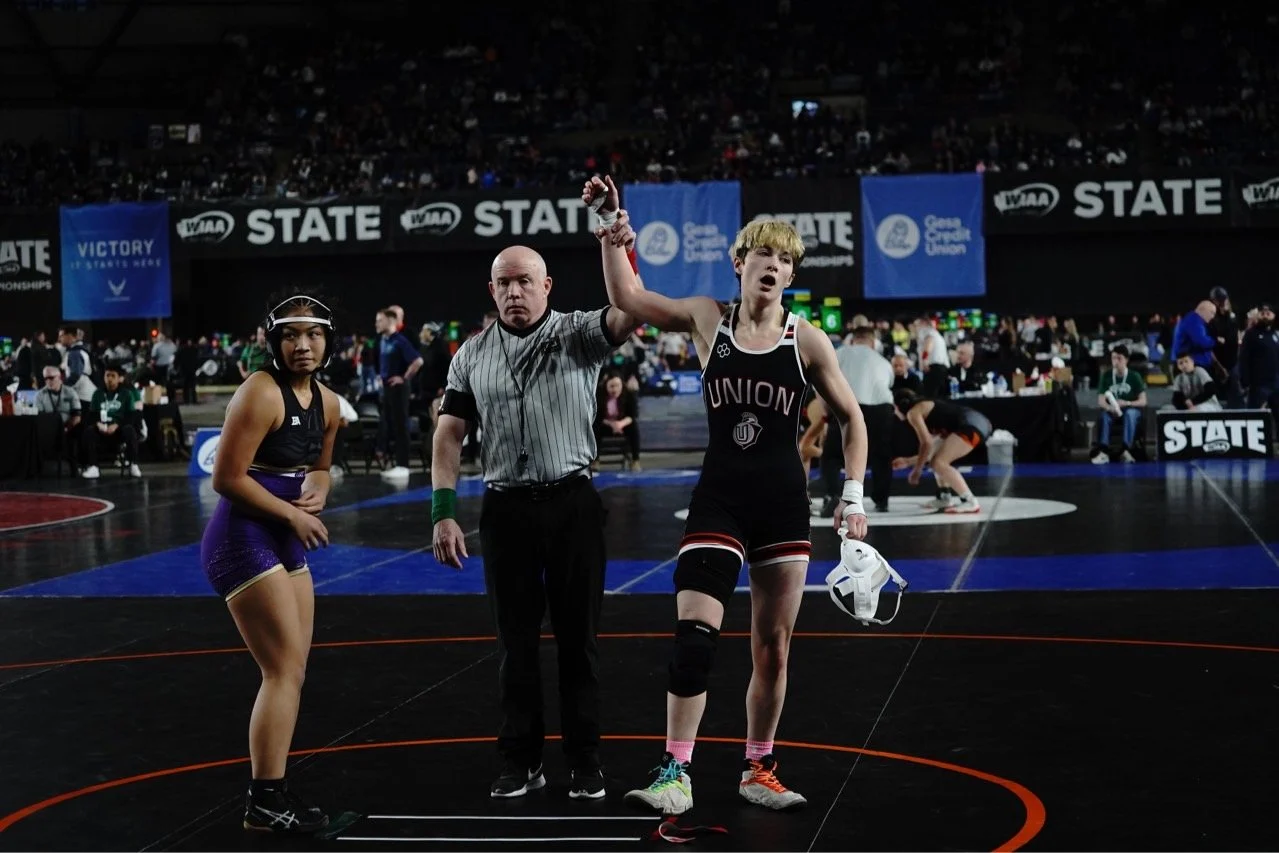
Priority #2: decide what you need from the coaching staff
My second priority was very personal to me. I wanted a female coach on staff.
If the head coach was not a woman, I required the program to have a female coach in a legitimate leadership position who worked directly with the women’s team. I did not want a woman listed on a staff directory who rarely interacted with the athletes. I wanted female leadership inside the actual program. I was very fortunate to have had one of the best female assistant coaches in the world on staff at the college I attended freshman year.
Your requirement may be different.
Sports psychology gives us a much broader principle to use here: the coaching environment matters enormously.
One of the most established frameworks in sport motivation research is Self-Determination Theory. Athletes function better psychologically when three basic needs are supported: autonomy, or having some ownership over what they are doing; competence, or feeling capable and able to improve; and relatedness, or feeling connected to the people around them.
A study of 201 elite athletes found strong relationships between autonomy, competence, self-determined motivation and lower athlete burnout. Athletes whose motivation came more from genuine choice and personal value showed fewer burnout symptoms than athletes functioning through more controlled forms of motivation.
Research involving NCAA Division I athletes has also linked controlling coaching behavior with maladaptive perfectionism, poorer motivation and greater burnout.
This gives recruits much better questions to ask than simply, “Is this coach nice?”
Watch how coaches interact with their current athletes. Pay attention to whether wrestlers are allowed to ask questions and communicate concerns. Ask how the staff handles injuries, class conflicts, difficult weight-management periods, mental health concerns and athletes who are struggling.
Ask current wrestlers what happens when they disagree with a coach.
Ask who they go to when they are having a problem.
Ask whether they feel like the coaching staff knows them outside their win-loss record.
Ask how many athletes have transferred or left the program during the last few years, and then ask why.
For female athletes specifically, emerging research on former NCAA athletes has also found that the quality of coach-athlete relationships can shape athletes’ mental health, sense of support and overall collegiate experience. That research is still developing, and it does not establish that female athletes need female coaches. It does reinforce the importance of paying close attention to who holds power in the program and what daily life under that staff actually feels like.
For me, female leadership remained a non-negotiable. The research-supported part of that priority is the larger question underneath it: Do I trust the people who will have an enormous amount of influence over my daily life for the next four years?
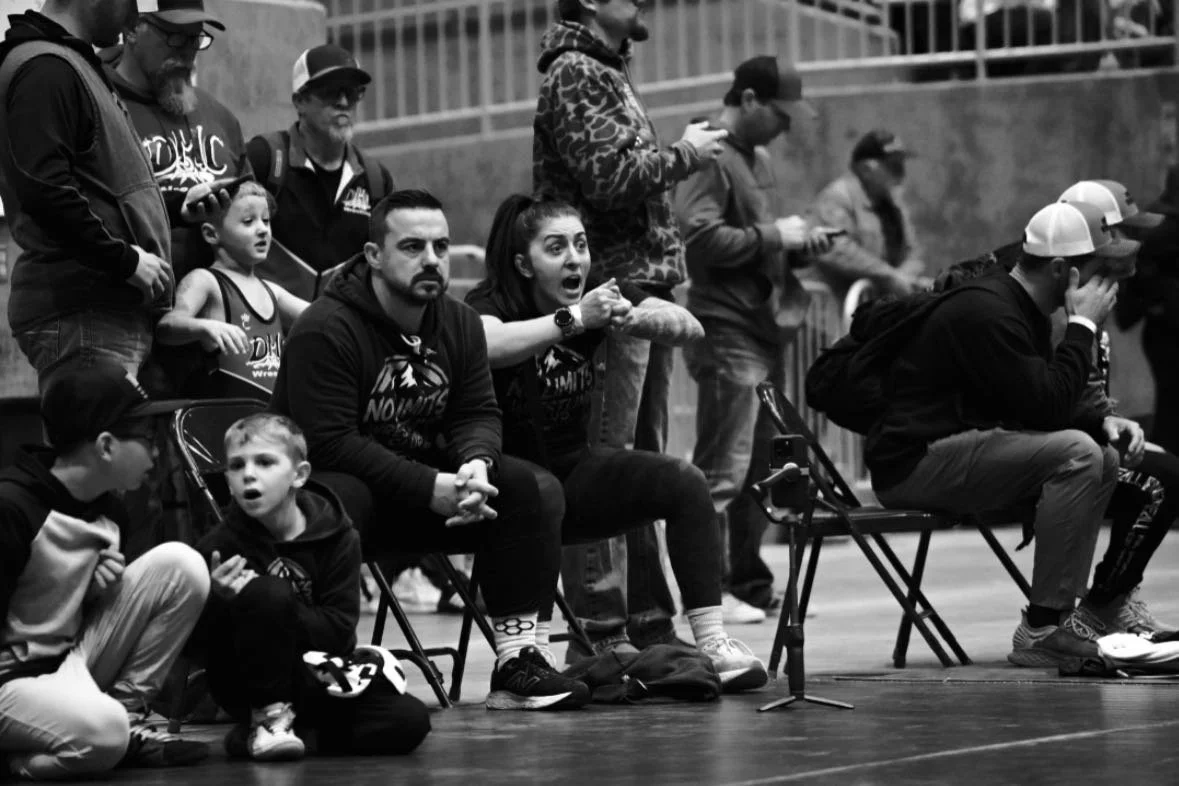
Priority #3: decide how much division actually matters to you
The next thing I wanted to decide was how important the competitive structure was to me.
Some athletes absolutely want the varsity collegiate experience. They want to compete for their university, qualify through sanctioned postseason events and pursue a college national championship.
Other athletes may find the academic school they love and be perfectly happy competing through a club while continuing to wrestle freestyle, compete through USA Wrestling or pursue other competitive opportunities outside a varsity college schedule.
Both athletes can continue wrestling.
The more useful question is how important the college division and championship structure are to you personally.
Sports psychology gives us an interesting perspective here because the things associated with athletes staying in sport are not simply prestige or competitive level.
A 2022 systematic review and meta-analysis on continued youth sport participation found that enjoyment had a correlation of r = .45 with athletes’ intention to continue. Coach support, peer support, perceived competence and satisfaction of basic psychological needs were also among the primary factors associated with continued participation.
A separate systematic review of 43 studies on youth sport dropout identified five major groups of factors associated with leaving organized sport: lack of enjoyment, perceptions of competence, social pressures, competing priorities and physical factors such as injury.
Those athletes were younger than the typical college population, so we should be careful about applying every finding directly to college wrestling. The broader pattern is still useful when evaluating a program. Athletes stay engaged when they enjoy what they are doing, feel capable, have good relationships around them and feel some ownership of their participation.
Choose the competitive structure that fits what you actually want from college wrestling. For some athletes, competing in the NCAA is a major goal, while others may find that an NAIA program, junior college, or club team offers a better fit academically, financially, or developmentally. Maybe the school with the exact degree you want only offers club wrestling, or maybe another program gives you the competitive environment you have always wanted. Division should matter as much as it genuinely matters to you, and it should sit on your priority list accordingly.
Priority #4: figure out what the school will actually cost you
My last major priority was money.
I wanted to know whether the financial package was substantial enough that I could dedicate the amount of time I wanted to wrestling without constantly worrying about how I was going to pay for school.
Do the actual math.
A large scholarship at an expensive private university can still leave you owing more than a smaller scholarship at another school. Look at tuition, housing, meal plans, fees, academic scholarships, athletic aid, grants and the amount you will realistically have to cover each year.
Division III schools do not award athletic scholarships, for example, but that does not automatically make them more expensive. Academic scholarships, grants and need-based aid can change the final number considerably.
This part of the decision also connects directly to dual-career research. A 2025 scoping review examined 25 studies involving more than 3,000 student-athletes across 23 countries. Financial strain, inadequate financial aid, rigid educational structures and difficulty coordinating academic and athletic demands repeatedly appeared as barriers. Social support, mentorship and institutional support helped athletes manage those dual demands. Most of that research came from European systems, so the exact financial structures differ from American collegiate athletics, but the workload problem is very familiar: athletes have limited time and multiple major responsibilities competing for it.
There is only so much time in a week.
If attending one school means maintaining a demanding job schedule on top of classes, lifting, practice, travel, recovery and competition, put that reality on the whiteboard too.
The scholarship number by itself does not tell you what school is cheapest.
The final amount you need to pay does.
Run every school through one more filter: can you actually sustain this life?
I would add one research-informed question across every category on your board:
Can I realistically live this way for four years?
Burnout is generally described through emotional and physical exhaustion, a reduced sense of accomplishment and increasing devaluation of the sport. Research has connected burnout with combinations of chronic stress, inadequate recovery, high expectations, maladaptive perfectionism, motivational problems and environments where athletes begin to feel trapped.
That means recruits should look at the ordinary Tuesday in February, not only the recruiting visit.
When you are comparing programs, look closely at what daily life will actually involve. Ask questions such as:
What time is practice, and how long does it usually last?
How often does the team lift?
How much travel is involved during the season?
Can athletes in your major realistically complete required labs, clinicals, student teaching or internships?
How does the coaching staff handle conflicts between academics and wrestling?
How much sleep are athletes realistically getting during the season?
Do teammates spend time together outside of practice?
Do the women on the team still seem to enjoy wrestling?
Do athletes feel comfortable addressing injuries before they become more serious?
When current wrestlers talk about the program, do they sound excited to be there, or do they sound exhausted and overwhelmed?
These questions give you a much clearer picture of whether the program is sustainable than a recruiting visit alone. You can literally write these questions in a notebook and ask the coach to answer some of them in an interview format. Most of them would be happy to oblige. Any that seem unwilling are red flags and are demonstrating they dont value as deeply as their recruiting tactics might lead you to believe.
Perfectionism deserves attention here. Research distinguishes between striving to improve and the more damaging form of perfectionism driven by fear of mistakes, external expectations and chronic concern about failing. A meta-analysis found that perfectionistic concerns were positively associated with burnout, while healthy perfectionistic striving showed a very different relationship. We are making a decision that will impact your future after all.
High standards are normal in college athletics. Feeling like your value to the program disappears every time you lose a match is something different.
Longevity in sport means staying healthy and engaged enough to keep competing while you still want to compete. It also means reaching the end of college with an education, relationships, interests and career plans that still exist when competitive wrestling ends.
Get a whiteboard - a literal whiteboard
I genuinely recommend doing this physically with a whiteboard. Write every school you are seriously considering, then evaluate each one against the same priorities in the same order:
Does the school offer the academic program you want?
Does the coaching staff and program structure meet your requirements?
Does the competitive division or structure fit what you want from college wrestling?
What will the school actually cost after scholarships, grants and financial aid?
Is the overall academic, athletic and financial workload sustainable for you?
If a school fails one of your major non-negotiables, remove it from the board. Keep working through the list until you are left with a smaller group of schools that meet the priorities you established before the recruiting process started influencing your decisions.
Do not keep moving a school forward simply because the coach is recruiting you hard. Recruiting attention feels good, especially to a high school athlete who has spent years working for the opportunity to wrestle in college, but being wanted during recruiting does not automatically tell you what your life will look like once you are on the roster.
Eventually that enormous list should become a handful of schools.
At that point, the decision changes.
You are choosing among schools that already satisfy the things you decided were important before the recruiting process started influencing you.
Then you can start looking at geography. How far from home do you want to live? Which campus do you like? Which division do you prefer? Which school has the lowest final cost? Which coaching staff did you connect with most naturally? Which team felt like somewhere you could belong?
That is usually where the decision gets much more personal, and somewhere in that process you generally reach the point where you know.
We need to, and i cannot stress this enough, prepare girls for more than getting recruited
The expansion of women’s wrestling has created an incredible problem to have.
Girls who once would have been choosing among a couple dozen collegiate programs are now looking at more than 150 varsity options. They can compete for sanctioned NCAA and NAIA national championships, pursue scholarships at many schools and continue wrestling at a level that barely existed for women a generation ago.
Coaches and parents now have another responsibility alongside helping these athletes become good enough to wrestle in college.
We need to teach them how to choose well.
That means teaching a 17-year-old wrestler to look past the excitement of being recruited and ask what she wants to study, what type of coaching environment she functions well in, how much debt she is willing to take on, what type of competition she wants and whether the daily demands of that program are sustainable.
Research on sport dropout gives us good reason to care about enjoyment, competence, social support and athlete autonomy. Burnout research tells us to pay attention to stress, recovery, coaching behavior, motivation and perfectionistic pressure. Dual-career research reminds us that the athlete is simultaneously building an education and an adult life. Research on retirement from college athletics tells us that eventually she will have to become something other than a collegiate wrestler.
Getting an athlete onto a college roster is one measure of success.
Helping her choose a program where she can still love wrestling, earn a useful education, develop as a person and walk away from college prepared for the rest of her life is a much better one.
References & Further Reading
Crane, J., & Temple, V. (2015). A systematic review of dropout from organized sport among children and youth. European Physical Education Review, 21(1), 114–131.
Gustafsson, H., Kenttä, G., & Hassmén, P. (2011). Athlete burnout: An integrated model and future research directions.International Review of Sport and Exercise Psychology, 4(1), 3–24.
Lonsdale, C., Hodge, K., & Rose, E. (2009). Athlete burnout in elite sport: A self-determination perspective. Journal of Sports Sciences, 27(8), 785–795.
Miller, L., & Buttell, F. P. (2018). Are NCAA Division I athletes prepared for end-of-athletic-career transition? A literature review. Journal of Evidence-Informed Social Work, 15(1), 52–70.
Stambulova, N., Wylleman, P., Torregrossa, M., et al. (2024). FEPSAC position statement: Athletes’ dual careers in the European context. Psychology of Sport and Exercise, 71, 102572.
Zhang, M., Wang, X.-C., & Shao, B. (2022). Predictors of persistent participation in youth sport: A systematic review and meta-analysis. Frontiers in Psychology, 13, 871936.
Yang, J.-H., Yang, H.-J., Choi, C., & Bum, C.-H. (2023). Systematic review and meta-analysis on burnout owing to perfectionism in elite athletes based on the Multidimensional Perfectionism Scale and Athlete Burnout Questionnaire.Healthcare, 11(10), 1417.
