
Grinding, motor learning, and the wrestler’s technical toolbox | The No Limits Approach to Building a Competitor
Story time: last night Coach Brandon pulled one of our little guys aside to talk about his conduct in the wrestling room. He is a genuinely good kid, but he can also be incredibly distracting. His parent also happens to be a coach here (coughCoach Kassi cough), so he occasionally gets a little too comfortable with the idea that this is also kind of “his” wrestling room. He gets sidetracked, does not always follow directions the first time, and sometimes when a coach redirects him, his response has a little too much five-to-seven-year-old “yeah, whatever” behind it.
He had already spent most of practice sitting on the wall because, for this particular kid, being removed from participation is about the most effective consequence you can give him. He wants to wrestle. Sitting there watching everyone else wrestle is miserable. So by the time Coach Brandon sat down with him afterward, he had already had plenty of time to think about why he was there.
Brandon was encouraging with him, but he was also very clear that what had been happening in practice could not continue. He asked him what his plan was moving forward and what, specifically, he was going to do differently.
His answer was, “I’m going to work harder.”
Coach Brandon, in significantly more child-appropriate language, basically told him that was BS.
And he was right. “Work harder” is so vague that it gives a kid almost nothing to actually do. For this athlete, the plan could be listening the first time a coach gives an instruction, staying with his drilling partner, finishing the reps he was given, or immediately getting back on task when somebody redirects him. Now we have actual behaviors that a coach can point to and the athlete can practice.
That conversation was also a pretty funny little example of something wrestling does all the time. We love telling people to work harder. I grew up hearing the same language most wrestlers did: drill harder, wrestle harder, push the pace, get more reps, get more mat time, run more, sweat more.
Hard work absolutely belongs in wrestling. The problem is that “work harder” gets used as an answer to problems that actually require more specific coaching.
An athlete can put an enormous amount of effort into practice and still make very little progress if nobody has identified what they are trying to improve. If I tell a wrestler to work harder, I should probably be able to tell them what I want that additional effort directed toward. Maybe we are fixing stance. Maybe we are maintaining head position. Maybe we are trying to recognize the same opening sooner or get back to good position after the first attack fails.
Once there is an actual direction, effort becomes useful.
That is where I start thinking about technical development like building a toolbox.
Wrestling has always respected hard work, and it should. There are very few sports where an athlete could, throughout the course of history, hide poor technical conditioning or an inability to stay composed when they are exhausted. Much like many other coaches in the sport of wrestling, we grew up around the same language most wrestlers did: work harder, drill harder, wrestle harder, push the pace, get more reps, more mat time, run the miles, less food, sweat more etc.
Where I think wrestling sometimes gets stuck is when “training harder” becomes the developmental strategy. An exceptionally outdated and burnout ridden strategy
An athlete can work incredibly hard without making proportional progress. The kid in the room whose ‘just never going to be good at this sport’ (how many times have we heard a coach talk about that kid, don’t lie, you know you have). Volume, contrary to common belief, tells us how much training was completed. It does not give us any level of substantial or conclusive evidence pertaining to how much was retained or can be reproduced by the athlete, what became more reliable, or what that athlete will actually be able to access when another wrestler is actively trying to prevent them from doing it.
I think about technical development like building a toolbox. Pretty common phrasing for any athletic coach with any decent level of knowledge.
If a car breaks down, owning 150 tools does not make somebody a better mechanic. Throwing the entire toolbox at the car certainly does not make the repair happen faster. A good mechanic understands the problem well enough to pull out the few tools that apply and knows how to use them precisely.
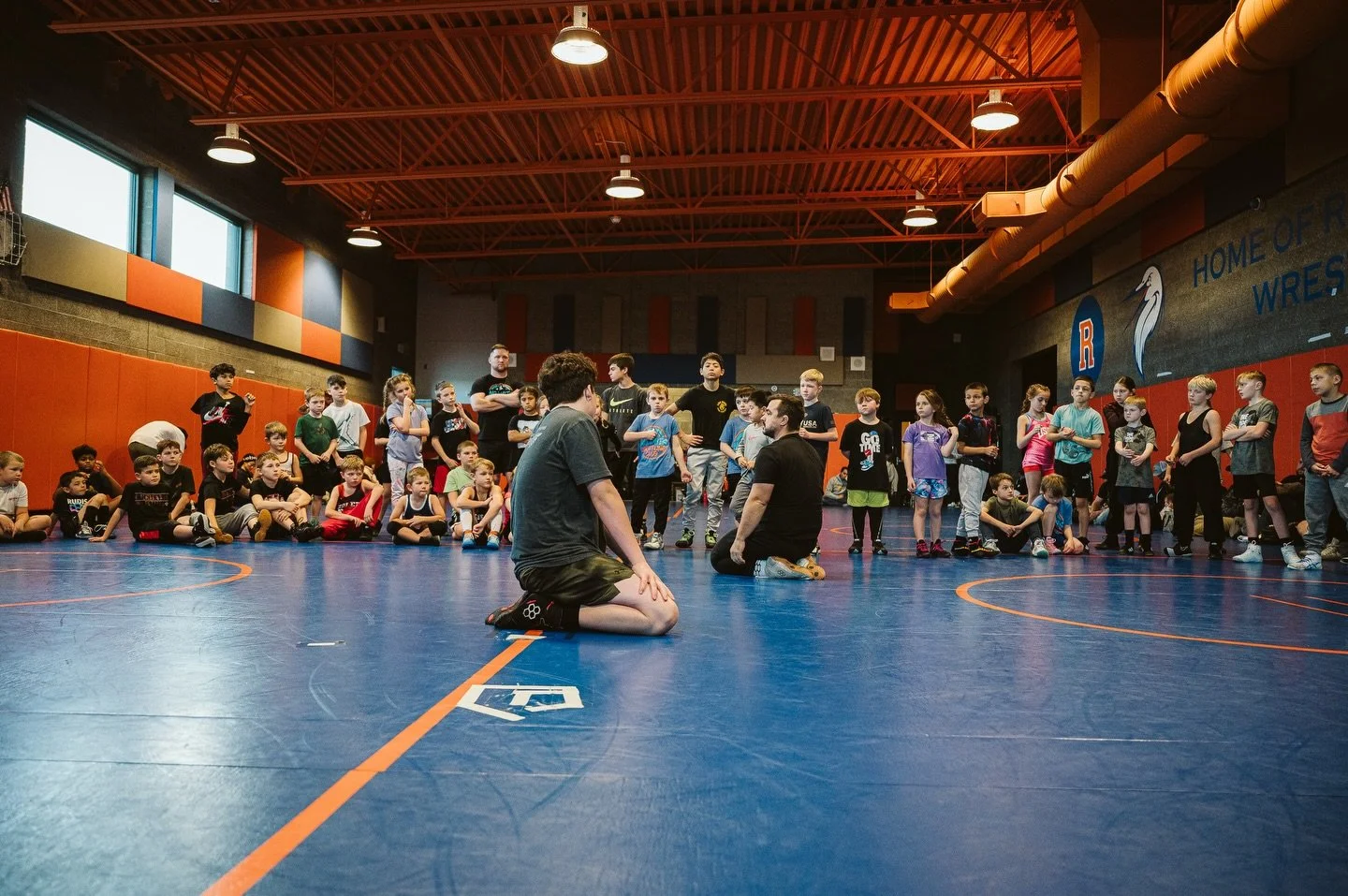
Wrestling is similar. I would rather build an athlete with a limited and intentional toolbox of extremely reliable skills than spend years accumulating techniques that the athlete vaguely recognizes but cannot reliably produce under pressure because there is lack of consistency and disorganization in their muscle memory.
That toolbox also needs organization. A single leg is considerably more useful when the wrestler understands the position that creates it, how to get an opponent into that position, what reaction to expect, how to finish from the most common reactions, and where to recover when the first attempt fails. At that point, we are no longer teaching an isolated move. We are teaching a wrestler how to operate from a position.
USA Wrestling's own developmental material reflects this emphasis on foundations. Its Athlete Development Model and coaching resources emphasize fundamental movement skills, athlete-centered coaching, intentional practice planning, and technical development. USA Wrestling's published material identifies skills such as stance, head position, hip movement, level change and hand fighting as prerequisites for more complex wrestling technique.
That matters because what coaches casually call “muscle memory” is really a motor-learning problem. With practice, athletes develop more stable and increasingly automatic ways of producing skilled movement. Research on the development of motor expertise describes a progression in which skilled movement becomes less dependent on consciously directing every correction during performance.
A wrestling match gives an athlete very little time for conscious technical inventory. A six-, eight-, or ten-year-old cannot realistically stop in the middle of a scramble and mentally sort through the 40 moves they were shown during the previous six months. They are going to rely heavily on the positions, reactions and movement patterns that have become familiar enough to access quickly.
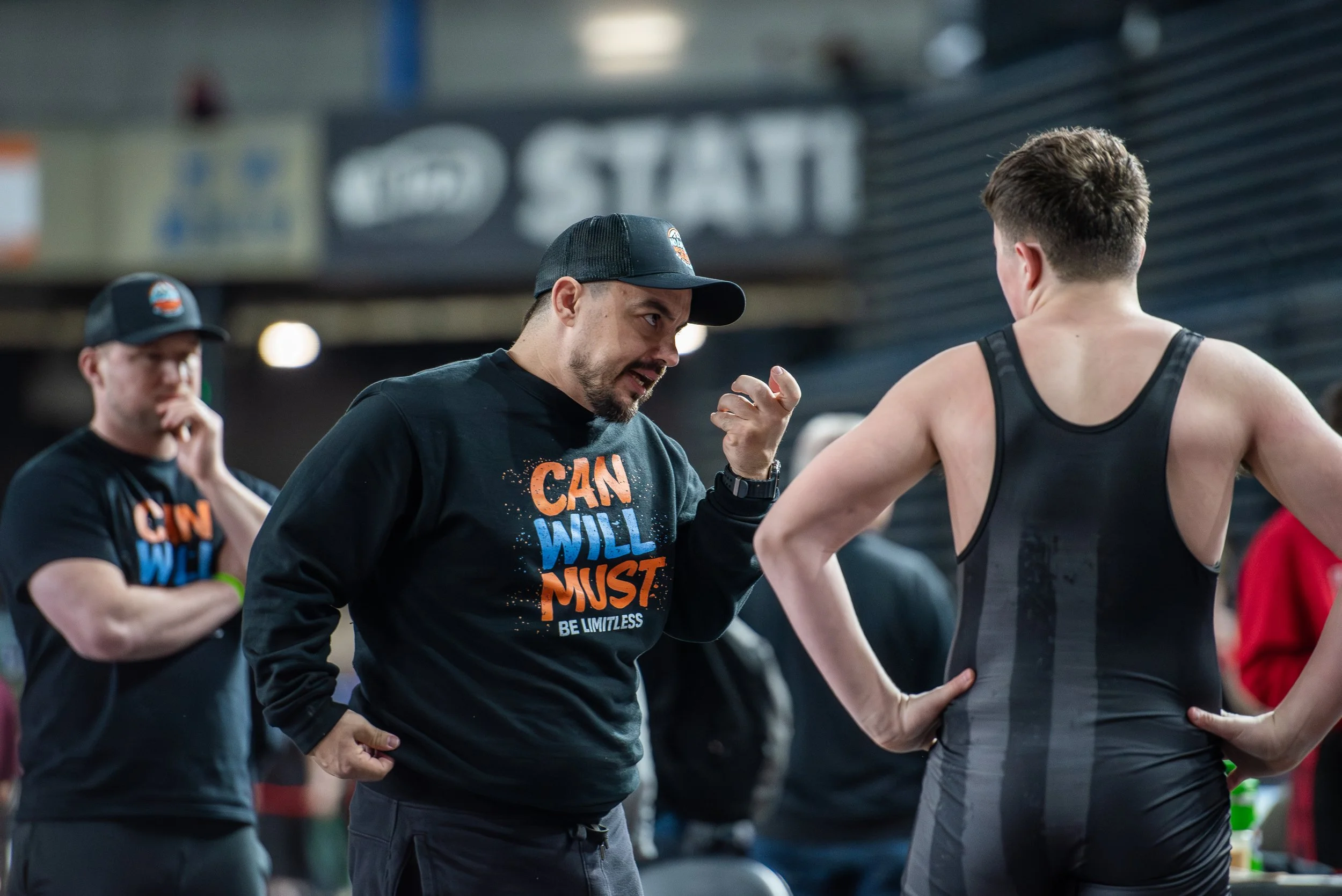
That is why I care so much about what we repeatedly put into the toolbox.
There is a difference between exposing a wrestler to a technique and developing ownership of it. Exposure has value. Athletes should see wrestling, experiment, play and develop broad movement competency. Ownership takes considerably more work. The athlete has to recognize the position, produce the movement against resistance, make corrections, encounter different reactions and continue solving the same general problem until the skill becomes dependable.
This is consistent with broader athlete-development science. The National Strength and Conditioning Association's position statement on long-term athletic development calls for a structured, logical, evidence-based and individualized approach to developing young athletes. The International Olympic Committee has likewise advocated evidence-informed and developmentally appropriate systems for youth athlete development.
Neither of those frameworks gives us much reason to use suffering as a proxy for learning.
A practice can be brutally hard and technically unproductive. Wrestlers can sprint from one drill to another, learn several unrelated techniques, wrestle live until everybody is exhausted and walk out of the room knowing they worked hard. I still want to know what became more stable during those two hours.
Did their stance improve? Can they maintain head position when somebody is pushing into them? Can they create the angle we have been working on? Are they recognizing the same reaction sooner? Can they find their primary attack when the first setup fails? When fatigue sets in, are they returning to the positions we have trained, or are they abandoning them?
Those questions tell me considerably more about development than how tired everybody looks at the end of practice.
There is some nuance here because good motor learning does require variability. I do not want a wrestler repeating one perfectly scripted sequence against a partner who gives the exact same reaction every time. Wrestling does not happen that way.
Research on contextual interference is useful on this point. A 2024 systematic review and meta-analysis found that higher contextual interference can improve motor-skill retention. A related meta-analysis found a positive overall effect on transfer, although the effect was much smaller and statistically uncertain when researchers looked specifically at applied settings. Researchers working in sport have consequently cautioned coaches against taking laboratory findings and simply maximizing randomness in practice.
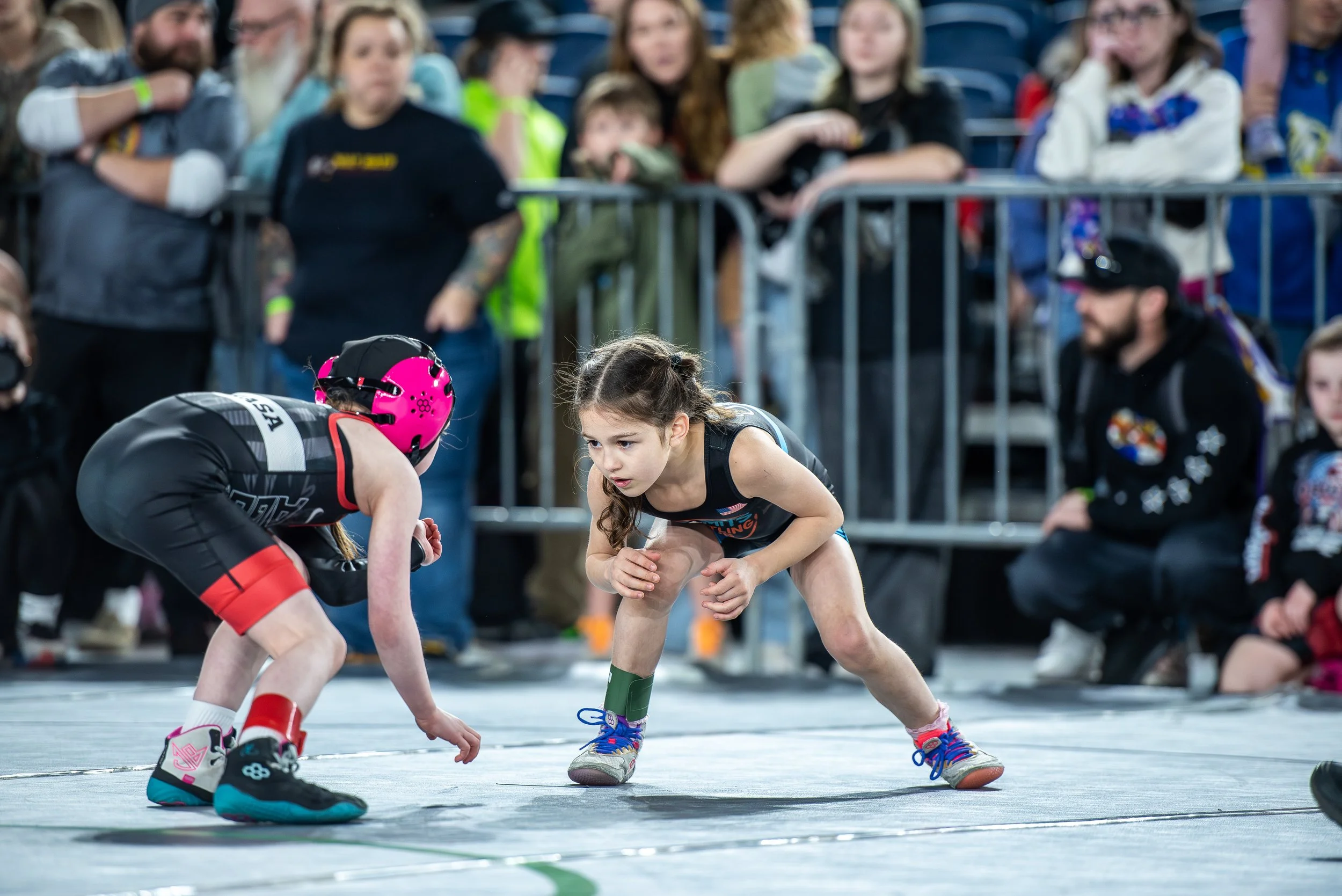
For wrestling, I think the practical answer is organized variability.
If we are developing an attack from an inside tie, I can change the partner's stance, pressure, motion, reaction and level of resistance while keeping the underlying technical problem recognizable. Eventually I can put the athlete into live situations where they have to find that position themselves. The environment becomes increasingly difficult without changing the entire technical direction every five minutes.
Now the wrestler is learning adaptability without building a cluttered toolbox.
The same principle changes how I think about “grinding.”
Imagine attaching a rope to an athlete, staking the other end into the ground and telling them to run as hard as possible. They could run a thousand miles an hour if they were capable of it. They could accumulate an enormous amount of distance and finish completely exhausted. The rope still keeps them traveling around the same point.
Hard work needs directionality.
Athlete development looks more like navigating a ship over a long distance. The destination gives the journey its direction, while the actual route requires constant small corrections. Wind changes. Current changes. Conditions change. Nobody responds by choosing an entirely new destination every afternoon.
Coaching works much the same way for me. Establish a developmental direction, observe what practice and competition expose, and make small corrections to the course.
For a young wrestler, that direction might include developing a reliable stance and motion, learning to create useful contact, establishing one or two primary attacks, understanding the positions that connect to those attacks and learning how to recover when an initial attempt fails. The system can expand as the athlete becomes more competent and starts encountering problems their existing tools cannot solve efficiently.
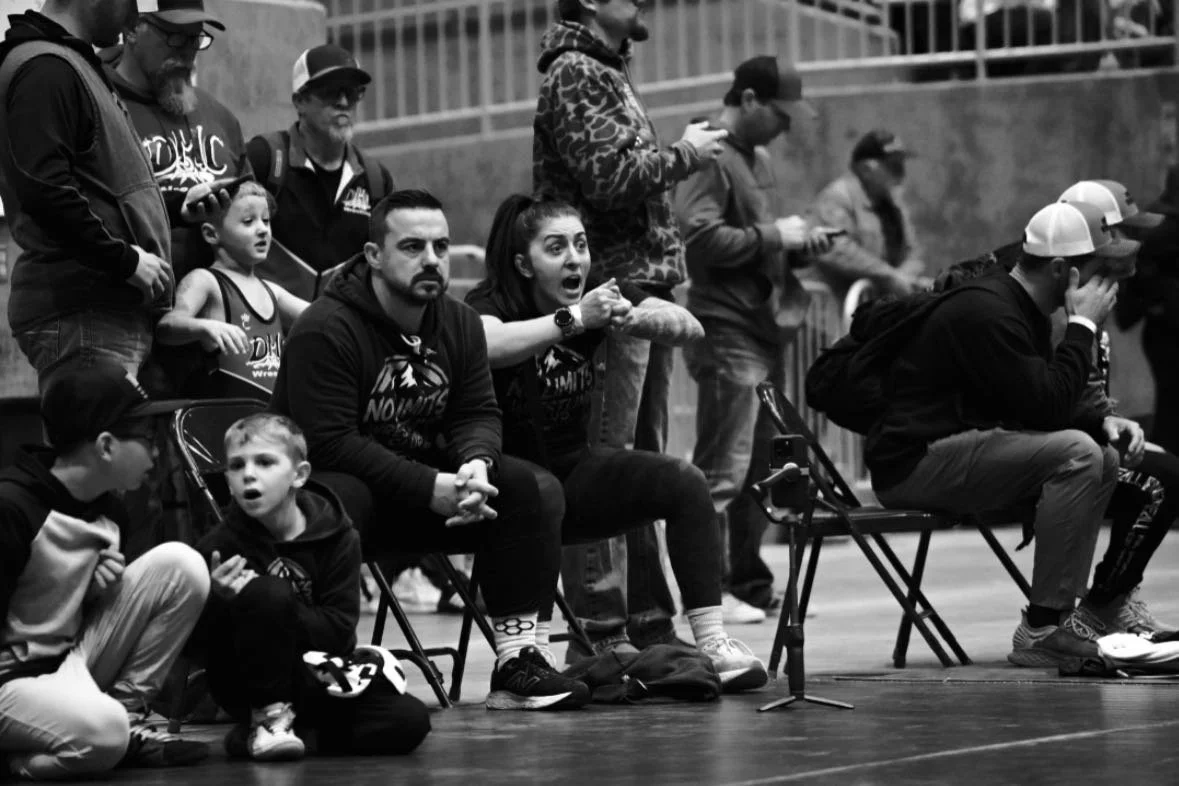
This also gives new techniques a reason to exist. We are adding a tool because the wrestler has developed enough understanding to recognize the problem that tool solves.
Research on deliberate practice offers another useful piece of this conversation, with an important qualification. Deliberate practice has sometimes been reduced in popular culture to the idea that enough hours inevitably create expertise. The sports literature does not support that simple interpretation. A meta-analysis found that deliberate practice accounted for about 18 percent of the variance in sports performance, and researchers increasingly describe expertise as the result of multiple interacting factors.
The useful part of deliberate-practice theory for coaches is its emphasis on purposeful work directed at specific weaknesses, repeated opportunities to perform, useful feedback and continued adjustment. Ericsson's later work also emphasized individualized practice designed around improving particular aspects of performance.
That is very close to what I want when I talk about building an intentional toolbox.
I still want wrestlers to train hard. I want them conditioned. I want them physically prepared for the sport. I want them to experience resistance, fatigue and difficult live situations because wrestling eventually demands all of those things.
Once the technical direction is clear, we can use intensity to pressure-test it. We can see whether an athlete can maintain their stance late in a round, whether their head position disappears when they get tired, whether they can still recognize the same opening against a harder opponent and whether they can return to good position after their first attack gets stopped.
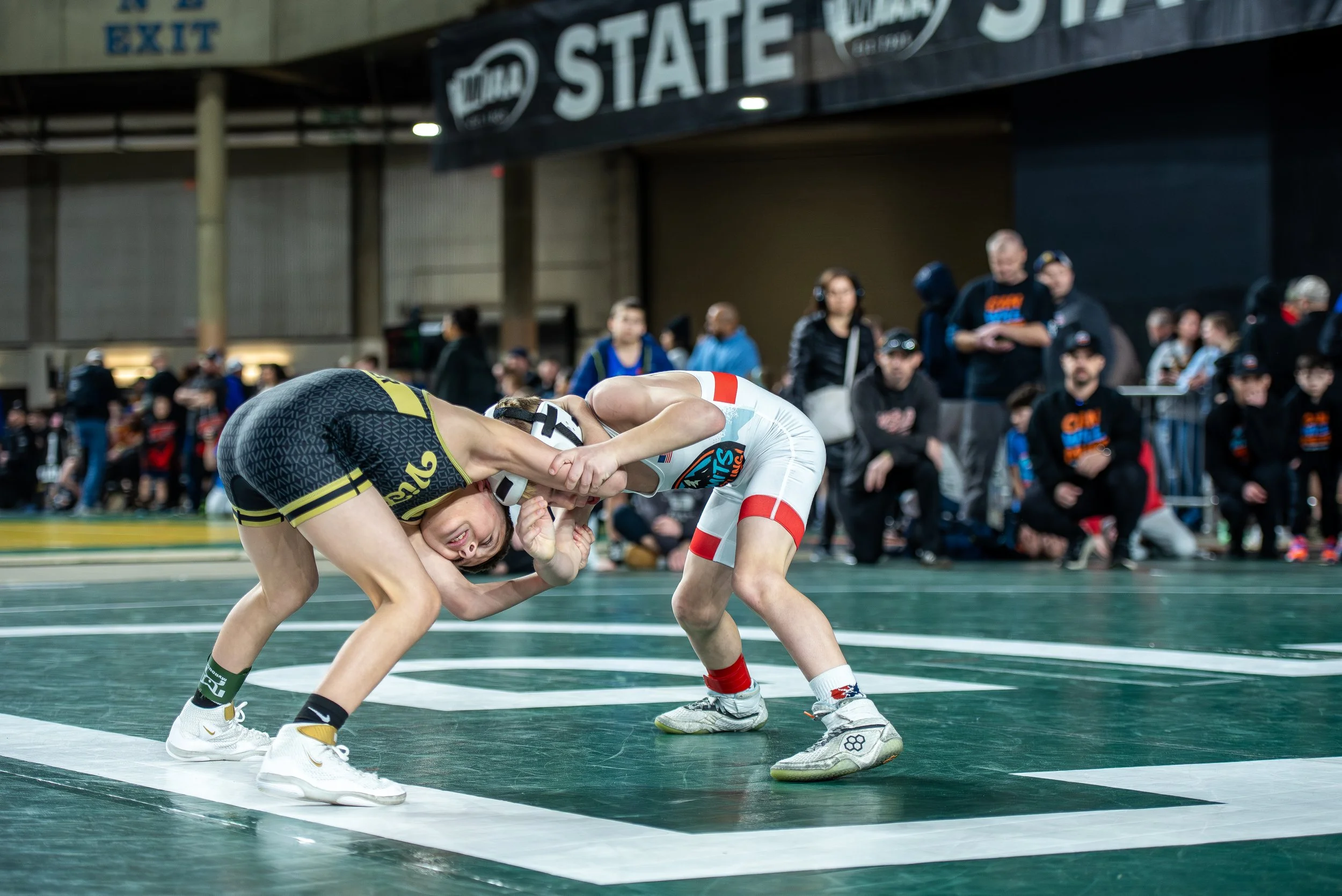
The grind now has a purpose.
My goal as a coach is to build a wrestler who owns a relatively small number of high-quality tools, understands where those tools fit and has practiced using them against enough realistic variation that they remain available when wrestling gets messy.
We can always add another tool later. I am much more interested in whether the wrestler knows where the toolbox is when they need it.
References & Further Reading
Bergeron, M. F., et al. (2015). International Olympic Committee consensus statement on youth athletic development.British Journal of Sports Medicine, 49(13), 843–851.
Czyż, S. H., Wójcik, A. M., Solarská, P., & Kiper, P. (2024). High contextual interference improves retention in motor learning: systematic review and meta-analysis. Scientific Reports, 14, 15974.
Czyż, S. H., Wójcik, A. M., & Solarská, P. (2024). The effect of contextual interference on transfer in motor learning: a systematic review and meta-analysis.
Ericsson, K. A. (2020). Towards a science of the acquisition of expert performance in sports: Clarifying the differences between deliberate practice and other types of practice. Journal of Sports Sciences.
Farrow, D., & Buszard, T. (2017). Exploring the applicability of the contextual interference effect in sports practice.Progress in Brain Research, 234, 69–83.
Lloyd, R. S., et al. (2016). National Strength and Conditioning Association position statement on long-term athletic development. Journal of Strength and Conditioning Research, 30(6), 1491–1509.
Macnamara, B. N., Moreau, D., & Hambrick, D. Z. (2016). The relationship between deliberate practice and performance in sports: A meta-analysis. Perspectives on Psychological Science.
Milton, J. G., Small, S. S., & Solodkin, A. (2004). On the road to automatic: Dynamic aspects in the development of expertise. Journal of Clinical Neurophysiology, 21(3), 134–143.
USA Wrestling. Coaching resources, Athlete Development Model, and National Coaches Education Program materials.
