
Youth wrestling has become very good at making little kids look like finished products. There are national tournaments, rankings, giant championship belts, highlight reels, social media graphics and multiple tournament circuits operating across the country. RMN runs national events and its own age-group rankings, while RAF NEXT GEN has entered the youth wrestling space with another national series and ranking system alongside the much larger USA Wrestling competition structure. RAF NEXT GEN events are sanctioned by USA Wrestling, but the series still has its own rankings and championship pathway.
All of that creates more opportunities for kids to wrestle, which is great. It also means phrases like “national champion,” “nationally ranked” or “one of the best kids in the country” need some context. A child can have an unbelievable weekend at one national tournament and get absolutely worked at another one a month later. A wrestler can be highly ranked within one tournament series while barely crossing paths with many of the best kids competing somewhere else.
That does not cheapen the championship. If a kid walks into a bracket and beats everyone placed in front of them, they earned what they won. Celebrate it, take the picture and let them be proud of it. The part that gets strange is when adults start using that Saturday afternoon result to decide what kind of wrestler an eight-year-old is going to become.
That is where I keep coming back to the same question: who cares who the best eight-year-old in the country is?
I care whether our eight-year-olds are learning how to wrestle. I care whether they are becoming coachable, whether they are learning how to respond when something goes wrong in a match and whether they still want to walk back into the room Monday. I absolutely want them trying to win when they compete, but I have very little interest in trying to predict their ceiling while they are still in elementary school.
An 8U national title can be an awesome memory. It is still one weekend in what could eventually become a fifteen- or twenty-year wrestling career.
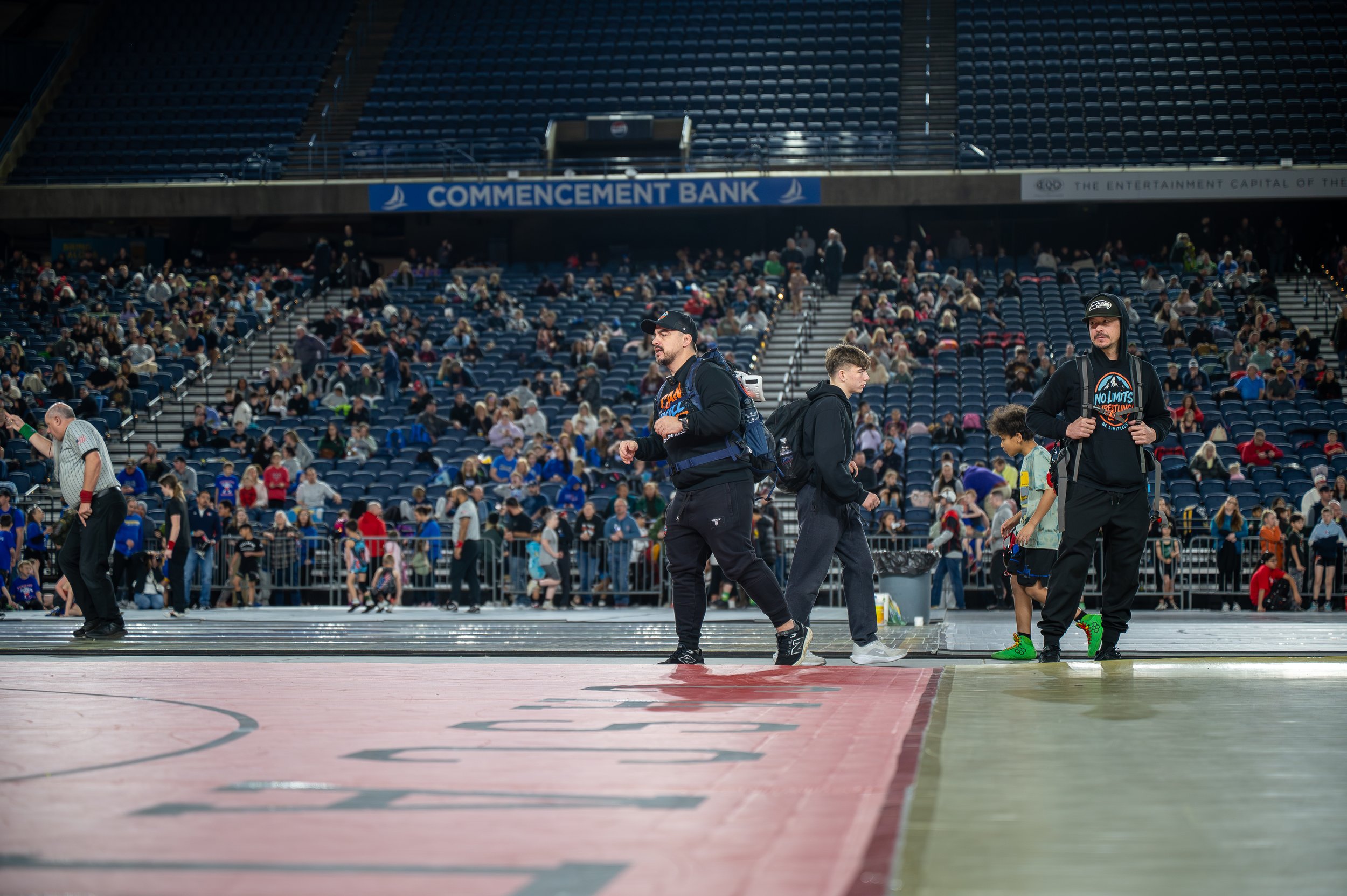
youth results are actually terrible at predicting adult results
There is real sports science behind this. A systematic review and meta-analysis published in Sports Medicine examined 13,392 athletes across Olympic sports and compared how well athletes performed as juniors with how well they eventually performed as adults. Researchers found only a small relationship between junior and senior performance, and the relationship became even weaker when the junior athletes being studied were younger.
Here is what that means in normal language: being one of the best kids right now tells us surprisingly little about whether that kid will eventually become one of the best adults. The younger the kid is, the worse our crystal ball gets.
The researchers quantified that relationship at roughly 0.148. Nobody at a wrestling tournament needs to remember that number, so here is the useful part: junior results accounted for only a very small portion of the differences researchers eventually saw among adult athletes. A ranking at eight, ten or twelve can accurately tell you that the child is very good at eight, ten or twelve. It becomes much less useful when somebody tries to use it to predict what that same athlete will look like at twenty-two.
That distinction matters because youth sports culture loves certainty. A kid wins enough tournaments and people start talking about him like the next ten years have already been written. Another kid loses for two seasons and adults start wondering if he simply “doesn't have it.” Research gives us very little justification for making either assumption.
The kid dominating today may continue dominating and eventually become an incredible adult wrestler. The kid struggling today may also eventually become an incredible adult wrestler. At eight years old, we have nowhere near enough information to know.
the aggressive kid who can overpower everybody has a real advantage
Every wrestling room has seen the kid who is physically ahead of everyone else. He is strong, aggressive and completely comfortable making contact. He gets his hands on another child and immediately starts moving him backward. He finishes questionable shots because he can keep driving through them, forces turns that would probably fail against someone stronger and occasionally gets away with being wildly out of position because the other kid cannot physically make him pay for it.
That kid may win a tremendous amount of wrestling matches. Those wins are legitimate, and aggression is something most coaches would rather develop than eliminate. Wrestling rewards athletes who are willing to attack, pressure and fight through positions.
The coaching problem is figuring out how much of that success comes from wrestling skill and how much comes from a physical advantage that may eventually shrink.
Imagine two eight-year-olds shooting the exact same technically poor double leg. One is much stronger than the opponent, keeps driving and gets the takedown. The other gets sprawled on immediately. One kid receives two points for the mistake while the other receives instant feedback that something needs to change.
If that happens hundreds of times over several seasons, the losing wrestler may be forced to learn cleaner setups, better head position, stronger finishes and better reactions much earlier. The stronger wrestler can sometimes delay learning those details because his body keeps allowing him to escape the consequences.
There is no scientific paper proving that the aggressive eight-year-old will inevitably struggle later, and I would never make that claim. Plenty of physically dominant young wrestlers continue developing technically and become outstanding older wrestlers. The risk comes when physical dominance becomes the athlete's entire wrestling system.
Eventually the smaller kids grow. They become stronger, more coordinated and more experienced. The kid who used to get flattened by a head-and-arm has now defended that head-and-arm approximately ten thousand times. The opponent who used to get pushed across the mat develops enough strength and positioning to hold ground.
When that happens, the wrestler who has been developing technique along with his physicality has an incredible combination. The wrestler who has spent years winning primarily because he could overwhelm children suddenly has technical problems that the scoreboard used to hide.
That is why coaches can watch a kid win a tournament and still come back Monday with a long list of corrections.
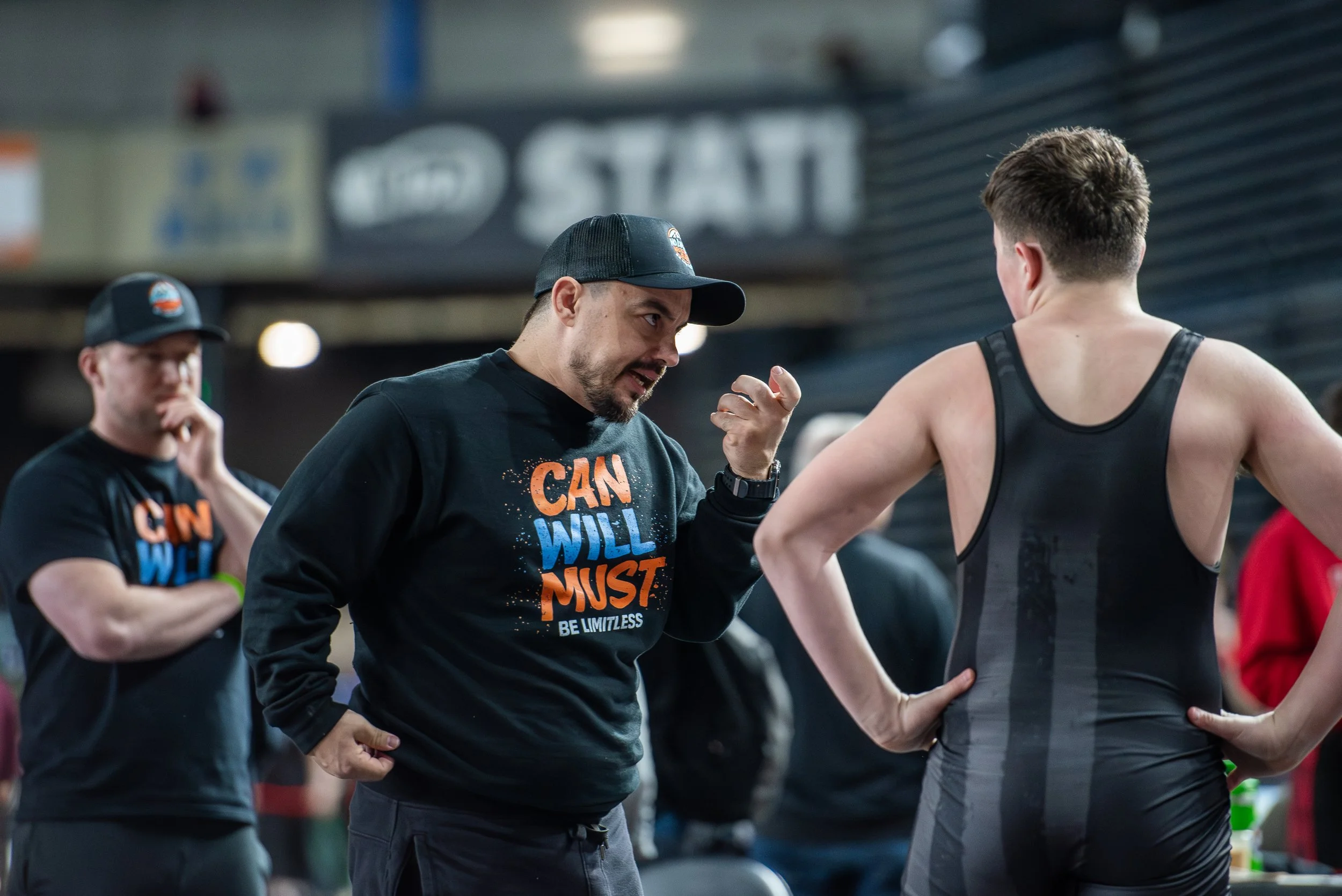
kids in the same age division are not developing at the same rate
Age divisions make children look much more developmentally equal than they actually are. Two kids can both be ten years old while being noticeably different in size, coordination, muscular development and general physical maturity.
Sports researchers study this through concepts such as biological maturation and the relative-age effect, where relatively older or more physically mature children within a youth division can have performance advantages over younger or later-developing peers.
Translated into wrestling-parent language, two kids can have “10U” printed next to their names and still be working with very different bodies.
One may already have noticeably more strength and coordination. The other may be several months or even years away from the same stage of physical development. When those two kids wrestle, we tend to look at the winner and say he is the better athlete without having any real ability to separate wrestling talent from developmental timing.
Researchers studying youth sports have repeatedly found that maturity and relative age can influence who gets identified as talented and who produces better results early. Those advantages become much less useful for predicting performance once athletes move toward adulthood and the developmental gaps between them shrink.
In practical terms, the kid getting physically pushed around at nine may not always be the smaller, weaker kid. Give childhood a few years to do what childhood does before deciding who has the higher ceiling.
the path to being the best junior is different from the path to being the best adult
Another major meta-analysis examined 71 studies containing information from 9,241 athletes, including Olympic, world and continental champions. Researchers compared the developmental histories of successful junior athletes with the histories of athletes who eventually became successful at the highest adult levels.
They found something that should make youth-sports parents pay attention. The athletes who were especially successful as juniors generally started their primary sport earlier, progressed faster and accumulated more specialized, coach-led practice in that sport. Adult world-class athletes showed a different pattern. They generally had more childhood involvement in other sports, progressed more gradually early in their careers and accumulated less intensive sport-specific training during childhood.
Here is the simple version: the development pattern that helps produce the best 12-year-old is not necessarily the same pattern that helps produce the best 22-year-old.
That does not mean putting a young kid in wrestling early is bad. Plenty of great wrestlers began very young. It means being ahead early and eventually going the farthest are two different things.
A kid who improves incredibly quickly at seven may legitimately be far ahead of his peers. Another kid may be improving much more slowly and still end up passing him years later. Slow development can be frustrating to watch because there may not be a medal proving that the work is paying off yet, but research does not give us a good reason to assume the slower-developing athlete has a lower ceiling.
A separate systematic review of professional, Olympic and other elite athletes looked at specialization and found that seven of nine studies examining performance favored athletes who specialized later. All eight studies that examined injury risk found lower injury risk among athletes who delayed specialization.
Again, normal-person translation: doing more, earlier, all year long does not automatically create a better adult athlete. In many of the sports studied, the athletes who eventually reached the highest levels had broader athletic backgrounds during childhood.
That is worth remembering before we treat an elementary-school wrestling résumé like a college application.
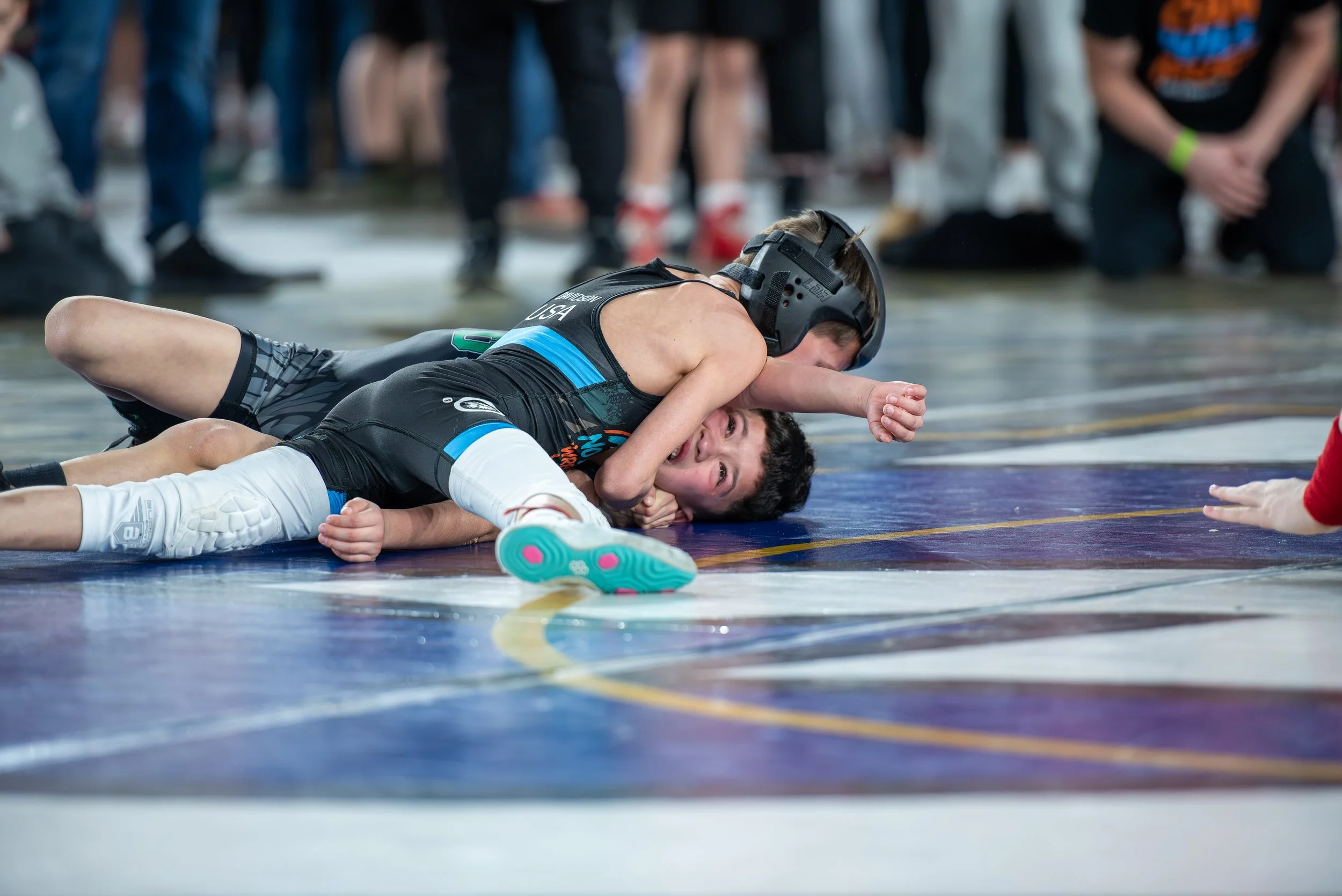
Brandon Slay spent his first season getting pinned
Brandon Slay is probably one of my favorite examples of why adults should be careful about deciding what a young wrestler is capable of becoming.
Slay eventually represented the United States at the 2000 Sydney Olympics and became an Olympic gold medalist. USA Wrestling's National Coaches Education Program has specifically used him as an example of a late-developing wrestler because Slay was reportedly pinned in every match during his first year in the sport.
Think about what that would look like in modern youth wrestling. His record would be awful. He would not have rankings, championship belts or podium pictures. Parents watching from the bleachers would have very little reason to believe they were watching somebody who would eventually become one of the best wrestlers on the planet.
If somebody had evaluated his future entirely from that first season, they would have been spectacularly wrong.
Slay kept wrestling long enough for the athlete he eventually became to develop. His first-year results were real, but they were almost useless as a forecast of the rest of his career.
Pat Smith didn't really start winning until middle school
Pat Smith eventually became the first wrestler in NCAA Division I history to win four individual national championships. Looking backward from that accomplishment, it would be easy to assume he was one of those kids who had been terrorizing national youth tournaments since kindergarten.
His brother John Smith has described a completely different development path. In an interview with InterMat, John said he did not consider Pat particularly talented when he was young and that Pat did not really start winning until around eighth or ninth grade.
That is almost funny when you compare it with modern youth wrestling expectations. By eighth grade, some kids have already spent nearly a decade competing. They have hundreds of matches, national tournament experience and years of rankings behind them.
Pat Smith was apparently still figuring out how to win.
Then he became the first four-time NCAA champion in history.
The kids who were better than Pat Smith when they were nine years old probably really were better than Pat Smith when they were nine years old. Nobody needs to rewrite that history. Their mistake would have been assuming that being better at nine meant they would still be better at nineteen.
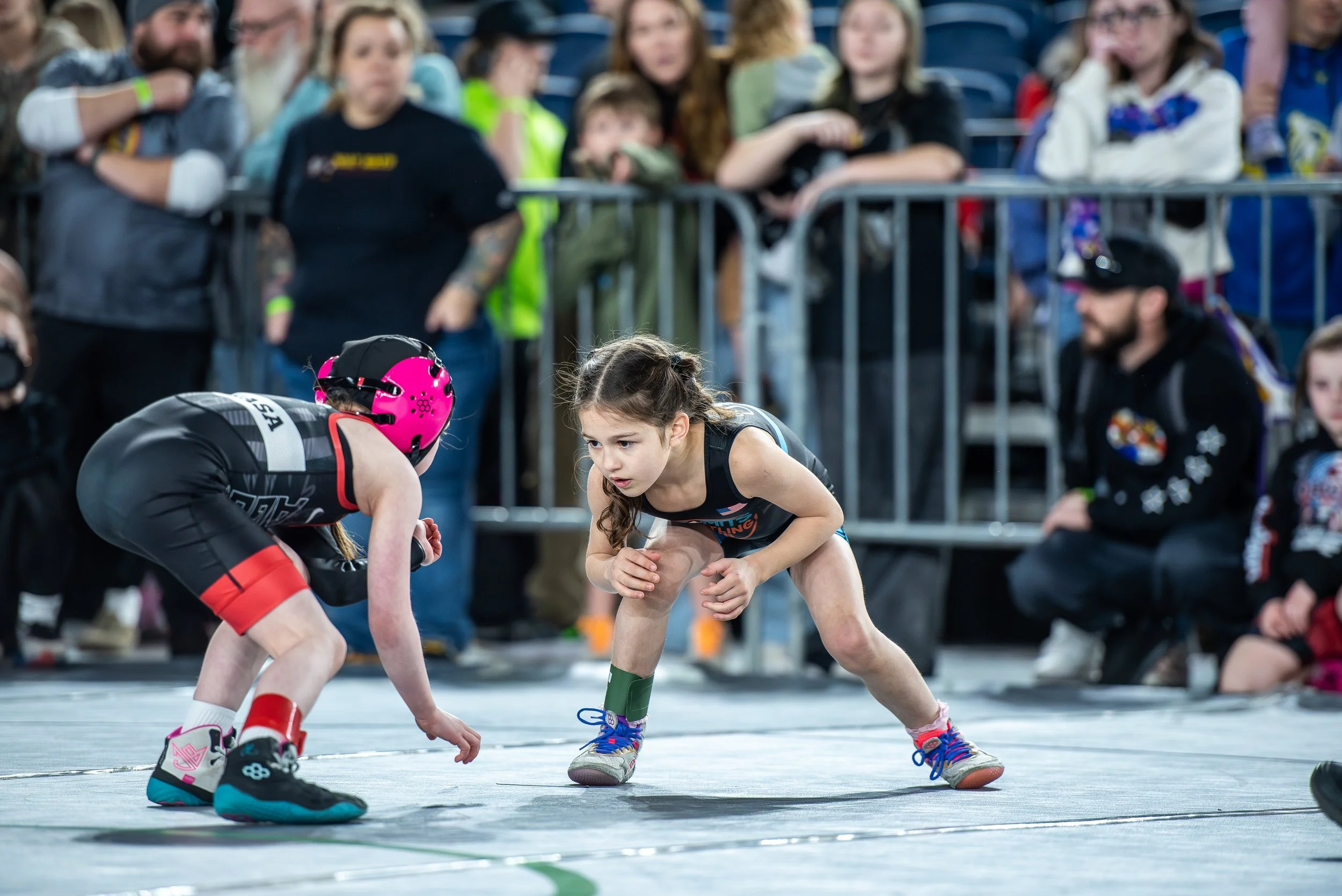
Jamill Kelly kept developing after the checkpoints people usually care about
Jamill Kelly gives us an even more interesting example because he did not suddenly become dominant in high school or college either.
Kelly never won a California high school state championship. His best finish was fourth. He eventually wrestled at Oklahoma State and did not become an NCAA All-American there.
If you were trying to predict his ceiling from the usual résumé checkpoints, you had multiple opportunities to underestimate him. He was not the high school state champion, and he was not standing on an NCAA podium at the end of college.
His wrestling career kept going.
Kelly eventually represented the United States at the 2004 Athens Olympics and won a silver medal.
That is one of the reasons I love his story. His development did not follow the clean progression people like to imagine, where the youth champion becomes the high school champion, then becomes the NCAA champion and eventually becomes the Olympic medalist.
Sometimes a wrestler keeps getting better after everybody thinks we have enough information to know who he is.
Andrew Nadhir went 10-18 as a college freshman
Andrew Nadhir is another example USA Wrestling has highlighted when discussing late bloomers. He entered Northwestern without the résumé of a superstar and went 10-18 during his freshman season. He improved to 14-12 the following year, then 24-12 as a junior. By his senior season, Nadhir went 34-8 and became an NCAA All-American.
For anyone who does not immediately appreciate how dramatic that progression is, he went from losing almost twice as many matches as he won during his first college season to standing on an NCAA podium three years later.
There was no requirement that his freshman record accurately describe the wrestler he would become as a senior.
Youth wrestlers deserve at least that much patience.
Sometimes development looks boring while it is happening. A kid gets a little better on bottom this season. His stance improves next season. He finally learns how to finish through a good sprawl. He becomes physically stronger, starts understanding hand fighting and gradually stops making the same mistakes.
Then five years go by and everyone talks about how talented he is.

winning can hide technical problems
Parents understandably notice wins and losses first because they are easy to measure. The wrestler either won or lost, the bracket shows where they placed, and the medal hanging around their neck tells everybody what happened.
Coaches are usually watching a much longer list of things. Did the wrestler stay in stance? Did he create a real setup before attacking? Did he maintain head position? Did he finish correctly when somebody defended? Did he understand where he was on the edge? What happened mentally after the other kid scored first? Could he escape when somebody on top actually knew how to ride?
A wrestler can answer several of those questions badly and still win the match.
If he is considerably stronger, faster or more experienced than his opponent, he may get away with technical mistakes for years. The scoreboard keeps telling him everything worked because the scoreboard only knows whether two points were awarded. It has no idea whether the technique producing those two points is going to survive against a sixteen-year-old who is just as strong.
Another wrestler can execute much better technique and still lose because the other kid is simply better right now. That is why coaches occasionally get more excited about something that happened in a loss than something that happened during an easy win.
We can watch a wrestler go 1-2 at a hard tournament and know he just made enormous progress. We can also watch a wrestler go 4-0 and know Monday's practice needs to address some serious technical problems.
The medal tells us what happened that weekend. It does not grade the quality of the wrestling underneath it.
difficult tournaments still have a huge place in development
None of this means competition should become soft or that parents should stop caring about results. Wrestling is a competitive sport, and kids eventually need to learn how to win close matches against good wrestlers.
A kid who spends years beating weak competition can develop a very inaccurate idea of where his wrestling actually is. That is one reason No Limits goes to difficult tournaments and seeks out difficult competition. Sometimes a wrestler who looks dominant locally travels somewhere else and gets a pretty uncomfortable education.
That can be extremely useful.
Now the athlete knows that the position which worked easily at home broke down against better defense. The coach knows exactly where the technical hole is. The kid gets to feel what another level of wrestling actually feels like and then returns to practice with something specific to work on.
The tournament becomes information.
That is a much healthier use of competition than treating every weekend as a referendum on whether a nine-year-old is talented.
early success can become part of a kid's identity if adults let it
Modern youth wrestling can make a child's résumé feel surprisingly adult. Some kids have rankings, championship graphics, huge belts, highlight accounts and years of tournament results online before they reach middle school.
Celebrating them is completely fine. Winning something difficult should feel good. Kids should enjoy seeing their hard work turn into something tangible, especially when they have been training for it.
Adults have to be careful about what happens when the celebration becomes identity.
A child who believes “I love wrestling and I'm getting pretty good at it” has room to struggle.
A child who believes “I am the kid who wins” has a much harder problem when winning stops.
Eventually every wrestler meets somebody who is better. Another kid catches up physically. A favorite move gets figured out. A growth spurt puts the athlete into a completely different body. Someone who was barely competitive two years ago suddenly becomes very difficult to beat.
Those moments are part of wrestling.
A kid who has learned that results provide information can lose, be upset about it and eventually go back to work. A kid whose entire identity has been built around being better than everyone else has much more to lose emotionally when the hierarchy changes.

the kid getting crushed today may simply be early in the story
When I look at an eight-year-old who is struggling, I have no interest in deciding what his ceiling is.
Maybe he is going to become an average high school wrestler.
Maybe he will quit in two years and fall in love with baseball.
Maybe something clicks at fourteen and he becomes unbelievable.
We don't know.
Brandon Slay's first season did not tell us Olympic gold was coming. Pat Smith's elementary-school results did not tell us four NCAA championships were coming. Jamill Kelly's high school and college résumés still did not tell us an Olympic silver medal was coming.
Sports research tells us the same thing in a much less interesting way: the younger athletes are, the less useful their current performance becomes for predicting their eventual adult performance.
That should change how we react to both ends of the youth wrestling spectrum.
The kid winning everything deserves coaching, because there are still enormous parts of wrestling he has never had to learn.
The kid losing everything deserves coaching, because we have absolutely no idea what he could become if he stays in the room long enough to learn them.
so who cares who the best eight-year-old in the country is?
I genuinely don't know who the best eight-year-old wrestler in America is, and I don't particularly care to figure it out.
There are probably several kids who could make a convincing argument depending on which tournament results and ranking system somebody wants to use. They are probably ridiculously talented little wrestlers, and I hope they continue loving the sport long enough for us to see what they become.
I am much more interested in what happens next.
Can the aggressive kid learn enough technique that he is still dangerous when everybody else becomes strong? Can the undersized kid stick around long enough for his body to catch up? Can the wrestler who wins everything learn how to handle the first season when he doesn't? Can the kid going 0-2 keep improving without deciding at ten years old that he simply isn't good at wrestling?
Those questions matter because everybody's eight-year-old eventually stops being eight.
When one of our kids wins a national tournament, we are going to celebrate it. Take the picture with the belt, enjoy the weekend and be proud of the work that went into earning it. When practice starts again, that wrestler is going to walk back into the same room and continue learning.
The kid who went 0-2 will walk back into that room too.
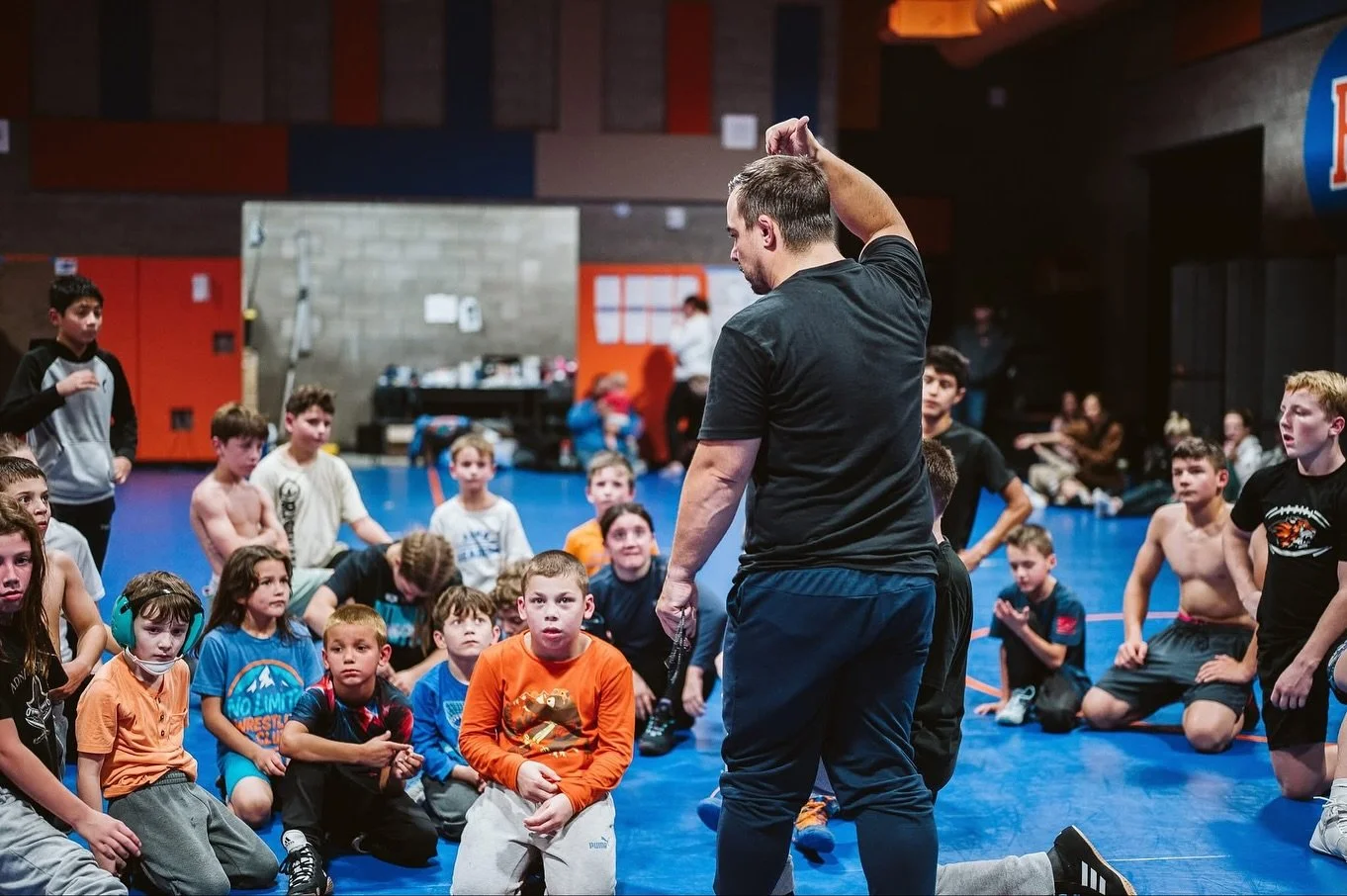
At No Limits, we have every intention of coaching both of them like their story is nowhere close to finished.
