
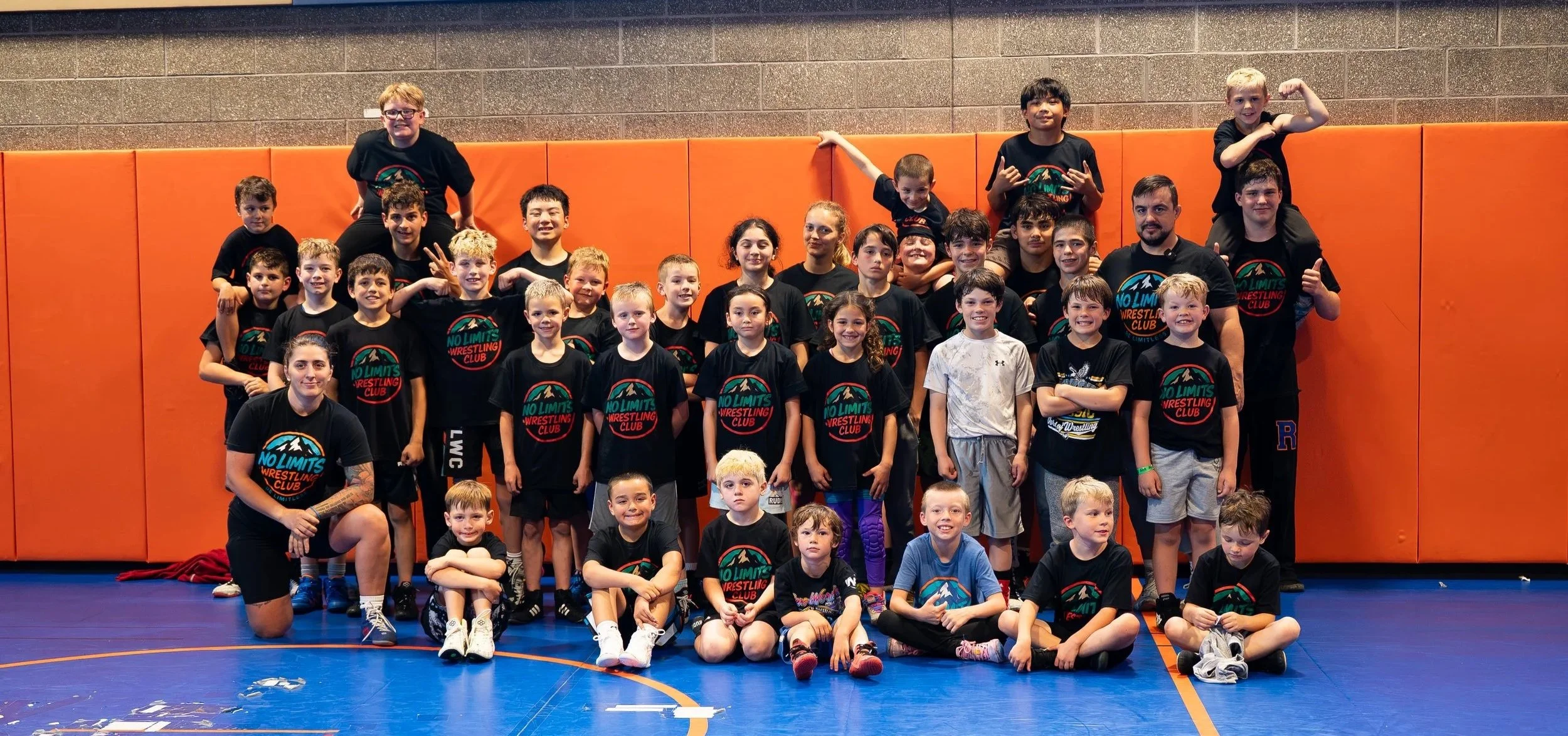
Every fall, when folkstyle season begins, we get an influx of kids who haven't trained with our program before. Some are incredibly talented. They pick up technique quickly, look great in drilling, and can hold their own against experienced wrestlers in the room.
Then we get to tournaments, and those same kids sometimes struggle to put it together.
They hesitate on attacks they've been hitting all week. They get taken down early and start forcing positions. They become frustrated when a match doesn't go according to plan, and the confidence they showed during practice disappears.
We've all seen the wrestler who looks like a future state champion in the wrestling room and then struggles to wrestle their own match on Saturday. Talent is there. The technical ability is developing. Something is getting lost when competition introduces pressure.
We call this being a practice champion.
What happens when the match gets uncomfortable?
Wrestling creates situations that can be difficult for young athletes to handle. You can spend an entire week working on your offense, step onto the mat, and get taken down in the first 20 seconds. Your opponent might be stronger than you expected, or you might make a mistake that costs you points.
Some kids can work through those moments. Others start wrestling emotionally. They abandon the positions they've been practicing, take bad shots, or become so focused on the score that they struggle to make good decisions.
Coaches often describe this as a lack of mental toughness. Sometimes that description fits. In other cases, the athlete hasn't developed the skills to manage pressure, recover from mistakes, or trust their preparation when a match becomes difficult.
Sports psychology research gives us a useful way to understand this gap. An athlete's physical ability and technical knowledge are only part of their performance. Their beliefs about their own abilities, their attention, and their response to setbacks can influence how well they execute those skills under pressure.
A talented wrestler can spend years improving physically while giving very little attention to those mental skills. When the competition gets difficult, they have to figure everything out in the moment.
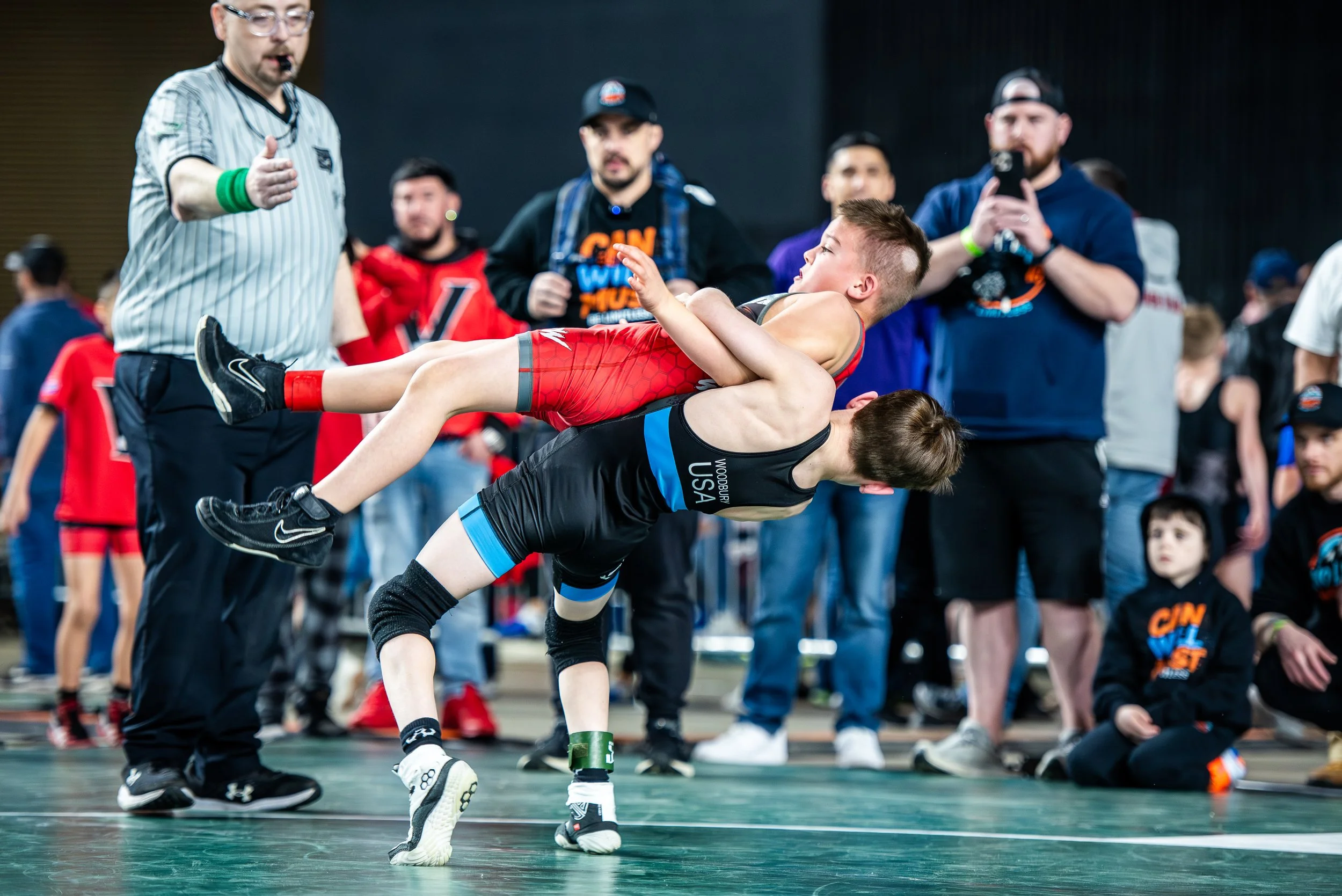
A mental edge develops through preparation
At Limitless Performance Systems, we work with athletes on the mental side of performance because we see how often it affects what happens on the mat. Our Limitless Mindset program addresses confidence, accountability, focus, emotional control, and the habits athletes develop around preparation. <Cite refs={["turn122927search0","turn122927search2"]}/>
One area that deserves particular attention is goal setting.
Young wrestlers often have big ambitions. They want to win state, qualify for national tournaments, or become the best wrestler in their weight class. Having those ambitions can give an athlete direction, but the goal alone doesn't tell them what to work on during Tuesday's practice.
A state championship requires a lot of development. The athlete has to improve their technique, learn how to compete against different styles, and become more consistent in difficult positions. Those changes happen over time, through work that often feels pretty ordinary on a day-to-day basis.
Research on goal setting in sport supports the value of focusing on the actions athletes need to execute, not just the results they hope to achieve. A 2022 systematic review and meta-analysis by Williamson and colleagues examined goal-setting interventions in sport and found particular benefits associated with process goals for performance and athletes' belief in their own capabilities. Read the research.
That connection makes sense in wrestling. An athlete who knows what they're trying to improve has something concrete to work toward each time they step on the mat. Progress becomes easier to recognize, and setbacks become easier to evaluate.
Confidence has to come from somewhere
We hear athletes say they need more confidence before a tournament. Parents say it, too. They know their kid can wrestle well in practice, and they want that version of their athlete to show up in competition.
Confidence is complicated when it depends on the expectation of winning. A wrestler who feels great after dominating an opponent can lose that confidence after one bad exchange. If they interpret every mistake as proof that they're a worse wrestler than they thought, it becomes difficult to recover mentally during a match.
Psychologists use the term self-efficacy to describe a person's belief in their ability to perform a particular task. An athlete's belief in their ability to execute an escape, finish an attack, or work through a difficult position can affect how they approach that situation.
Preparation gives that belief something to rest on.
Consider a wrestler who has struggled from bottom all season. They keep getting broken down, giving up turns, and losing control of the match. After weeks of focused work, they start doing a better job of building their base and escaping against resistance. They have evidence of improvement because they've experienced it in practice.
When they find themselves underneath a tough opponent at a tournament, that experience gives them a reason to trust their ability to work out of the position.
They might still feel nervous. They might still lose. Their confidence can survive a difficult moment because it comes from knowing they have developed a skill they can use.
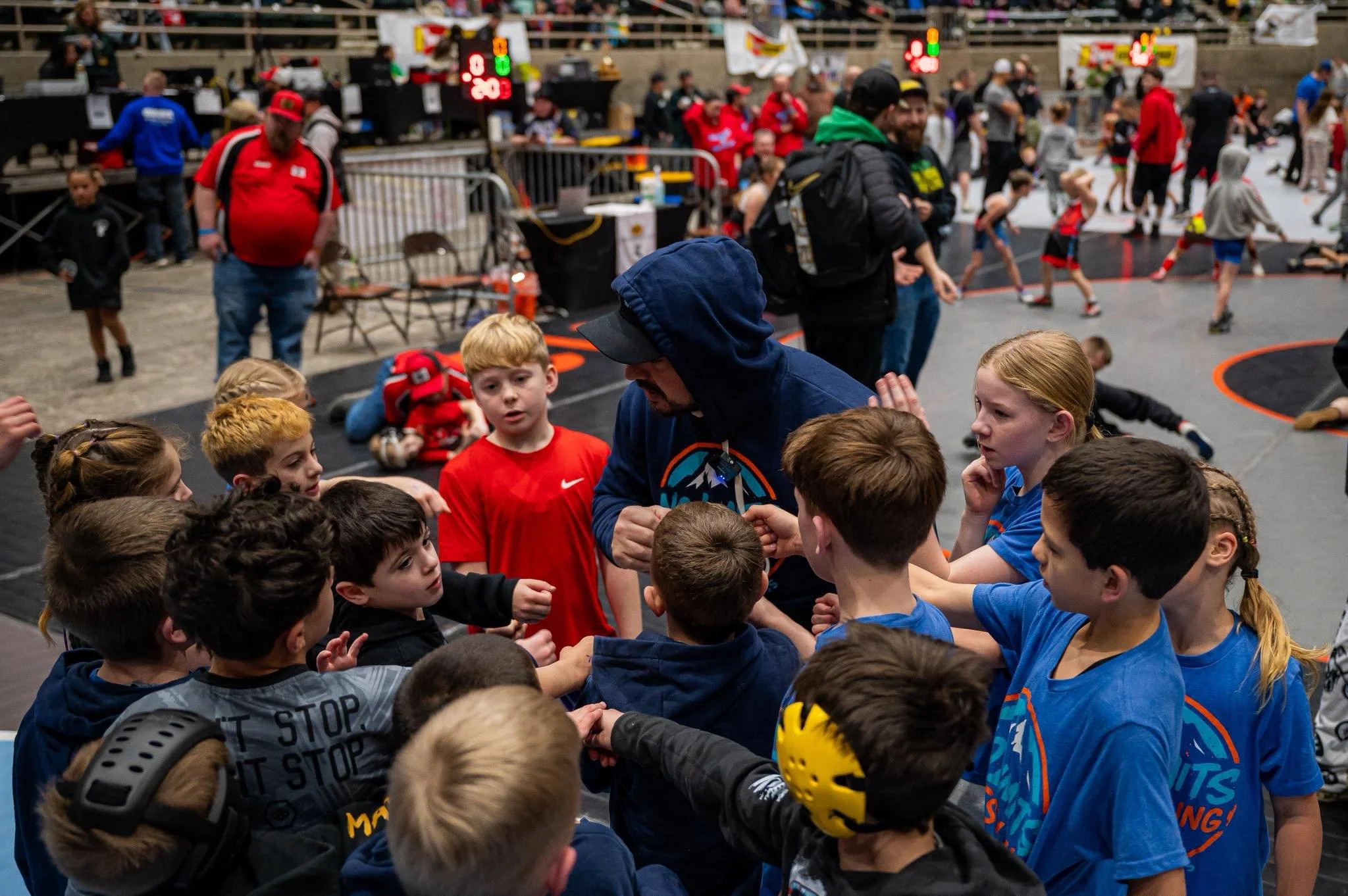
The response to a mistake matters
Every wrestler makes mistakes. Even experienced competitors take bad shots, miss opportunities, and find themselves in positions they didn't expect.
The mental response can determine what happens next.
A young wrestler who gets taken down might become angry, rush their next attack, and give up another set of points. Another wrestler might recognize the situation, work to improve their position, and continue competing.
That ability to recover deserves attention during athlete development. It takes experience to learn how to manage frustration without allowing it to control the next decision.
The same applies after a loss. An athlete who spends the entire drive home thinking about how bad they wrestled has little direction for the next practice. An athlete who can look honestly at what happened has something useful to bring back to the room.
Coaches have a responsibility here, too. If every conversation after a tournament centers on winning and losing, athletes learn to judge themselves by the scoreboard. They need room to discuss what happened during the match and how their decisions affected the result.
This doesn't mean making excuses for poor performances. Athletes need to take responsibility for their preparation and their choices. They also need to learn that a disappointing result can provide useful information about what they need to improve.
Why we work on mindset outside practice
No Limits wrestlers have access to mindset training through Limitless because we want mental development to receive the same deliberate attention as physical and technical development.
Our weekly online sessions give athletes time to discuss competition, work toward their goals, and reflect on the challenges they're experiencing. Those conversations help us address the mental side of wrestling outside the immediate pressure of a practice or tournament.
The work continues over time. Athletes have to learn how to approach preparation, manage their response to difficult situations, and take ownership of their development. A single conversation about confidence won't resolve every struggle an athlete experiences on tournament day.
The purpose is to help them develop a more consistent approach to competing. That includes learning how to evaluate their own progress and understanding how their daily work connects to their longer-term ambitions.
Parents sometimes see a wrestler struggle at a tournament and assume they need more practice. Additional mat time can help, especially when an athlete has technical gaps. When the wrestler already demonstrates the necessary skills in the room, though, the next step may involve understanding why those skills are difficult to access during competition.
That is a different problem, and it deserves attention.
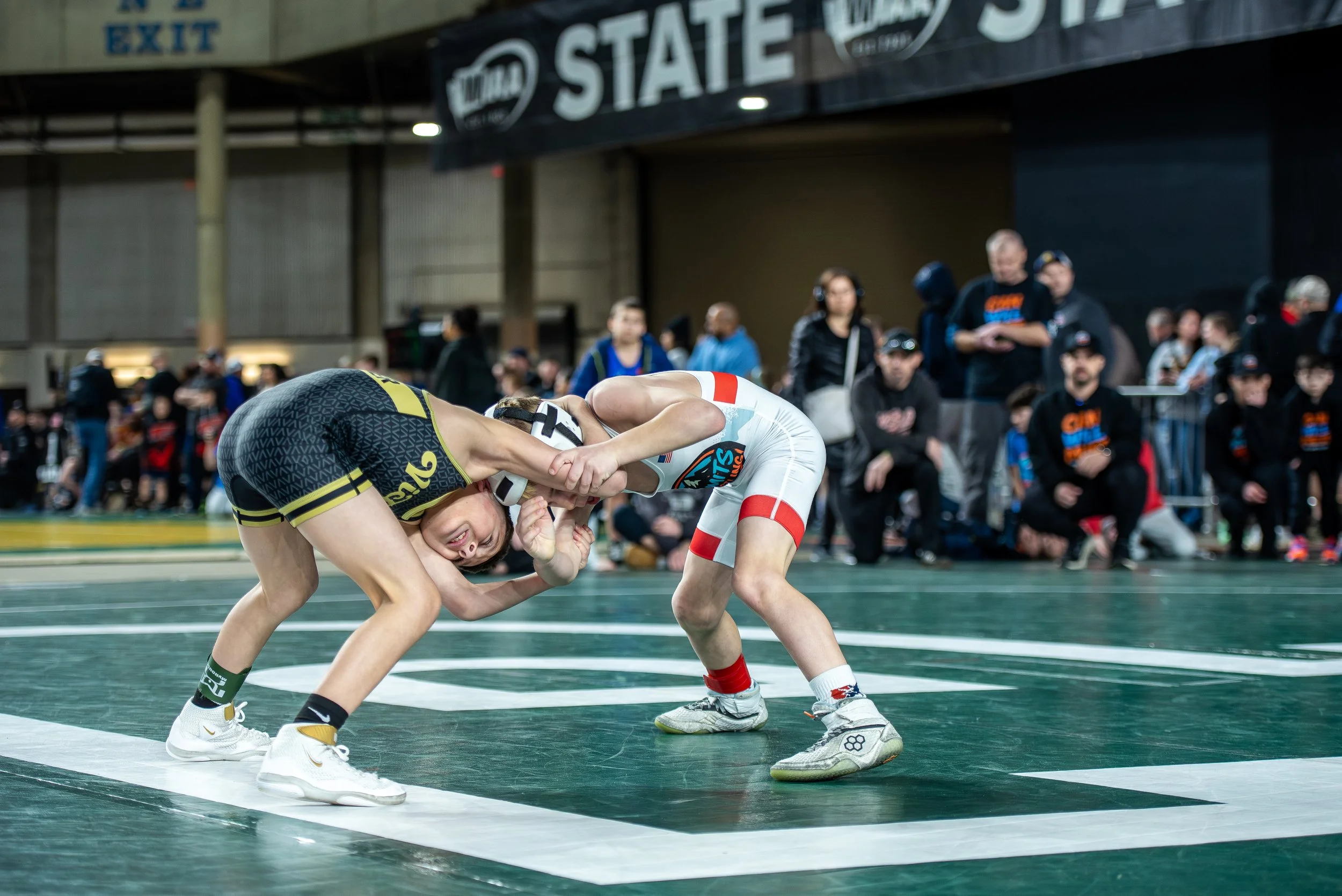
Developing the wrestler who shows up on Saturday
When new athletes enter our room each fall, we see plenty of physical talent. Our job is to help those kids continue developing their wrestling while learning how to handle the demands of competition.
A wrestler who struggles under pressure can improve. They can learn to approach their goals with more direction, develop confidence through preparation, and respond to mistakes with better decisions. Those skills take time, and their development won't always show up immediately in the win-loss record.
We want our athletes to compete with a clear understanding of what they're working toward and the preparation they've put into getting there. When they give up an early takedown, we want them to keep wrestling their match. When they lose, we want them to understand what happened and return to practice ready to work.
The wrestler who dominates practice has already demonstrated some of the ability needed to succeed. The next step is learning to access that ability when the opponent is unfamiliar, the score is tight, and the match becomes uncomfortable.
That work belongs in athlete development just as much as learning a new technique. It's part of what we expect to develop at No Limits Wrestling Club.
References and further reading
The following research explores how goal setting, confidence, and mental skills relate to athletic performance.
Goal setting and performance
Williamson, O., Swann, C., Bennett, K. J. M., Bird, M. D., Goddard, S. G., Schweickle, M. J., & Jackman, P. C. (2024). The performance and psychological effects of goal setting in sport: A systematic review and meta-analysis. International Review of Sport and Exercise Psychology, 17(2), 1050–1078.
Self-talk and athletic performance
Hatzigeorgiadis, A., Zourbanos, N., Galanis, E., & Theodorakis, Y. (2011). Self-talk and sports performance: A meta-analysis. Perspectives on Psychological Science, 6(4), 348–356.
Confidence and self-efficacy
Pre-Event Self-Efficacy and Sports Performance: A Systematic Review with Meta-Analysis. This review examines research on athletes' belief in their ability to perform and its relationship with competitive outcomes.
Sport psychology and performance
Lochbaum, M., Stoner, E., Hefner, T., Cooper, S., Lane, A. M., & Terry, P. C. (2022). Sport psychology and performance meta-analyses: A systematic review of the literature. PLOS ONE, 17(2), e0263408.
