

How intentional coaching, technical development, and evaluating our own instruction can improve what young wrestlers learn throughout a season.
I think one of the most important things a youth wrestling coach can do is evaluate their own ability to teach. We spend an enormous amount of time evaluating our athletes, identifying where they're struggling, and deciding what they need to improve, but how often are we taking that same approach to our own coaching? If a wrestler spends an entire season in our room and continues making the same fundamental mistakes, at some point we have to examine what we're teaching, how we're teaching it, and whether we're following a curriculum that actually allows our athletes to develop their technical knowledge throughout the season.
When I talk about evaluating technical development, I'm looking at what our wrestlers actually understand about the sport. Can they recognize a position and explain what they're trying to accomplish? Do they understand why their hips, hands, or feet need to be in a particular place? When something goes wrong during live wrestling, can they identify what caused them to lose the position and begin making the necessary corrections? These are things we should be teaching intentionally throughout the season, and they're also things we should be evaluating independently of how many matches a child is winning.
Developing that kind of technical understanding requires coaches to be intentional about what they're teaching throughout the season. Every practice should build on skills the athletes have already learned, giving them opportunities to apply those techniques under increasingly difficult circumstances while continuing to correct the fundamental positions involved. A coach should be able to explain why a particular technique is being taught, how it connects to the rest of the curriculum, and what the athletes need to understand before moving on to something more advanced.
I see this happen in youth wrestling more often than I'd like. A coach walks into practice and decides to teach a technique they saw over the weekend, or they spend an entire practice working on something because one wrestler got caught in that position during a tournament. The following week, they're teaching something completely different because another wrestler struggled with another situation. Before long, the kids have been introduced to dozens of techniques, but there hasn't been much consistency in what they're actually being asked to learn or retain. When practices are planned this way throughout an entire season, it's difficult to establish whether the athletes are developing a meaningful understanding of wrestling or simply being exposed to new movements every week.
There's nothing wrong with teaching something new or addressing problems that show up during competition. Those things should have a place within an established curriculum. If the kids are consistently struggling to finish their takedowns, we should be able to identify exactly where that breakdown is happening and spend time correcting it. That might mean revisiting their penetration step, fixing their head position, or teaching them how to respond when an opponent sprawls. We can spend several practices working through those problems while continuing to build on the fundamental technique we're trying to develop. By the end of the season, I want our coaching staff to be able to identify where our instruction was successful and where we need to make changes. If the same mistakes are showing up across the majority of our athletes month after month, we have a responsibility to examine whether our curriculum is accomplishing what we intended.
Building a season around six fundamental techniques
One approach I believe can be incredibly effective for youth wrestling programs is building a season around a small number of fundamental techniques. For our purposes, I'm going to call this the Fundamental Six, although the exact number is less important than establishing a clear technical foundation that coaches can consistently build on. The idea is to identify a manageable group of techniques that every wrestler should learn during the season and develop a curriculum around the positions, reactions, and problems that naturally occur when those techniques are applied against an opponent.
Imagine starting the season by identifying six basic techniques that every wrestler in your room should understand. Those techniques would include foundational skills from neutral, top, and bottom positions, selected according to the age and experience of the athletes in your program. You might choose a single leg, a double leg, a basic sprawl, a stand-up, a breakdown, and a fundamental top-control technique. Another coaching staff might make slightly different selections depending on the needs of its athletes. What matters is that everyone on the coaching staff understands which techniques the program is prioritizing and how the instruction will progress throughout the season.
Once those techniques have been established, the remainder of the season revolves around helping wrestlers become increasingly competent in the positions that develop from them. Teaching a double leg during the first few weeks doesn't mean you've completed your instruction on that technique. A wrestler who understands how to perform a penetration step still needs to learn what happens when their opponent sprawls, how to adjust their head position when they're losing the angle, and how to maintain control when the initial finish doesn't work. Every one of those situations creates an opportunity for additional technical instruction, and the wrestler gradually develops a more complete understanding of the original movement because they've spent months learning how to respond when an opponent changes the position.
The same thing happens with bottom wrestling. A stand-up might be introduced as a relatively simple sequence, but anyone who has coached wrestling knows how many technical problems develop once an opponent begins applying pressure. Kids forget to control hands, allow their hips to get too far away, or stand straight up without establishing a position they can maintain. Those mistakes can become the focus of entire practices throughout the season. A wrestler who learns a basic stand-up in October should have a considerably better understanding of bottom position by February because they've spent months learning how to execute that movement against different partners, respond to resistance, and recognize when they're about to lose control of the position.
A curriculum built around fundamental techniques can include an enormous amount of technical instruction because wrestling positions develop into increasingly complicated situations as opponents begin defending them. A single leg, for example, can produce several different finishing positions depending on how an opponent reacts. We can spend weeks teaching athletes how to maintain control of that leg, recognize defensive pressure, and make appropriate adjustments without introducing a completely unrelated takedown. Over time, the wrestler develops a collection of skills that are connected to a movement they already understand, giving the coaching staff a consistent foundation for evaluating technical progress.
What motor learning research tells us about practice
Research on motor learning provides some useful context for understanding why coaches should pay attention to how they organize practices. Motor learning describes the process through which people acquire and retain movement skills through practice and experience, and researchers distinguish between how well someone performs a movement during a particular practice session and whether they've learned that movement well enough to reproduce it later. A wrestler might perform a beautiful double leg during drilling when their partner is standing in exactly the right position and offering very little resistance, yet struggle to recognize an opportunity for that same takedown during live wrestling. The difference gives coaches information about the athlete's current level of understanding and their ability to apply the movement under changing conditions.
Researchers have spent decades studying how different practice structures affect the acquisition and retention of motor skills. One area of research involves contextual interference, which examines the differences between practicing skills in predictable sequences and practicing them in more varied arrangements. A 2019 systematic review by Graser, Bastiaenen, and van Hedel examined 25 studies involving typically developing children and found that the evidence supporting particular practice orders was often conflicting or insufficient. A 2023 systematic review and meta-analysis by Ammar and colleagues similarly found no statistically significant overall advantage for random practice over blocked practice in sports settings when examining skill acquisition, retention, and transfer.
Those findings are particularly relevant when coaches are deciding how to introduce techniques to beginners. A child who has never performed a penetration step may need repeated opportunities to practice the movement under relatively controlled conditions before they're capable of performing it while an opponent is moving. As the athlete becomes more competent, the coach can gradually introduce resistance, different reactions, and additional decisions that require the wrestler to recognize when the technique is appropriate. Both controlled repetition and more variable practice conditions can fit into the same curriculum, with coaches adjusting the difficulty according to what their athletes have demonstrated.
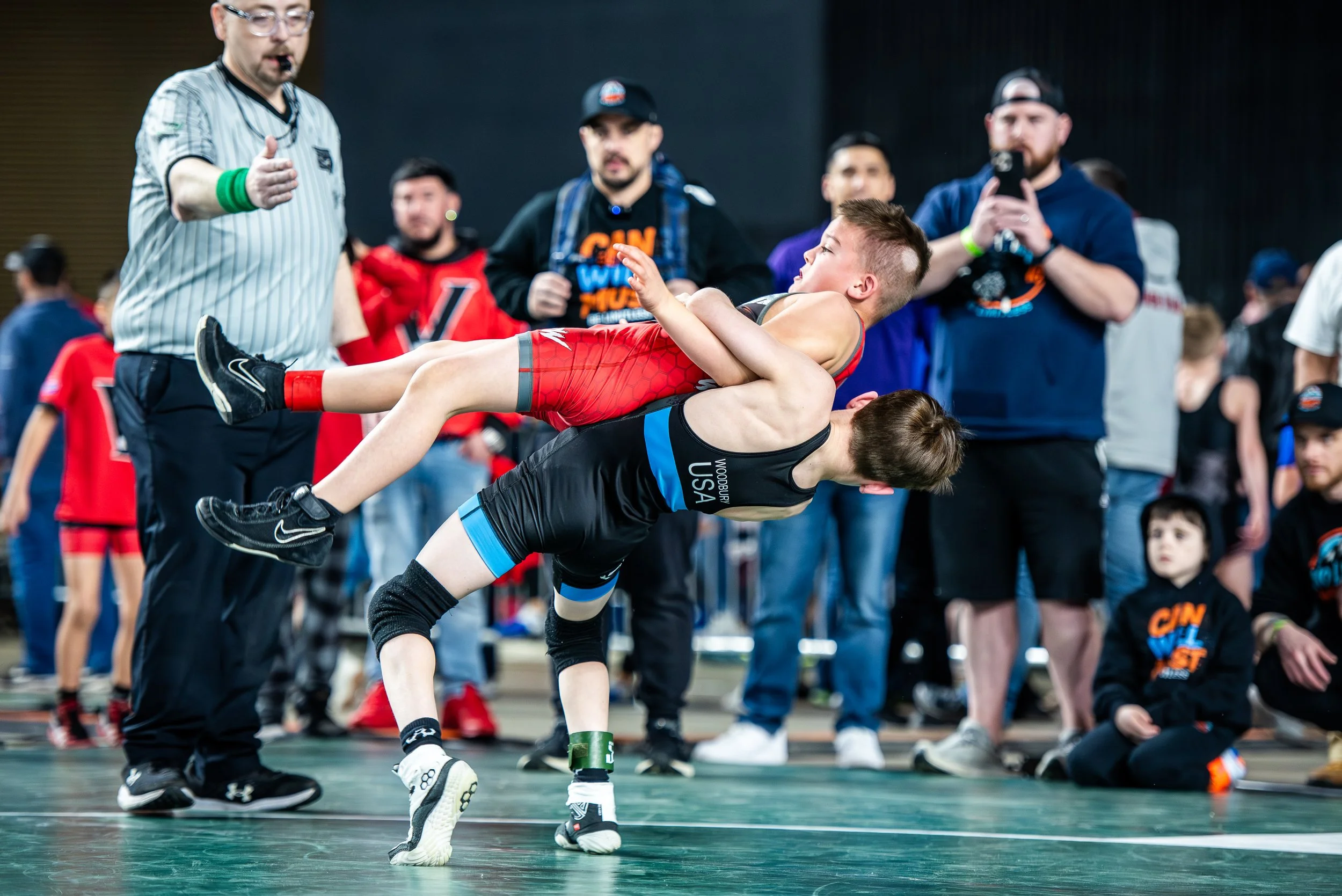
I think coaches sometimes underestimate how much technical knowledge can develop from spending an extended period of time working through the same foundational positions. A wrestler who spends several weeks learning a double leg is developing familiarity with the initial entry, but the technical education continues as they begin encountering different defensive reactions. During one practice, we might focus on maintaining posture after contact. During another, we might work on finishing when an opponent sprawls or begins circling away. Eventually, the athlete needs to recognize when the attack is available during live wrestling and make adjustments without waiting for a coach to tell them what to do. The curriculum gives us a way to organize those lessons so the skills build on one another throughout the season.
Correcting positions throughout the season
One thing I'd like to see youth wrestling coaches spend more time doing is evaluating the mistakes that occur when their wrestlers attempt techniques they've already been taught. A child who consistently gets stuck underneath an opponent while attempting a takedown may understand the initial entry perfectly well but struggle with what happens immediately afterward. Maybe their head position is wrong, they're allowing too much space between their body and their opponent, or they haven't learned how to adjust when their opponent begins applying pressure. Each of those mistakes represents a different technical problem that coaches should be able to identify and address through subsequent instruction. If we have a room full of kids who understand how to enter on a single leg but consistently struggle to finish it, we have a pretty clear indication of where our instruction should go next.
We might spend a practice working on maintaining good position after securing the leg, followed by additional instruction on responding when an opponent applies a whizzer. Later in the season, we could spend time teaching the adjustments necessary when an opponent begins hopping or attempting to square their hips. The athletes are continuing to develop a technique they were introduced to earlier in the season, and each correction gives them a better understanding of the positions they're likely to encounter during a match. This kind of progression allows coaches to introduce increasingly complicated technical information while maintaining consistency in the overall curriculum.
I also think coaches can become more effective by changing how they communicate corrections. Telling a wrestler to get lower, work harder, or keep wrestling doesn't necessarily explain what they need to do differently. A child who doesn't understand why they're losing a position needs information they can actually apply. A 2021 systematic review by Zhou, Shao, and Wang examined 23 studies involving feedback and motor skill learning in physical education and found strong evidence that feedback improved learning compared with receiving no feedback. The evidence was less conclusive about which particular forms of feedback were most effective, which means coaches still need to consider the individual athlete and the specific problem they're trying to correct.
Sometimes a child needs to see the movement demonstrated again, while another wrestler may understand the explanation but need an opportunity to feel the difference between a strong position and a weak one. There are also situations where an athlete knows exactly what they're supposed to do during a controlled drill but struggles to recognize the position once their opponent begins moving. In that case, continuing to explain the original movement may accomplish very little because the wrestler needs more practice identifying the appropriate reaction under resistance. A coach should be able to recognize these differences and make decisions about how to help the athlete develop a better understanding of the technique.
Over the course of a season, I want our wrestlers to become increasingly capable of recognizing their own positional mistakes. A child who understands why their hips need to be in a particular position has a better opportunity to make that adjustment during a match when their coach can't stop the action and demonstrate it. This requires us to give athletes opportunities to think through the positions they're learning, explain what went wrong, and practice making corrections until they begin recognizing those problems independently.
Managing different learning rates in the same wrestling room
Anyone who has coached a large group of youth wrestlers understands how differently children learn. You can demonstrate the same technique to 20 athletes and have some understand it almost immediately while others need considerably more time before they can perform the movement correctly. Coaches should anticipate those differences when planning their practices and develop ways to provide additional instruction without repeatedly interrupting the progression of the entire room.
I don't believe a coach should stop an entire room and restart a lesson every time one wrestler struggles to understand a technique. When the majority of the athletes have demonstrated that they understand the concept and are prepared to continue, the practice should generally be allowed to progress. The wrestler who is struggling still deserves the instruction necessary to develop that skill, which is why having multiple coaches in a room can be incredibly valuable. If a child is having difficulty with a movement, another coach can spend additional time helping them work through it while the rest of the room continues with the planned instruction.
That might involve breaking the technique into smaller movements, changing the explanation, or spending several minutes helping the wrestler understand a specific position before rejoining the larger group. Partner selection can also be useful, although I think coaches should put some thought into why they're pairing certain athletes together. Sometimes two wrestlers who are struggling with the same movement can benefit from practicing at a slower pace under direct supervision. In other situations, pairing a less experienced wrestler with a patient and technically competent partner provides the consistency they need to recognize the correct position. The decision should depend on the individual wrestler, their current level of understanding, and the particular skill they're trying to learn.
There will also be athletes who require additional time or a modified progression because of developmental, physical, or learning differences. An established curriculum should give coaches direction while allowing them to make accommodations that help individual athletes participate successfully. I want every child in the room to receive the instruction they need, and I also want the athletes who are ready for the next part of the curriculum to have opportunities to continue progressing. When a coaching staff communicates well and understands the technical objectives of each practice, it becomes much easier to manage those differences without allowing one athlete's learning challenges to determine the direction of instruction for everyone else.
When the entire room struggles, evaluate the instruction
There are situations where slowing down the entire room is exactly what needs to happen. If nearly every wrestler is making the same technical mistake, I think coaches should be willing to stop their planned progression and examine why so many athletes are struggling. Maybe the technique was too advanced for their current skill level, or there was a prerequisite movement we assumed they understood but never actually taught. Sometimes the demonstration itself needs to be reconsidered because the explanation made perfect sense to the adults in the room but failed to communicate what the children were supposed to accomplish.
Experienced wrestlers perform many movements without consciously thinking about every small adjustment their bodies are making. Something that feels completely natural to a coach who has wrestled for 20 years might be a movement an eight-year-old has never attempted before. If we're teaching children, we have to account for the fact that their understanding is limited to what they've already learned and experienced. When a large portion of the room is struggling with the same skill, we should be asking whether our instruction has given them enough information to understand the position and whether we've allowed enough time for them to practice it successfully.
If the majority of our wrestlers are struggling to maintain pressure from top position, spending another practice teaching advanced turnovers probably isn't going to solve the underlying problem. We may need to return to basic top control, explain where their weight should be distributed, and help them recognize how that pressure changes when an opponent begins moving underneath them. That might mean dedicating an entire practice to something we covered several weeks earlier or rebuilding a progression we thought our wrestlers had already mastered. I'm comfortable making those adjustments because I want the curriculum to reflect what the athletes are actually learning, and I think coaches should be willing to acknowledge when their original instruction needs to be improved.
There's a significant difference between recognizing that one child needs additional support and observing that an entire room is struggling with the same concept. Coaches should be able to make that distinction and adjust their instruction accordingly. If almost everyone is having trouble maintaining the same fundamental position, repeatedly telling the kids to work harder gives us very little information about how to help them improve. We need to examine what we're asking them to do, whether they understand the movement, and how we're preparing them to apply it against an opponent.
Evaluating our own coaching should be part of the curriculum
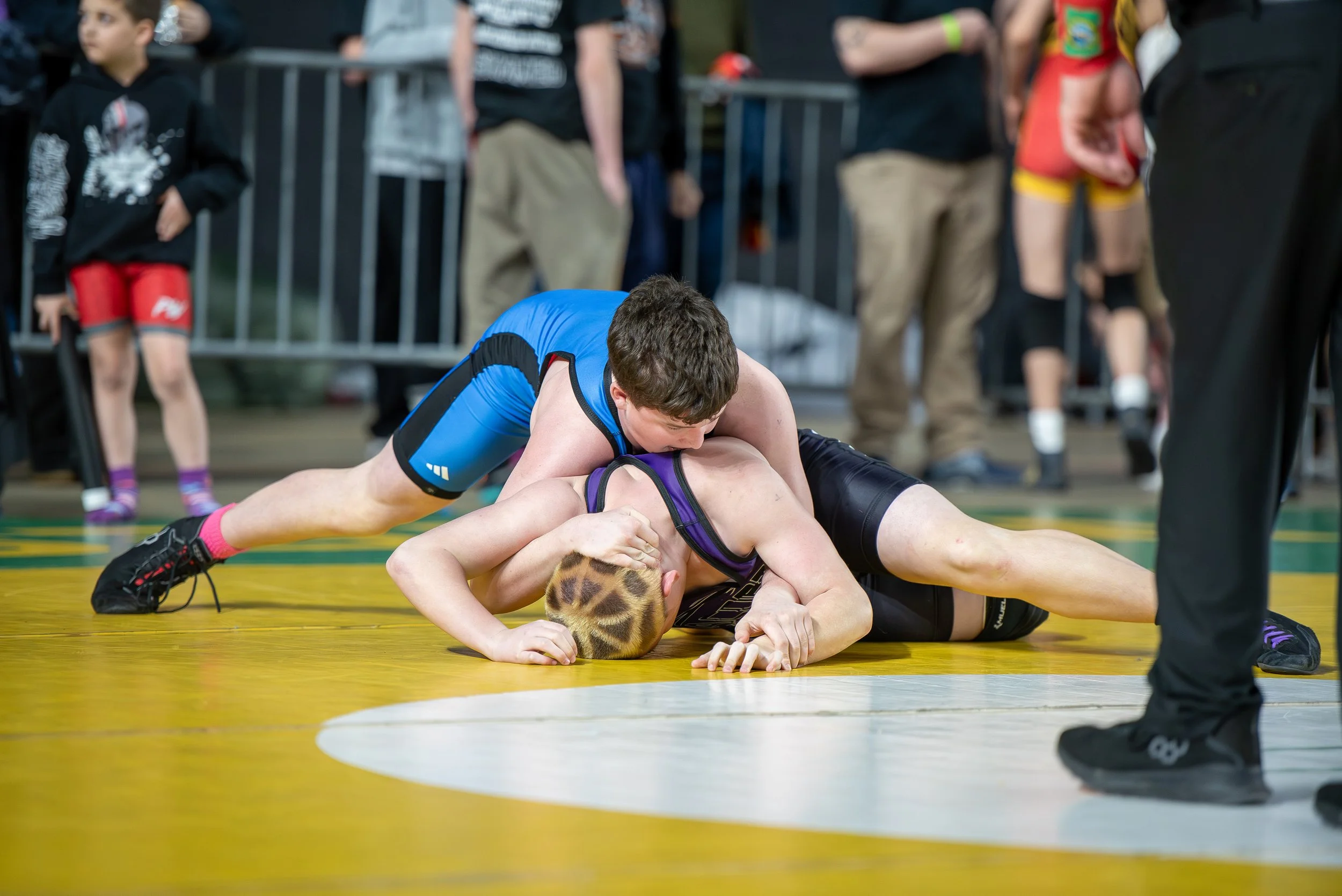
When we watch our athletes compete, we're constantly collecting information about what they need to improve. We notice when they're giving up poor positions, failing to finish takedowns, or struggling to maintain control from top, and those observations should influence what happens during practice the following week. Imagine watching 10 wrestlers from the same program compete over the course of a weekend and noticing that eight of them consistently struggle to maintain their base from bottom position. Even though the coaching staff spent several practices teaching bottom wrestling earlier in the season, the athletes are still demonstrating the same technical deficiency. I would want our coaches to discuss why that problem is occurring across such a large portion of the room.
Did we spend enough time developing the basic position? Were we providing appropriate resistance during drilling? Did we teach the athletes how to respond when an opponent begins applying pressure, or were they primarily practicing against cooperative partners? It's possible that the instruction was appropriate and the athletes simply need more opportunities to apply the technique against resistance. We may also discover that we moved through the material too quickly or overlooked something fundamental during the original lesson. Either way, we've identified an area that deserves additional attention, and the coaching staff should be using that information to make decisions about future instruction.
I believe coaching staffs should communicate regularly about the progress they're seeing in their athletes. If one coach notices that several wrestlers are consistently making the same positional mistake, that information should be shared with the rest of the staff so everyone understands what needs to be reinforced. An established curriculum makes those conversations considerably easier because the coaches already know which techniques the program is prioritizing and what athletes are expected to learn throughout the season. We can discuss whether our wrestlers understand the initial movement, whether they're capable of recognizing the position under resistance, and whether they know how to respond when an opponent begins defending.
Evaluation also needs to account for the difference between demonstrating a technique during drilling and applying it successfully during live wrestling. A child might perform a stand-up correctly against a cooperative partner but struggle when someone is actively trying to return them to the mat. That tells us something about the next part of their technical development. We can begin introducing resistance and different reactions while continuing to correct the mechanics they've already learned. When several athletes demonstrate the same problem, we can adjust the curriculum to give the room more opportunities to practice that position under increasingly realistic circumstances.
I think this level of accountability should be expected of anyone responsible for coaching children. We ask our wrestlers to listen to corrections, recognize mistakes, and continue practicing until they understand something that previously gave them trouble. Coaches should be willing to approach their own instruction with that same attitude, especially when we're responsible for deciding how an entire group of athletes will spend several hours of their week learning the sport.
Technical knowledge, aggression, and competitive confidence
One of the reasons I feel strongly about evaluating technical knowledge independently is that youth wrestling involves several qualities that develop at different rates. Some children are naturally aggressive competitors who are comfortable with physical contact and willing to commit to attacks without spending much time worrying about what might happen if they make a mistake. Other children are more cautious and may understand the techniques they're being taught but struggle to apply them because they're hesitant to initiate contact or worried about getting scored on. Those differences can have a significant influence on competitive results, particularly when we're talking about very young wrestlers who are still developing an understanding of the sport.
Anyone who spends much time around youth wrestling has probably watched a technically limited but fearless child overwhelm an opponent who has a stronger understanding of the positions involved. Those situations can be frustrating when you're coaching the child who seems to know exactly what they're supposed to do but cannot convince themselves to commit to the movement. We have to be careful about what conclusions we're drawing from those matches because a child who wins through physical strength or competitive aggression may still have substantial gaps in their technical knowledge, while a wrestler who struggles with hesitation may be developing a very good technical foundation.
I believe coaches should evaluate the technical knowledge of those athletes separately from the competitive behaviors that influence their match results. Can they demonstrate the technique correctly during practice? Do they understand what they're trying to accomplish? Can they recognize the position when it develops, and can they explain what went wrong when they lose control? Those questions help us evaluate the wrestling education we're providing, and they give us something meaningful to measure throughout the season regardless of how many matches an athlete has won.
Competitive confidence and the willingness to commit to an attack can develop as athletes gain experience and become more comfortable applying their skills under pressure. Coaches can help that process by creating practice environments where children receive feedback about their technical decisions and are encouraged to continue attempting movements they're still learning. A 2026 systematic review and meta-analysis by Gu and Cheng examined motivational climate and youth sport outcomes, finding positive associations between supportive coaching environments and outcomes related to motivation and engagement. The analysis also found that task-oriented and autonomy-supportive climates were associated with stronger positive outcomes than performance-oriented climates.
For me, that supports recognizing technical progress even when a wrestler's competitive results haven't caught up with what they're learning. If a child who has been afraid to shoot finally attempts a takedown during live wrestling, I'm going to recognize that progress while helping them understand what they can improve about the attempt. If a wrestler who has struggled with bottom position begins maintaining a stronger base, I want them to understand what they're doing correctly so they can continue developing that skill. We still expect our athletes to work hard and learn how to compete, and part of that process involves developing the confidence to apply their techniques when the appropriate opportunity presents itself.
I'm unwilling to assume that the most fearless eight-year-old in the room is automatically the most technically developed or has the greatest long-term potential. Some children need more time to develop the confidence required to use the skills they've learned against an opponent. If we continue teaching them good wrestling and helping them recognize the progress they're making, we're giving those athletes an opportunity to develop competitive confidence alongside the technical foundation they've been building.
Every wrestler deserves a technical education
One of the things I appreciate about an established curriculum is that it creates a consistent foundation for every athlete in the program. A beginner who walks into the room without any wrestling experience should have a clear pathway for learning the fundamentals, while an experienced wrestler working through the same curriculum should be receiving instruction that helps them refine the technique and understand more complicated situations that develop from it. Those athletes may practice the same fundamental movement at different levels of difficulty, with the newer wrestler learning how to establish the basic position while another athlete learns to maintain that position against a partner who is actively defending.
I think this is especially valuable because youth wrestling programs can unintentionally begin directing more technical instruction toward the athletes who are already successful in competition. It's understandable that coaches enjoy working with athletes who learn quickly and demonstrate advanced skills, particularly when those wrestlers are ready to practice more complicated techniques. The athletes who struggle early still deserve intentional instruction that helps them develop their understanding of the sport, and a curriculum gives the coaching staff a consistent set of skills to work toward with every wrestler in the room.
I want a child who spends an entire season in our program to leave understanding more about wrestling than they did when they arrived, regardless of how many matches they won. They should understand how to establish basic positions, recognize when they're in trouble, and identify the adjustments necessary to improve their technique. Some wrestlers will become competent much faster than others, and I don't expect every child to achieve the same level of technical mastery within the same amount of time. I do expect our coaches to provide a consistent technical foundation and make adjustments when athletes need additional support.
If a wrestler spends several years in our room, there should be a recognizable progression in what they've learned. We should be able to explain which skills we've taught, how we've developed them, and what that athlete is currently working toward. Those conversations become more meaningful when they're based on specific technical abilities the child has demonstrated during practice and competition, particularly when an athlete is still developing the confidence or competitive experience necessary to apply those skills successfully in matches.
Who you are between 18 and 80 matters more than who you were between 8 and 18
Something I think about often when coaching children is how relatively short their competitive wrestling careers may be compared with the rest of their lives. We spend a lot of time discussing rankings, tournament results, and what kids are accomplishing at eight or ten years old. Families travel across the country for competitions, athletes spend countless hours practicing, and coaches invest an enormous amount of time helping children pursue their goals. I understand why those accomplishments matter to the athletes and their families, and I believe learning how to compete successfully is an important part of participating in a competitive sport.
I also believe that who a child becomes between the ages of 18 and 80 is far more important than who they were or what they accomplished between eight and 18. Most of the children who come through youth wrestling programs will eventually stop competing. Some will wrestle through high school, a smaller number will continue in college, and an even smaller number will compete beyond that. For the majority of our athletes, wrestling will eventually become something they did when they were younger, and they'll spend considerably more of their lives applying the things they learned as children to situations that have very little to do with wrestling.
A child who learns to accept correction and continue working on something they haven't mastered is developing an approach to learning that can be useful well beyond the wrestling room. Someone who learns how to evaluate a mistake, adjust their approach, and try again is practicing a way of responding to problems that can carry into school, work, and relationships. These are behaviors I want our athletes to develop while they're learning how to wrestle, and I think coaches have opportunities to reinforce them every time they teach a difficult technique or help a child work through something they're struggling to understand.
Research on positive youth development through sports supports the value of intentionally teaching life skills. Newman and colleagues examined this subject in a scoping review of coaching practices, identifying the importance of supportive relationships and helping young athletes understand how lessons learned through sports can be applied to other areas of life. The researchers also discussed the distinction between developing a skill within a sports setting and successfully transferring that skill into a different environment. That transfer requires attention from the adults responsible for teaching and reinforcing those behaviors.
The International Olympic Committee's 2015 consensus statement on youth athletic development also encouraged a broader approach to developing young athletes, with attention to long-term health, resilience, and sustainable participation alongside competitive achievement. I think those principles should influence how youth sports programs define success and how coaches make decisions about the experiences they're providing for children.
I want our wrestlers to become technically competent, confident competitors who understand the work required to improve. I also want them to learn that adults can acknowledge mistakes, that receiving correction is a normal part of learning, and that progress sometimes takes considerably longer than we want it to. Those lessons depend partly on what we model as coaches. When a coaching staff recognizes that its instruction hasn't been effective and makes adjustments, we're demonstrating the same willingness to learn that we expect from our athletes. When we spend additional time helping a struggling wrestler understand a technique, we're showing the room that every athlete's development deserves attention.
The way we respond to frustration, mistakes, and differences in ability becomes part of what children experience throughout their time in our program. Years after their final wrestling match, most of our athletes probably won't remember every technique we taught them. They may forget the details of tournaments they attended when they were eight years old or how many matches they won during a particular season. I would like them to remember that the adults responsible for coaching them took their development seriously and gave them the tools to become better at something they worked hard to learn. I hope they carry that willingness to keep learning into the much longer portion of their lives that will happen after they're finished competing.
What should a successful season actually look like?
When we get to the end of a wrestling season, I want to be able to look at our athletes and identify what they've learned over the previous several months. I want to know whether they understand the fundamental techniques we prioritized, whether they're becoming more capable of recognizing their own positional mistakes, and whether our instruction has helped them develop the technical knowledge necessary to continue progressing. I also want our coaching staff to be able to explain what worked in our instruction and what we would change before teaching the same curriculum again.
Maybe we discover that our wrestlers consistently develop strong takedown entries but struggle with finishing positions. That should influence how we structure the following season and how much time we dedicate to teaching the reactions that develop after an athlete secures an attack. Maybe our wrestlers are technically sound from neutral but lack the ability to maintain pressure from top. We should be prepared to evaluate whether we're spending enough time developing those positions and whether our teaching is giving the athletes opportunities to practice them under appropriate resistance. An established curriculum gives us a consistent set of learning objectives that makes identifying those patterns considerably easier.
I think youth wrestling coaches should be able to sit down before the season begins, identify the fundamental techniques they want every athlete to understand, and develop a progression that builds on those skills throughout the year. Once practices begin, our responsibility is to observe what's happening in the room and make informed adjustments. Some children will need more time, while others will be ready to progress quickly and require additional challenges to continue developing. There will be practices where we need to change our original plan because the entire room needs more instruction on a position we thought they understood, and we should be comfortable making those changes when the athletes' performance tells us they're necessary.
I don't expect every wrestler to finish a season with the same number of wins or the same level of competitive confidence. I do expect us to have provided a consistent technical foundation that allows each athlete to progress from where they started. As coaches, we should be willing to hold our own instruction to the same standard of improvement we expect from the children we're teaching. We ask our athletes to recognize mistakes, listen to feedback, and continue working until they develop a better understanding of a position. I think it's reasonable for them to expect that same commitment from us, particularly when we have the opportunity to influence how they approach learning for years after they've finished wrestling.
References and further reading
Ammar, A., Trabelsi, K., Boujelbane, M. A., Boukhris, O., Glenn, J. M., Chtourou, H., & Schöllhorn, W. I. (2023). The myth of contextual interference learning benefit in sports practice: A systematic review and meta-analysis. Educational Research Review, 39, 100537.
https://doi.org/10.1016/j.edurev.2023.100537
Bergeron, M. F., Mountjoy, M., Armstrong, N., et al. (2015). International Olympic Committee consensus statement on youth athletic development. British Journal of Sports Medicine, 49(13), 843–851.
https://doi.org/10.1136/bjsports-2015-094962
Graser, J. V., Bastiaenen, C. H. G., & van Hedel, H. J. A. (2019). The role of the practice order: A systematic review about contextual interference in children. PLOS ONE, 14(1), e0209979.
https://doi.org/10.1371/journal.pone.0209979
Gu, Y., & Cheng, L. (2026). A systematic review and meta-analysis of motivational climate and youth sport outcomes: Examining a hierarchical effects model. Frontiers in Psychology, 16, 1716745.
https://doi.org/10.3389/fpsyg.2025.1716745
Newman, T., Black, S., Santos, F., Jefka, B., & Brennan, N. (2023). Coaching the development and transfer of life skills: A scoping review of facilitative coaching practices in youth sports. International Review of Sport and Exercise Psychology, 16(1), 619–656.
https://doi.org/10.1080/1750984X.2021.1910977
Zhou, Y., Shao, W. D., & Wang, L. (2021). Effects of feedback on students' motor skill learning in physical education: A systematic review. International Journal of Environmental Research and Public Health, 18(12), 6281.
https://doi.org/10.3390/ijerph18126281
