
Early Success vs. Long-Term Development: Why Wrestling Is a Long Game

A youth wrestling coach sits with young athletes during practice, reinforcing the importance of patience, effort, and long-term development in the sport of wrestling.
One of the hardest moments as a coach doesn’t come after a bad practice.
It comes after a tournament, when a young athlete has done everything you asked of them, worked hard, stayed coachable, stepped on the mat with courage… and still lost. Especially when they lost to someone who is clearly further along.
In youth wrestling and youth sports development, these moments matter more than the scoreboard. How they are framed, for athletes and for parents, often determines whether a child stays in the sport long enough to truly develop.
Recently, I found myself in that exact situation with several athletes who are new to wrestling. They competed against kids who were stronger, more experienced, and operating at a higher level right now.
The challenge wasn’t the result. It was explaining why they were still doing well.
The Myth of Early Success in Youth Sports
In youth athletics, early success is often mistaken for future success. The dominant 8-year-old is labeled “elite.” The struggling beginner is quietly written off. But research and experience tell a different story.
A growing body of evidence shows that early athletic achievement has very little correlation with long-term, elite-level success, even at the Olympic level. Many elite athletes were not standout performers as children. Likewise, many youth athletes who dominated early never sustain that trajectory.
Early wins feel good, they build confidence, they create momentum, but they do not guarantee long-term success.
Physical Maturity Is Often Mistaken for Talent
One of the most overlooked factors in youth sports is developmental timing.
There is a well-documented concept called the Relative Age Effect, studied extensively in youth hockey, soccer, and other sports. At young ages, elite teams are often dominated by athletes who are simply older within the same age group, not more talented, just more physically mature.
That maturity can mean:
Greater strength
Better coordination
Faster speed
Higher confidence
Wrestling is no different.
When a young wrestler faces an opponent who is bigger, stronger, or more aggressive, it is often a reflection of timing, not potential.
Over time, those early physical advantages even out. But the labels created early on tend to stick.
A Coach’s Perspective on Long-Term Development
I recently said this in a conversation, and it captures our philosophy perfectly:
“Some kids are naturally gifted, athletic, and aggressive and have early success. Other kids develop at their own pace. What matters most is creating a system that keeps kids in the sport long term. I’d rather have a room full of athletes who develop passion for wrestling and stay in it for years than a group of really good 8-year-olds.”
This belief sits at the core of everything we do at No Limits Wrestling Club in Ridgefield, WA and Limitless Performance.
What We Value Early in Wrestling Development
At the early stages of wrestling, wins and losses are not the primary metric.
We care about:
Attitude
Effort
Coachability
Courage
Consistency
Did the athlete step on the mat ready to compete?
Did they attempt to execute what they’ve learned?
Did they keep wrestling when it got uncomfortable?
These traits are far more predictive of long-term success than early medals.
Wrestling Is a Long Game
Wrestling rewards patience, it rewards discipline, resilience and those who stay long enough for development to take place. Early dominance does not and has not ever guaranteed anything.
Equally so, early struggle doesn’t limit anything.
What matters is staying engaged, staying curious, and continuing to build, physically, mentally, and emotionally.
This long-term approach is why our youth wrestling programs in Ridgefield, WA and strength & conditioning systems are designed to support athletes beyond a single season or tournament.
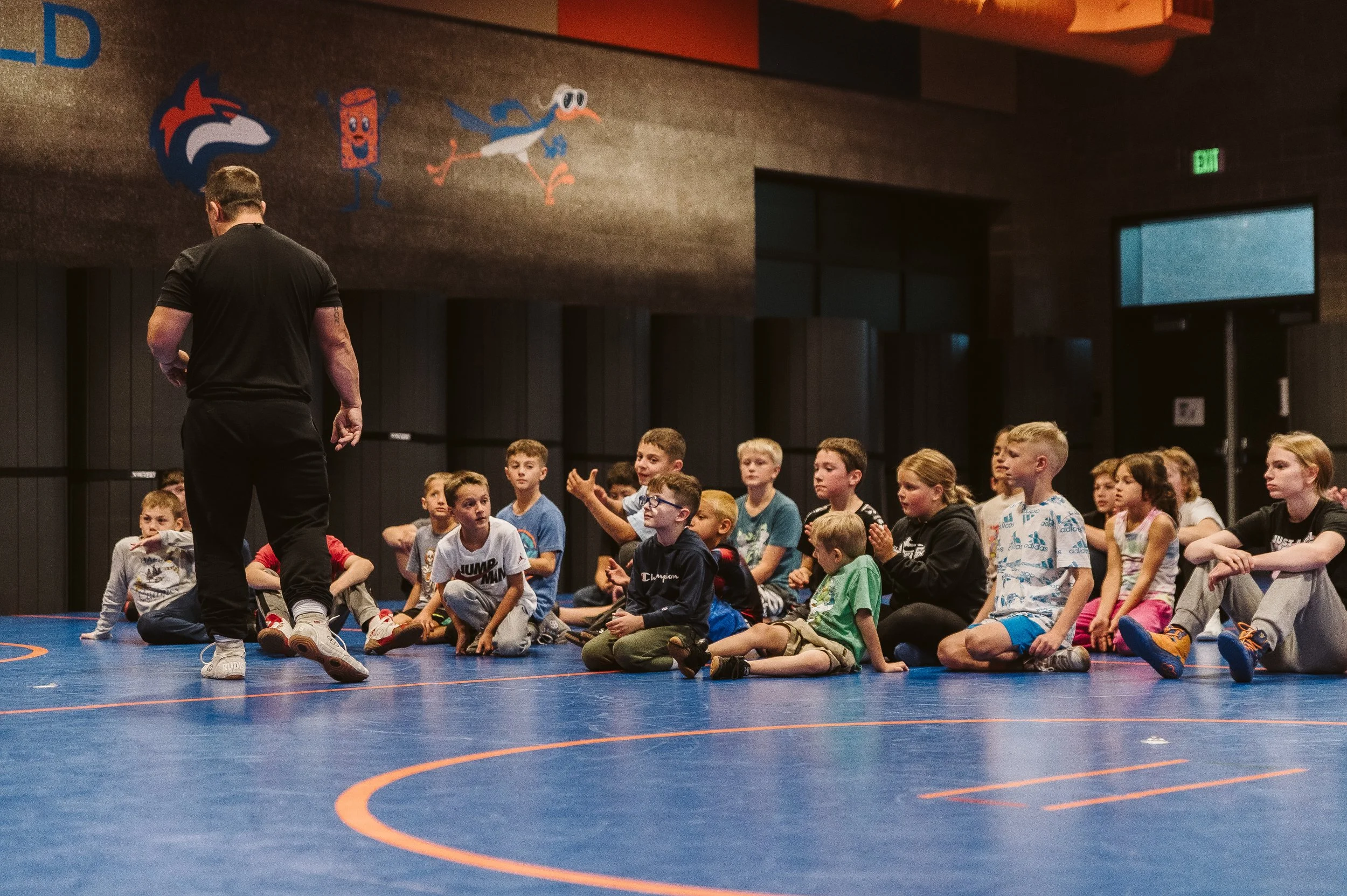
Our programs are built to support athletes beyond a single season or tournament.
Our Commitment to Athletes and Families
Our goal is not to chase short-term results.
Our commitment is to:
Develop athletes who enjoy the process
Teach life skills through sport
Build confidence that extends beyond the mat
Support long-term athletic and personal development
We believe wrestling is one of the most powerful tools for teaching discipline, resilience, and self-belief — but only when it’s approached with patience and perspective.
Final Thought
If you’re a parent reading this: trust the process.
If you’re an athlete reading this: stay patient.
If you’re a coach reading this: keep framing the journey correctly.
For more on helping athletes work through setbacks, confidence swings, and uneven progress, read Success Isn’t Linear in Youth Wrestling.
Because wrestling isn’t about who wins early.
It’s about who stays, grows, and ultimately becomes their best self — on the mat and beyond.
